I hope you’re all as excited for RootsTech this week as I am! If you’re new to genealogy and you’ve never heard of RootsTech, it’s simply the world’s largest family discovery event, which is taking place both on-demand and in-person in Salt Lake City, this Thursday through Saturday, March 6–8, 2025.
Unless you’re local to Salt Lake City, it’s probably too late to make plans to attend in person. However, there’s still time to register for the online event, which is free and includes over 200 sessions in more than 26 languages. The full schedule for RootsTech is here, which you can filter by skill level, speaker, and topic to find presentations that will be most helpful to you based on your research needs and interests.
I’m presenting two lectures which will be livestreamed from RootsTech. If you’re unable to attend live, you don’t have to miss out, because the recordings will also be available after the conference in the on-demand library, which currently includes more than 1,500 sessions on 185 topics in over 30 languages.
In my last post, I pieced together the relationships of individuals recorded on the Bogacki family monument in St. Stanislaus Cemetery in Cheektowaga, New York (Figures 1 and 2).
Figure 1: Front of the Bogacki monument in St. Stanislaus Cemetery, Cheektowaga, New York. Photo taken by the author, July 2014.
Figure 2: Back of the Bogacki monument in St. Stanislaus Cemetery, Cheektowaga, New York. Photo taken by the author, July 2014.
The individuals buried here are either descended from the patriarch and matriarch, Józef and Apollonia (Prusiecka) Bogacki, through their son, Antoni Bogacki, and his three wives, Anna Burczykowska (m. 1879), Jadwiga Tądrowska (m. 1892), and Jadwiga’s sister, Maryanna Tądrowska (m. 1901), or else they married into the family. Those who married into the family, in addition to Antoni’s two wives, Jadwiga and Maryanna, were Kazimiera (Pawlicka) Bogacka, who married Jan Bogacki; Wiktoria (Niewczyk) Bogacka, who married Władysław Bogacki; Eugenia (Michalska) Bogacka, who married Henryk Bogacki; and Edward Kurpisz, who married Marcyanna “Marion” (Bogacka) Kurpisz.
That leaves Elżbieta Siekierecka unaccounted for. Her burial in the Bogacki family plot suggests that she was a Bogacka somehow; was her maiden name Bogacka? Or was Siekierecka her maiden name, and she married a Bogacki, as suggested by her Find-a-Grave memorial? [1]
As it turns out, neither is true.
Elżbieta Siekierecka did not leave much trace in U.S. records. Her grave marker informs us that she was born in 1873 and died in 1923, and the New York State Death Index specifies her date and place of death as 1 February 1873 in Cheektowaga, New York.[2] She arrived in the the port of New York on 25 July 1921, so she resided in the U.S. for just 18 months prior to her death.[3]
Elżbieta arrived in the U.S. as a 42-year-old widow with two children, 11-year-old Marya and 9-year-old Antoni. Their ages suggest birth years of 1879, 1910, and 1912, respectively, which makes Elżbieta six years younger than what her grave marker suggests. Her passenger manifest identifies her as a farm laborer whose last permanent residence was “Pozen” (Poznań). Her nearest relative in the country from whence she came was her sister, Marcjanna Szule, who was living in “Staraleka Gub. Pozen.” This suggests the village of Starołęka Wielka, which is currently located in gmina Poznań, Poznań County, in the Wielkopolskie province of Poland. (“Gub.” here is an abbreviation for “gubernia,” which was an administrative division in the Russian Empire comparable to a province. Poznań was never under Russian control, so there was never a “Poznań gubernia.” Moreover, by 1921, Poland had regained its independence, so this village was located in the Poznań voivodeship of the Second Polish Republic.[4] Unfortunately, the clerk who prepared the manifest was apparently unaware of all that.)
Elżbieta was headed to Buffalo, New York, to her sister, “Marya Bogaeta,” living at 76 Rugby Avenue, which is actually Rugby Road on Buffalo’s north side. “Bogaeta” is pretty clearly a mistranscription of Bogacka, in light of present evidence, which would imply that Elżbieta was the sister of Marya (Tądrowska) Bogacka. Marya married Antoni in 1901, and he died in 1915, so she was his widow in 1921 when Elżbieta arrived in the U.S.[5]
Nonetheless, I had been expecting that Elżbieta would have been born a Bogacka, based on her burial in the Bogacki family plot, so my first thought was that the information on the passenger manifest was another example of a Polish immigrant employing a rather expansive definition of family relationships. In my research experience, Polish immigrants sometimes exaggerated the closeness of their relationships to their American contacts, referring to them as “in-laws,” “cousins,” or even “brothers” and “sisters” when there was no evidence for those relationships in historical records. Based on my experience, if Elżbieta were Antoni’s sister, it would not be unusual for her to identify Marya (Tądrowska) Bogacka as her sister, rather than her sister-in-law—especially since Antoni Bogacki was already deceased.
This was my working hypothesis when last I left off with my Bogacki research a few years ago. However, in recent weeks I’ve circled back to it, looking at the data with fresh eyes. That’s when I realized that Elżbieta Siekierecka wasn’t born a Bogacki at all, nor did she marry one: she really was the full sister of Marya (Tądrowska) Bogacka.
What tipped me off was her place of birth, recorded on the second page of her passenger manifest as “Kostrzynie.” Marriage records for Antoni Bogacki and Jadwiga and Marya Tądrowska identify the Tądrowskis’ birthplace as “Kostrzyn, Boruss[ia],” i.e. Kostrzyn, Prussia, as do baptismal records for five of Jadwiga’s children.[6] Jadwiga’s death record similarly identifies her birthplace as “Kostrzyn, Pos[e]n.”[7] The baptismal record for her youngest son, Zygfryd, identifies Jadwiga’s birthplace as “Kościerzyna, Boruss[ia],” which is a different place in Poland, but the body of evidence points to Kostrzyn as being the correct place of origin for the Tądrowski family.[8] The variant spelling recorded on the passenger manifest, “Kostrzynie,” reflects the grammatical declension inherent to the Polish langauge: to say, “I was born in Kostrzyn” in Polish, I would say, “Urodziłam się w Kostrzynie.” A similar conversation probably took place when the passenger manifest was recorded.
In order to prove that Elżbieta Siekierecka was a Tądrowska, I needed to find some evidence of her parentage. Her church burial record or death certificate would likely identify her parents, but a quick search in the PGSNYS databases was negative; she may have been buried from a church which is not indexed. For $11.00, I could request her death certificate from the Town of Cheektowaga (where she died), but why spend money unnecessarily? Her baptismal record or marriage record from Kostrzyn might be easier to find at FamilySearch.
Searching this collection requires a bit of patience and persistence, and sometimes a sense of humor. It seems that many of the volunteer indexers who helped to create this database had little to no familiarity with Polish given names, surnames, and Polish diacritics, or perhaps the entire index was AI-generated. I’ve noticed this same problem with other FamilySearch databases, such as, “Poland, Tarnow, Roman Catholic Diocese Church Books, 1612-1900.” These databases are rife with transcription errors, such as “t” for “ł,” “y” for “ą,” etc. Sometimes, it’s possible to guess what the name should have been based on the transcription. For example, the surname “Koztdwska” makes no sense in Polish, but it’s clearly Kozłowska in the original record. Similarly, “Riotrowski” should be Piotrowski, “Kapusienslia” is Kapuścińska, and the absurd “McHael” is Michael. Unfortunately, FamilySearch doesn’t offer an option to submit a correction to transcriptions in their database like Geneteka does, so these errors are likely to persist. Nonetheless, indexed records with errors are better than no indexed records at all, and wildcards can be used to advantage, even when the surnames were butchered by transcribers or are genuinely difficult to read in the original record.
In this case, we’re in luck, because Jadwiga’s and Marya’s marriage records identify their parents as Wawrzyn Tondrowski/Tądrowski and Salomea Luberska, and this combination of given names is uncommon. And to its credit, FamilySearch‘s search algorithm recognizes that the Polish names Wawrzyn or Wawrzyniec are equivalent to the Latin name Laurentius, so it doesn’t matter which version of the name we use for our search.[9] A search for surname “*drowski” with father’s name Wawrzyn and mother’s name Salomea produces 11 baptismal records for children of this couple—including the three buried in the Bogacki family plot, Hedvigis “Tadrowski,” Elisabeth “Tydrowski,” and Marianna “Igdrowski” (Figure 3). All of them were baptized in Kostrzyn, just as expected, although the dates are off a bit from those reported on the Bogacki monument. Jadwiga/Hedwig Tądrowska was born 11 October 1863 (not 1866), Maria/Marya/Marianna (indexed as Igdrowski) was born 19 November 1865 (not 1867), and Elżbieta/Elisabeth (indexed as Tydrowski) was born 18 November 1872 (not 1873). [10]
Figure 3: Result of search for surname “*drowski,” father’s name “Wawrzyn,” and mother’s name “Salomea” in the FamilySearch database, “Deutschland, Preußen, Posen, Katholische und Lutherisch Kirchenbücher, 1430-1998.” Click image to enlarge.
Geneteka, being a Polish website, usually does a better job with transcribing Polish surnames and given names. As it happens, birth records from Kostrzyn are also indexed there, from 1820–1875, so all eleven of these Tądrowski/Tondrowski birth records should be included. Weirdly, a search for surname “T*” with given names Wawrzyn and Salomea only produced four of them (Figure 4).
Figure 4: Search result for births in Kostrzyn with surname T* and given names Wawrzyn and Salomea. Click image to enlarge.
It’s not clear to me why the other seven birth records aren’t found in this search. Maybe Geneteka is just being glitchy and temperamental, but this underscores the importance of checking more than one database, when available, and always consulting the original records before concluding that a particular event did not happen in a particular location.
We should be able to find Elżbieta’s marriage record to (_____) Siekierecki, and birth records for their children identified on the passenger manifest, Marianna and Antoni, as well as (_____) Siekierecki’s death record, for further confirmation that our conclusions thus far are sound.
A search for surname “Siekierecki” with mother’s name Elisabeth produces the children’s birth records (Figure 5).
Figure 5: Result of search for surname “Siekierecki” and mother’s name “Elisabeth” in the FamilySearch database, “Deutschland, Preußen, Posen, Katholische und Lutherisch Kirchenbücher, 1430-1998.” Click image to enlarge.
These records indicate that Marianna and Antoni Siekierecki were born 26 May 1910 and 30 April 1912, respectively, in “Provinz Posen, Preußen,” and but they don’t tell us where in “Provinz Posen” these births were recorded, nor is it possible to locate a handy coverage table like this one provided for the “Poland, Tarnow Roman Catholic Diocese Church Books” collection. [11] Presumably, this information is available when one views the images at a FamilySearch Center or Affiliate Library. Elżbieta’s husband is also identified as Vincentius (Wincenty) Siekierecki. A little more digging produces a death record for a third child of this couple, an unnamed son who died 10 February 1906. [12]
No amount of digging and creative wildcard searching turn up either a marriage record for Elżbieta and Wincenty Siekierecki, or Wincenty’s death record. This result is explained by the catalog entry for Kostrzyn; the magnifying glass icon next to specific collections indicates that Roman Catholic church marriage records were indexed from 1776–1878 with no apparent gaps, and that death records were indexed from 1776–1915 with no gaps after 1820. Since Elżbieta Tądrowska was born in 1873, her marriage took place well after the end of the indexed records, and Wincenty must have died after 1915. All is not lost, however. The Poznań area has good coverage in indexed databases; in addition to this indexed collection at FamilySearch, we can also try Geneteka, the Poznań Project, and BaSIA.
Geneteka has Kostrzyn marriage records indexed from 1818–1899, and Kostrzyn death records indexed up to 1912, so it’s unlikely that we’ll find Wincenty’s death, although we might possibly find his marriage to Elżbieta. However, a search for Wincenty Siekierecki is negative, even when the search is expanded to include all indexed parishes within 15 km of Kostrzyn, suggesting that the marriage took place in 1900 or later. The stated focus of the Poznań Project is on 19th-century marriages, and in keeping with that, they only have Catholic and civil marriage records for Kostrzyn indexed up to 1899. So, it’s unsurprising that a search here for Wincenty and Elżbieta’s marriage record is negative, confirming the Geneteka search result. We hit pay dirt at BaSIA, however. An “extended search” for Wincenty Siekierecki (as opposed to the basic search, which only allows entry of a surname) produces results in four geographic areas, including Kostrzyn-Poznań-Czerniejewo-Swarzęndz (Figure 6).
Figure 6: Result of search at BaSIA for Wincenty Siekierecki in the Kostrzyn-Poznań-Czerniejewo-Swarzędz geographic cluster. Click image to enlarge.
Results for the Kostrzyn-Poznań-Czerniejewo-Swarzędz cluster include Wincenty’s marriage record and his death record. Consistent with our expectations based on database searches thus far, Wincenty and Elżbieta were married in Kostrzyn on 30 April 1902, and Wincenty died on 12 November 1916 in Poznań. The marriage and death search results are both linked to digital images of those records from the State Archive in Poznań.[13] (Note that the marriage record covers two pages; the second page is here.) The marriage record identifies Wincenty Siekierecki as a butcher, born 14 December 1854 in Kozakowa (?), son of the deceased master saddler Joseph Siekierecki and his deceased wife Franciszka née Witczak, both last living in Kostrzyn. Elżbieta’s parents’ names and birth date agree with those reported in the indexed record of her baptism. Her father was described as a deceased master cooper, while her mother was still alive and residing in Kostrzyn.
So there we have it. Contrary to what burial in the Bogacki family plot might suggest, Elżbieta Siekierecka was not a Bogacka, nor was she married to one. Her connection to the family was tangential, through her sisters, Marya and Jadwiga (Tądrowska) Bogacki, who were two of the wives of Antoni Bogacki. Those researching the Tądrowski family will find ample material in indexed records from Poland. Happy hunting!
Sources:
[1] Find a Grave, database and images (https://www.findagrave.com/memorial/114761395/elzbieta-bogacka : accessed February 20, 2025), memorial page for Elżbieta Siekierecka Bogacka (1873–1923), Find a Grave Memorial ID 114761395, citing Saint Stanislaus Roman Catholic Cemetery, Cheektowaga, Erie County, New York, USA; Maintained by gravefinderStStans (contributor 47637865).
[3] Manifest, SS Potomac, departed Danzig 9 July 1921, arrived New York 25 July 1921, list 5, lines 18-20, Elzbieta, Siekierecka family; imaged as “New York, U.S., Arriving Passenger and Crew Lists (including Castle Garden and Ellis Island), 1820-1957,” Ancestry (https://www.ancestry.com/search/collections/7488/records/4028539363 : accessed 20 February 2025); National Archives Microfilm T715, RG 85, “Records of the Immigration and Naturalization Service, 1787-2004.”
[4] Tadeusz Bystrzycki, Skorowidz miejscowości Rzeczypospolitej Polskiej z oznaczeniem terytorjalnie im właściwych władz i urzędów oraz urządzeń komunikacyjnych [Index of Placenames of the Republic of Poland with corresponding governmental agencies and offices, including communication facilities], (Przemyśl and Warszawa: Wydawnictwo Książnicy Naukowej, 1933?), p. 1610, “Starołęka Wielka, wieś i. folw;” digital image, Wielkopolska Biblioteka Cyfrowa [Wielkopolska Digital Library], (https://www.wbc.poznan.pl/dlibra/publication/7126/edition/12786/content : accessed 20 February 2025).
Roman Catholic Church of St. Stanislaus, Bishop & Martyr (Buffalo, Erie, New York, USA), Marriages, Vol. II (1891-1931), p. 65, 1901, no. 35, Bogacki-Tondrowska, 4 June 1901; digital image, FamilySearch (https://www.familysearch.org/ark:/61903/3:1:3Q9M-CS4N-64QV-V?lang=en&i=1471 : accessed 20 February 2025); and
[10] “Deutschland, Preußen, Posen, Katholische und Lutherisch Kirchenbücher, 1430-1998,” database, FamilySearch (https://www.familysearch.org/ark:/61903/1:1:6FZC-MC5D?lang=en : accessed 21 February 2025), Hedvigis Tadrowski, born 11 October 1863; and
[12] “Deutschland, Preußen, Posen, Katholische und Lutherisch Kirchenbücher, 1430-1998,” database, FamilySearch (https://www.familysearch.org/ark:/61903/1:1:6FC2-KH55?lang=en. : accessed 21 February 2025), (_) Siekierecki, died 10 February 1906.
[13] Urzad Stanu Cywilnego Kostrzyn (pow. sredzki), [Civil registry office of Kostrzyn, Środa County] (Kostrzyn, Środa, Wielkopolskie, Poland), Heiraths-Haupt-Register [Marriage register], 1902, pp. 36-37, no. 18, Siekierecki-Tadrowska; married 15 April 1902; Archiwum Państwowe w Poznaniu [State Archive in Poznań], Sygnatura 53/1875/0/2/172; digital image, Szukaj w Archiwach (https://www.szukajwarchiwach.gov.pl/en/jednostka/-/jednostka/1401374 : accessed 22 February 2025), scans 38 and 39; and
Urząd Stanu Cywilnego Poznań – obwód miejski, Księga miejscowa zgonów tom IV [Rejestr główny zgonów] [Main Death Register, Vol. IV], 1916, no. 2086, Vincent Siekierecki, died 12? November 1916; Archiwum Państwowe w Poznaniu [State Archive in Poznań], Sygnatura 53/1926/0/3/1416; digital image, Szukaj w Archiwach (https://www.szukajwarchiwach.gov.pl/en/jednostka/-/jednostka/23804447 : accessed 22 February 2025), image 217 of 564.
Many thanks to Jody Tzucker, Anne Callanan, Georg Patrzek, and Monika Deimann-Clemens of the Genealogical Translations group on Facebook for their German translation assistance.
Józef Bogacki (c. 1826–1919) and Apolonia (Prusiecka) Bogacka (c. 1822–1906) were some of my husband’s great-great-great-grandparents. They were Polish immigrants from the Prussian partition of Poland who settled in Buffalo, New York, along with some of their children, who were known to include Teka (Bogacka) Wolińska (1860–1906), and Antoni Bogacki (c. 1858–1915).
Although Tekla (Bogacka) Wolińska and her husband, Józef, are buried in a different location in the cemetery, there is a large monument for other members of the Bogacki family in St. Stanislaus Cemetery in Cheektowaga, New York (Figures 1 and 2).
Figure 1: Front of the Bogacki monument in St. Stanislaus Cemetery, Cheektowaga, New York. Photo taken by the author, July 2014.
Figure 2: Back of the Bogacki monument in St. Stanislaus Cemetery, Cheektowaga, New York. Photo taken by the author, July 2014.
Of course, having so many names on a monument just begs their placement into a family tree.
Judging from the dates on the marker alone, Józef Bogacki and Apolonia Bogacka, born in 1826 and 1825, respectively, are the earliest generation shown. Maryanna Bogacka (b. 1867), Antoni Bogacki (b. 1858), Jadwiga Bogacka (b. 1866), and Elżbieta Siekierecka (b. 1873) comprise the next generation of the family, but we need additional evidence to establish their relationships.
Indexed records from the PGSNYS databases provide a quick-and-dirty clarification (Figure 3).
Figure 3: Search results from the PGSNYS databases for surname “Bogack” and given name “Ant” which reveal two marriage records. Click image to enlarge.
These results include two marriage records (marked in red) from St. Stanislaus for Antoni Bogacki, one to Jadwiga Tądrowska in 1892and the other to Marya Tondrowska in 1901.[1] The “Page” column provides the specific volume, page, and record number for locating the results in the the original church books. Since marriage records from St. Stanislaus are imaged at FamilySearch from 1874–1917, both of these records are readily available.
The marriage records identify Antoni’s parents are Josef Bogacki and Apollonia Prusiecka. Although the maiden names of Antoni’s brides are spelled somewhat differently, Tądrowska and Tondrowska are phonetically similar in Polish. The fact that his wives had the same maiden name suggests that they might have been sisters. A second search in the database collection for “Jadwiga Tadrowska” and “Marya Tondrowska,” confirms this suspicion; both were daughters of Wawrzyn (Lawrence) Tądrowski/Tondrowski and Salomea Luberska.
The search shown in Figure 3 for Antoni Bogacki also confirms that he died in 1915 at the age of 57, which suggests a birth in 1858, and these dates match those on the grave marker (Figure 4).
Figure 4: Search results from the PGSNYS database collection for surname “Bogack” and given name “Ant” which reveal his death record. Click image to enlarge.
Antoni Bogacki was buried from Transfiguration parish in Buffalo, and those images, too, are online at FamilySearch.[2] Church records from ethnic Polish parishes like St. Stanislaus and Transfiguration can be a wonderful source for evidence of place of origin, and in this regard, Antoni’s death record and marriage records do not disappoint. His death record reveals that he was born in “Chelmno, Pruss. Zach.,” while both the marriage records state “Chełmno, Boruss.” Borussia is the Latin name for Prussia, and Prusy Zachodnie is the Polish name for West Prussia, so all the documents point to the same location, the town of Chełmno which is presently located in the Kujawsko-Pomorskie province of Poland.
So far we’ve identified the parents, Józef and Apollonia, and three of the four individuals in the Bogacki “children” generation, Antoni and his wives, Jadwiga and Maria (Tądrowska) Bogacki. Elżbieta Siekierecka remains to be placed on the tree, but hers is an interested story, so we’ll come back to her.
Moving on now to the “grandchildren” generation, based on birth years recorded on the monument, we have Jan Bogacki (born 1886), Kazimiera Bogacka (born 1889), Wiktoria Bogacka (born 1887), Władysław Bogacki (born 1885), Marcyanna J. Kurpisz (born 1899) and a priest, Ks. Prałat [ksiądz prałat] Maksymilian T. Bogacki, whose dates of birth and death are specified as Paź. 6 [Październik, October]1895 and Gr. 17 [Grudzień, December] 1982. A search for Jan Bogacki in the PGSNYS databases produces a number of useful records, including his death notice, which was published in the Polish newspaper, Dziennik dla Wszystkich, on 1 May 1954, as well as the record of his marriage at St. John Kanty on 3 June 1908 to Kazimiera Pawlicka.[3] Another piece falls into place; Kazimiera is certainly the Kazimiera Bogacka who was buried in the Bogacki family plot. The databases additionally contain Jan’s baptismal record from St. Stanislaus parish in 1886.[4] The marriage record and the baptismal record both identify Jan’s parents as Antoni Bogacki and Anna Burczykowska and the baptismal record reiterates Antoni’s place of birth as Chełmno, Boruss[ia].
So, Anna Burczykowska was Antoni’s first wife, although she was not buried in the same plot with Antoni and his subsequent wives. A search for her grave at Find-a-Grave is negative, but PGSNYS member, Barbara Ruppert, has Anna Bogacka’s grave indexed at her Grave Finder at St. Stan’s website, which should always be checked when searching for final resting places of Buffalo’s Polonia.[5] Anna’s death record, indexed in the PGSNYS database, reveals that she died 5 December 1891 and was buried 7 December 1891, consistent with the burial date indexed at the Grave Finder website.[6] The death record also states that Anna was born in Chełmno, adding to the growing body of evidence for the Bogacki family’s origins.
Getting back now to the folks whose names were recorded on that monument, we’ve pretty well confirmed the relationship between Kazimiera and Jan Bogacki—she was his wife. However, it would be nice to find some additional evidence of her birth and death dates. Her newspaper death notice is useful here (Figure 5).[7] Not only does it confirm her date of death (which agrees with the date on the grave marker), it also confirms her husband’s name and the names of her children. But wait, there’s more: two of those names match with as-yet-unidentified names on the grave marker, Henryk/Henry and Eugenia Bogacki.
Figure 5: Death notice from The Buffalo News (Buffalo, New York) for Kazimiera (Pawlicka) Bogacka.
A match for Kazimiera Bogacka in the Social Security Death Index (SSDI) with a date of death of July 1976, reports her date of birth as 23 October 1887.[8] This is off a bit from the date reported on her grave marker, 1889, but that kind of discrepancy is not unusual for individuals born in this era. Since Kazimiera’s marriage record indicated that she was born in Poland, we would need to locate her birth record in order to know definitively which birth date is correct, but that’s another question for another day.
Although the English equivalent of the name Kazimiera is Casimira, fellow Bogacki researchers should be aware that Kazimiera also used the name Catherine or Katherine.[9] It was not unusual for early 20th century Polish Americans to adopt an “American” name that differed from the etymological equivalent of that person’s Polish given name. If you compare Kazimiera/Catherine’s death notice shown in Figure 5 with the death notice of her husband, John Bogacki, published in The Buffalo News on 1 May 1954, you see that the names of the children are the same, although the couple’s oldest son, Charles, was recorded as “Carol” in his father’s death notice.[10] This, again, is due to a variant translation of the Polish name Karol (Charles).[11] If any doubt remains about these conclusions, consider John Bogacki’s obituary, published in the Cheektowaga Times, which identifies his wife as Kazimiera (née Pawlicki) rather than Katherine, and their oldest son as Charles J. Bogacki, rather than Carol.[12]
Since this research into Jan and Kazimiera Bogacki provided some preliminary information on Henry and Eugenia Bogacki, we may as well look them up in the SSDI and locate their newspaper death notices to confirm birth and death dates. Henry’s death notice reports his date of death as 4 March 1987, and the SSDI provides his date of birth, 8 November 1912.[13] Henry’s death notice also gives us Eugenia’s maiden name, Michalski, which is confirmed in Eugenia’s obituary, as well as in the Social Security Applications and Claims Index, which goes beyond the SSDI to provide her parents’ names, John Michalski and Victoria Ledzynska, in addition to her dates of birth (27 June 1917) and death (8 March 1999).[14] Since Henry and Eugenia lived so recently, it’s unsurprising that their birth and death dates agree perfectly with those reported on the Bogacki family monument.
After this brief foray into the “great-grandchildren” generation, let’s move back now to placing the remaining “grandchildren” on the tree, Wiktoria Bogacka (born 1887), Władysław Bogacki (born 1885), Marcyanna J. Kurpisz (born 1899) and Rev. Maksymilian T. Bogacki (born 1895). Another search in the PGSNYS databases for surname “Bogack” with father’s name “Ant” and mother’s name “Anna” produces a slew of baptism, marriage, and death records (Figure 6) for children of Antoni Bogacki and Anna Burczykowska, as well as a couple death records for children of Antoni Bogacki and Marianna Tądrowska (Figure 6).
Figure 6: Search results from the PGSNYS databases for surname “Bogack” with father’s name “Ant” and mother’s name “Anna.” Click image to enlarge.
Underlined results include a baptismal record for Vladislaus Antonius Bogacki, who was born 17 January 1885 and baptized at St. Stanislaus, as well as the record of his marriage to Victoria Niwczyk [sic] at Corpus Christi parish. The baptismal record is available online at FamilySearch, and a digital image of the marriage record is available upon request from PGSNYS.[15] They look like a promising match for the Władysław and Wiktoria on the Bogacki monument. We can repeat our strategy of confirming death dates using the SSDI and newspaper death notices, assuming that Władysław probably adopted the name Walter in later years. Lo, and behold, a search for Walter Bogacki at Newspapers produces his death notice, which confirms his date of death and wife’s name, and the SSDI provides additional confirmation of birth and death dates.[16]
As it turns out, there’s no good match for Wiktoria (Niewczyk) Bogacki in the SSDI, which is not unusual for women in this era. Since her marriage record indicated that she was born in Posen, I’ll bet I can find her birth record in BaSIA, which is a vital records database which focuses on the Wielkopolskie province of Poland, where Poznań is located. In the interest of staying focused, however, I’ll defer that question for another day and get back to the problem of untangling the relationships between members of the Bogacki family identified on their grave monument.
There’s a good match for Marcyanna J. Kurpisz in the PGSNYS databases as Marcyanna Bogacka, daughter of Antoni Bogacki and his second wife, Jadwiga Tądrowska. The PGSNYS index points us to her baptismal record from St. Stanislaus, which confirms her date of birth as 10 January 1899.[17] Her death notice confirms that she died 4 May 1971, and identifies her as Marion H. Kurpisz, rather than Marcyanna J.[18] The different middle initials are easily accounted for if we suppose that her middle name might have been Jadwiga, after her mother; the English version of Jadwiga is Hedwig. The name Marcyanna is a variant spelling of Marcjanna or Marciana, which is the female form of Marcjan, which in turn derives from the Latin name Martianus/Martiana.[19] Etymologically, the name is not equivalent to Marianna (Polish), Marian, or Marion (English); “Martina” would have been closer to the original. However, as we saw previously with Kazimiera/Catherine Bogacka, there were no rules which required Polish Americans to adopt names that were etymologically equivalent to their original names. In fact, until the advent of Social Security, no one was even keeping track, so you might see early 20th century Polish Americans trying out a few different names until they settled upon one they liked.
Marion Kurpisz’s death notice also informs us that her husband was Edward J. Kurpisz, who is undoubtedly the Edward Kurpisz on the grave marker. Edward’s death notice provides his date of death, 9 March 1984, but doesn’t tell us how old he was when he died.[20] The record of his marriage to Marion saves the day, however, providing his precise date of birth, 14 March 1899, and parents’ names, Konstanty Kurpisz and Teodora Wdowicka.[21]
A number of records discovered thus far have mentioned the Right Reverend Monsignor Maksymilian T. Bogacki. He was the priest who performed the marriage for his sister, Marion, and he was also one of the officiants at her funeral Mass. Msgr. Bogacki was born on 6 October 1895 to Antoni Bogacki and his second wife, the former Jadwiga Tądrowska. He was baptized at St. Stanislaus, and a very nice obituary was published in The Buffalo News on 19 December 1982 (Figure 7).[22]
Figure 7: Obituary from The Buffalo News for Msgr. Maximilian T. Bogacki. Click image to enlarge.
At this point, we’ve established relationships between everyone on the Bogacki family monument except for Adam Bogacki and Elżbieta Siekierecka. Elżbieta will be the subject of a future post, but Adam is a bit of a mystery. The grave marker gives only one date for him, 1907, which is probably his death date. However, there are no good matches in broad searches of indexed historical records for an Adam Bogacki who died in Buffalo in 1907. Rather, I suspect that the grave marker may be in error, and the error may stem from conflating two different children of Antoni Bogacki and his third wife, Maria Tądrowska.
A search in the PGSNYS databases for surname “Bogack,” father’s name “Ant” and mother’s name “Mar” produces the two death records shown in Figure 8, from Transfiguration parish.
Figure 8: Death records from Transfiguration parish for Adam and Venceslaus Bogacki. Click image to enlarge.
This search result reveals that Adam Bogacki was born to Antoni Bogacki and Maria Tądrowska on 2 July 1905, and he and died the next day. His death record is available here.[23] Similarly, Antoni and Maria lost another son, Venceslaus (Wacław in Polish) Bogacki, whose death record states that he was born 26 September 1907 and died one day later.[24] Cemetery records may help determine whether it’s Adam Bogacki who was buried in the family plot, and the grave marker incorrectly identifies his year of death (more likely), or whether it’s Wacław, and the grave marker incorrectly identifies his name. By the way, if you’re wondering where their baptismal records are, it may well be that Adam’s and Venceslaus’s baptisms were recorded at Transfiguration. However, baptismal records are only available for this parish up through 1903.
To sum it all up, then, Figure 9 depicts a partial family tree for the Bogacki family, focusing on those members who are buried in the family plot at St. Stanislaus Cemetery. Stay tuned for the story of Elżbieta Siekierecka: Was she a Bogacka?
Figure 9: Partial family tree for the Bogacki family of Buffalo, New York, focusing on those members who are buried in the family plot at St. Stanislaus Cemetery (Figures 1 and 2). Click image to enlarge.
Roman Catholic Church, Corpus Christi parish (Buffalo, Erie, New York), Marriages, Vol. II ( October 2, 1900 – November 3, 1909), p. 248, 1909, no. 101, Bogacki-Niwczyk; Polish Genealogical Society of New York State.
[17] Roman Catholic Church of St. Stanislaus, Bishop & Martyr (Buffalo, Erie, New York, USA), Baptisms, Vol. IV, (1895-1903), p. 310, 1899, no. 18, record for Marcyanna Bogacka, born 10 January 1899; digital image, FamilySearch (https://www.familysearch.org/ark:/61903/3:1:3Q9M-CS4N-643R-Z?cat=23415&i=1132&lang=en; : accessed 18 February 2025).
In my last post, I discussed the challenges inherent to researching a family whose documented surname variants strayed from the usual etymological and phonetic path. As previously noted, Antoni Szyfrynowicz was an individual whose name was recorded with a number of variant spellings, and who was documented in historical records spanning an area of more than 4,000 square kilometers. Is it possible, then, that there was more than one Antoni Szyfrynowicz? Since genealogical research is all about resolving questions of kinship and identity, how do I know that all of the records I’ve found are for the same Antoni?
Antoni and Anna (Naciążęk) Szyfrynowicz: Digging Deeper with “Alternate Facts”
By and large, I think the evidence pretty consistently describes the same individual, although there are a few conflicts within the data set that need to be resolved. Let’s take a closer look at what we know about Antoni Szyfrynowicz, and discuss a bit of methodology along the way.
My favorite method for keeping track of evidence for individuals in my family tree is the use of “alternate facts.” Different software platforms offer different methods for viewing alternate facts within your tree. If you keep your tree on Ancestry, you can enable this feature by selecting the profile of an individual in your tree, and then, in the “Facts” view, selecting “Filter” and ticking the boxes for “Name and Gender” and “Alternate Facts” as shown in Figure 1. When these “Name and Gender” alternate facts are enabled, it’s possible to view the different spellings found for Antoni’s surname and the sources attached to each.
Figure 1: Top portion of the profile page for Antoni Szyfrynowicz from my family tree on Ancestry, showing “Alternate Facts” and “Name and gender” displays enabled. Click image to enlarge.
I’m a Family Tree Maker (FTM) fan, and I especially like FTM’s display of this same information in a way that’s more visually compact, via the “Person” view for Antoni Szyfrynowicz (Figure 2). Note that FTM synchronizes with Ancestry, so updates to my FTM tree offline can be synced to my online tree, and vice versa. (Please note that I’m not affiliated in any way with FTM or its producer, Software MacKiev, I just like this product.)
Figure 2: Person view for Antoni Szyfrynowicz from my tree in Family Tree Maker, showing preferred facts and alternates, with occurrences of each fact tallied. Click image to enlarge.
The key utility in both of these applications is the ability to add “alternate facts,” in addition to a designated “preferred fact,” and to attach source citations to each. By doing so, you’re able to visualize those preponderances of evidence as they develop, and you can adapt your “preferred facts” accordingly. It was through this method that I was able to decide that the preferred version of my great-great-grandmother’s maiden name shouldn’t really be Maciążek, as was recorded on my great-grandfather’s marriage record, but rather Naciążek.
In order for this system to work, it’s necessary to extract every fact from each historical source discovered in the research, and attach it to the relevant person in the tree. As an example, the death record for Antoni Szyfrynowicz is shown in Figure 3.1
Figure 3: Death record from Dmosin parish for Antoni Szyfrynowicz, who died 10 February 1862.
The record states,
“14. Osiny. Działo się we wsi Dmosinie dnia dziesiątego Lutego, Tysiąc Ośmset Sześćdziesiątego Drugiego Roku, o godzinie drugiej w wieczór. Stawili się Jan Janaszek, parobek we wsi Osinowie zamieszkały lat dwadzieścia ośm, i Kazimierz Latka, służący Kościoła z wsi Dmosina, lat trzydzieści ośm mający, i oświadczyli: że w dniu dzisiejszym o godzinie ósmej rano umarł Antoni Szyfrynowicz, bedarz [sic] we wsi Osinach zamieszkały, urodzony we wsi Kamionie lat sześćdziesiąt ośm mający, syn Józefa i Maryjanny z Ziółkowskich, małżonków Szyfrynowiczów mularzy zmarłych. Zostawiwszy po sobie owdowiałą żonę Annę z Naciążków. Po Przekonaniu się naocznie o zejściu Antoniego Szyfrynowicza, Akt ten stawającym pisać nie umiejącym przyczytany, przez Nas tylko podpisany został. [Signed] Xiądz Franciszek Kostecki, Kommen[darz] Parafii Dmosińskiej, Utrzymujący Akta Stanu Cywilnego”
In translation,
No. 14. Osiny. This happened in the village of Dmosin on the tenth day of February in the year one thousand eight hundred sixty-two, at two o’clock in the evening. Jan Janaszek, a farmhand residing in the village of Osiny, having twenty-eight years of age, and Kazimierz Latka, a church servant of the village of Dmosin, having thirty-eight years, appeared and declared: that on this day, at eight o’clock in the morning, Antoni Szyfrynowicz died, a cooper residing in the village of Osiny, born in the village of Kamion, age sixty-eight, son of the spouses Józef and Marianna née Ziółkowskich, deceased masons. He leaves after himself his widowed wife, Anna née Naciążek. After visual confirmation of the death of Antoni Szyfrzynowicz, this Act was read to those present, who are unable to write, and was signed only by us. [signed] Fr. Franciszek Kostecki, Pastor of the parish of Dmosin, Performing the Duties of Civil Registrar
Based on this translation, this record can serve as a source for Antoni Szyfrynowicz’s
name,
occupation in 1862,
date of death,
residence in 1862,
year of birth,
father’s name,
father’s occupation,
mother’s name, and
wife’s name
—at minimum. The record does not explicitly state that the burial took place on the date of the record, but some researchers infer that. It also sometimes happens that the witnesses were relatives, and when that is the case, the same record can also serve as evidence for their names, years of birth, places of residence, and occupations. So, once I’ve created a source citation for this death record, I can attach it to at least nine different facts, and four people, in my family tree. The same process is applied to every other historical document I discover for my family and attach to my tree. If you build your tree using documents found online through Ancestry’s subscription databases, Ancestry will walk you through this process to a certain extent. However, it’s just as important to create and attach source citations to facts in the tree for documents found elsewhere.
It takes some discipline to commit to crafting a unique citation for each source in your tree, but the benefits to doing that are huge. In fact, the most important piece of advice I would give to any budding genealogist is to cite sources thoroughly and consistently, for every piece of information you add to your family tree. While I I don’t consider myself an expert in writing source citations, I do my best to adhere to the principles and examples found in Elizabeth Shown Mills’ book, Evidence Explained: Citing History Sources from Artifacts to Cyberspace. To make things easier, FTM offers a source citation generator that roughly follows Mills’ structure, and the citations can be further refined manually. Whether or not my source citations are entirely perfect, I think (hope) they serve the purpose of allowing other researchers to understand where I found a particular piece of evidence: what source document, and where that source document can be located, whether online or offline, so that my research is reproducible. Better still, going forward, I will never again have to wonder where I found a certain bit of information. (As for the information added to my tree when I was a baby genealogist, going back and adding proper source citations is a work in progress.)
When all the evidence for Antoni Szyfrynowicz is tallied in this fashion, here’s what we know:
Date of birth
Antoni Szyfrynowicz was born between 1793 2 and 1803,3 but most probably between 1794 and 1795, based on the fact that five of 11 independent sources point to a birth circa 1794–1795.1,4,5,6,7 Although an 11-year range in estimated date of birth based on age reported in vital records may seem a little broad to some researchers, it’s not uncomfortably so, in my mind. His death record states that he was born in Kamion, which is ambiguous, since there are multiple places in Poland by that name. However, the fact that he was married circa 1822 to Anna Naciążek, who was born in Giżyce,8 suggests that he was born in the village of Kamion located 16.5 km/10 miles northeast of Giżyce.
Occupation
Despite the fact that Antoni was noted to be residing in a dozen different villages between 1823 and 1862, he was almost always recorded as a bednarz (cooper). Only two records mention another occupation: the birth record of his daughter, Marianna Szyfrynowicz, who was born in Kiernozia in 1836,9 and the marriage record of that same daughter, Marianna, from Oparów in 1855.10 In both of those records, Antoni was noted to be a szynkarz (innkeeper). That same marriage record presents another conflict in the evidence: it describes Marianna as, “Córka Antoniego już zmarłego i Anny z Naciążków Małżonków Szyfrynowicz, szynkarzy, urodzoną w Kiernozi parafii także (?) a zamieszkałą w Oporowie w służbie we Dworze zostająca lat dziewiętnaście mający.” In translation, “Daughter of Antoni, already deceased, and Anna née Naciążek, the spouses Szyfrynowicz, innkeepers, born in Kiernozia, parish likewise, and residing in Oporów in service at the manor, having nineteen years of age.”
That’s a bit more problematic. In this record, not only was Antoni recorded with a different occupation, but he was also reported to be already deceased, in contrast to the death record shown in Figure 3 which indicates that Antoni Szyfrynowicz, a cooper, died in 1862 at the age of 68. This does seem to suggest that there were two different men named Antoni Szyfrynowicz, both born around the same time, one a cooper who died in 1862, and one an innkeeper who died before 1855. But here’s why I don’t think that’s the case:
Wife’s Name
Antoni’s wife was recorded as Anna in all 17 documents discovered to date, nine of which specify a maiden name of Naciązek, and four of which indicate a reasonable misspelling thereof. Two more don’t identify her maiden name at all. The only real outlier is the death record for Józefa “Szufrynowicz” from Bielawy, which identifies her mother as Anna Strzelecka, which we’ll get to in a moment.11 Both of these surnames, Naciążek and Szyfrynowicz, are relatively rare. Naciążek is so rare, that there are only 150 instances of this exact surname found in the Geneteka database, which currently contains nearly 48 million indexed entries. Of those 150 instances, all of the indexed entries from the Łódź province are related to this family, and many (or most) of the entries from the Mazowieckie province are related as well. While it’s a little more difficult to estimate the popularity of the Szyfrynowicz surname due to the large number of variant spellings, a search on just that spelling indicates only seven entries in Geneteka, all of which pertain to this family. What are the odds that there were two different men named Antoni Szyfrynowicz, living concurrently in the same general part of Poland, both of whom were married to women named Anna Naciążek?
Negative Evidence
If we suppose that there were two different men named Antoni Szyfrynowicz, one of whom died before 1855 and was the father of Marianna, we might expect to find a corresponding death record. Extensive searching in Geneteka did not produce any promising matches, although the possibility remains that such a record exists in an unindexed parish. Similarly, if there were another Antoni who was married to Anna Strzelecka, we might expect to find a record of that marriage somewhere, or a death record for Anna (Strzelecka) Szyfrynowicz. Extensive searching in Geneteka did not produce any likely matches for those records, either. It’s also important to consider that the two occupations, innkeeper and cooper, are not mutually exclusive. It may be that Antoni was, at different times in his life, both an innkeeper and a cooper.
At this point, I think the data are reasonably consistent, pointing to the existence of only one Antoni Szyfrynowicz, who was an itinerant cooper from the Łowicz area, who sometimes kept an inn; who was married to Anna Naciążek, and who died in 1862, but apparently skipped out on the wedding of his daughter, Marianna, in 1855, and was misrecorded as being deceased. These conclusions are nonetheless preliminary and speculative, and some of them might be disproved with further research. This is why the Genealogical Proof Standard requires “reasonably exhaustive research” as its first requirement. Additional evidence—particularly from non-metrical records—can likely be discovered for Antoni Szyfrynowicz that will help to clarify our present understanding of his life story.
Sources:
1Roman Catholic Church, Dmosin parish (Dmosin, Brzeziny, Łódź, Poland), “Akta stanu cywilnego Parafii Rzymskokatolickiej w Dmosinie, 1808–1920,” Akta urodzeń, małżeństw i zgonów, 1862 r. [Birth, marriage and death certificates,1862), Zgony [deaths], no. 14, Antoni Szyfrzynowicz; digital image, Skanoteka – Metryki: Baza skanów akt metrykalnych (https://metryki.genealodzy.pl/ : accessed 12 April 2023), Zespół: 1456d, Jednostka: 1862 / UMZ-1862, Katalog: Zgony, Plik: 010-015; citing Archiwum Państwowe w Łodzi [State Archive in Łódź].
2Roman Catholic Church, Żychlin parish (Żychlin, Kutno, Łódź, Poland), “Akta stanu cywilnego Parafii Rzymskokatolickiej w Żychlinie, 1808–1911,” [Civil Status Records of the Roman Catholic Parish in Żychlin, 1808 – 1911], Akta urodzeń, małżeństw i zgonów, 1833 r. [Birth, marriage, and death certificates, 1833], Urodzenia [Births], no. 52, Paulina Sitnerowicz; digital image, Skanoteka – Metryki: Baza skanów akt metrykalnych (https://metryki.genealodzy.pl : 12 April 2023), Zespół: 1757d, Jednostka: 1833 / UMZ-1833, Katalog: Urodzenia, Plik: 052-059; citing Archiwum Państwowe w Łodzi.
3 Roman Catholic Church, Wiskitki parish (Wiskitki, Zyrardów, Mazowieckie, Poland), “Akta stanu cywilnego parafii rzymskokatolickiej w Wiskitkach, 1826 – 1911,” Akta urodzeń, małżeństw i zgonów, 1843 r. [Birth, marriage and death certificates, 1843], Urodzenia [births], no. 15, Wincenty Apolinary Szafranowicz; digital image, Skanoteka – Metryki: Baza skanów akt metrykalnych (https://metryki.genealodzy.pl : 12 April 2023), Zespół: 0061d, Jednostka: 1843 / Księga UMZ-1843 r., Katalog: Urodzenia, Plik: 010-015; citing Archiwum Państwowe m. st. Warszawy, Oddział w Grodzisku Mazowieckim.
4 Roman Catholic Church, Bielawy parish (Bielawy, Łowicz, Łódź, Poland), “Akta stanu cywilnego Parafii Rzymskokatolickiej w Bielawach, 1809 – 1877 r.,” [Civil Status Files of the Roman Catholic Parish of Bielawy, 1809 – 1877], Akta urodzeń, małżeństw i zgonów, 1852 r. [Birth, marriage and death files, 1852], zgony [deaths], no. 9, Paulina Szyfnerowicz; digital image, Skanoteka – Metryki: Baza skanów akt metrykalnych (https://metryki.genealodzy.pl/ : 12 April 2023), Zespół: 1409d, Jednostka: 1852 / UMZ-1852, Katalog: zgony, Plik: 009-014; citing Archiwum Państwowe w Łodzi.
5 Roman Catholic Church (Śleszyn, Kutno, Łódź, Poland), “Akta stanu cywilnego Parafii Rzymskokatolickiej w Sołek–Śleszynie, 1810-1875,” Akta urodzeń, małżeństw i zgonów [Birth, marriage and death certificates], 1830; Urodzenia [births], no. 36, Joanna Sypnorowicz; indexed by anton_burza, Geneteka (https://geneteka.genealodzy.pl/ : accessed 12 April 2023); image copy obtained from indexer, citing Archiwum Państwowe w Łodzi, Sygnatura 39/1675/0.
6Roman Catholic Church, Leszno parish (Leszno, Warszawa Zachodnia, Mazowieckie, Poland), “Akta stanu cywilnego parafii rzymskokatolickiej w Lesznie,1826–1913,” Ksiega Duplikat do zapisywania Akt Religijno-Cywilnych Urodzenia Malzenstw i Zeyscia dla Parafii Leszno na Rok 1841 r. [Duplicate Book of Religious Civil Certificates of Birth, Marriage, and Death of the Parish of Leszno, 1841], Urodzenia [Births], no. 9, Marcella Agnieszka Szifnerowicz; digital image, Skanoteka – Metryki: Baza skanów akt metrykalnych (https://metryki.genealodzy.pl/ : accessed 12 April 2023), Zespól: 0071d. Jednostka: 116, Katalog: Urodzenia, Plik: 004-009.jpg; citing Archiwum Państwowe w Warszawie Oddział w Grodzisku Mazowieckim.
7Roman Catholic Church, Plecka Dąbrowa parish (Plecka Dąbrowa, Kutno, Łódź, Poland), “Akta stanu cywilnego Parafii Rzymskokatolickiej w Pleckiej Dąbrowie, 1810-1918,” Księga urodzeń, małżeństw i zgonów [Book of births, marriages, and deaths], 1847, zgony [deaths], no. 4, Joanna Szyfrynowicz; digital image, Skanoteka– Metryki: Baza skanów akt metrykalnych (https://metryki.genealodzy.pl : accessed 12 April 2023), Zespół: 1627d, citing Archiwum Państwowe w Łodzi.
8 Roman Catholic Church, Głowno parish (Głowno, Zgierz, Lódz, Poland), “Akta stanu cywilnego Parafii Rzymskokatolickiej w Głownie, 1808 – 1919,” 1868, Deaths, no. 18, Anna Szyfrzynowicz; digital image, Skanoteka – Metryki: Baza skanów akt metrykalnych (https://metryki.genealodzy.pl/: accessed 12 April 2023), Zespół: 1474d, Jednostka: 1868 / UMZ-1868, Katalog: Zgony, Plik 15-18.jpg.
9Roman Catholic Church, Kiernozia parish (Kiernozia, Łowicz, Łódź, Poland), “Akta stanu cywilnego Parafii Rzymskokatolickiej w Kiernozi, 1810-1888 r,” Akta urodzeń, małżeństw i zgonów, 1836 r. [Birth, marriage and death certificates, 1836], Urodzenia [births], no. 14, Marianna Szyfrynowicz; digital image, Skanoteka – Metryki: Baza skanów akt metrykalnych (https://metryki.genealodzy.pl/ : accessed 12 April 2023), Zespół: 1508d, Jednostka: 1836 / UMZ-1836, Katalog: Urodzenia, Plik: 10-15; citing Archiwum Państwowe w Łodzi.
10Roman Catholic Church, Oparów parish (Oparów, Kutno, Łódź, Poland), “Akta stanu cywilnego Parafii Rzymskokatolickiej w Oporowie, 1808 – 1919,” Akta urodzeń, małżeństw i zgonów [Birth, marriage and death certificates], 1855, Małżeństwa [marriages], no. 14, Michal Trafalski and Maryanna Szyfrynowicz; digital image, Skanoteka – Metryki: Baza skanów akt metrykalnych (https://metryki.genealodzy.pl/ : accessed 12 April 2023), Zespół: 1606d, Jednostka: 1855 / UMZ-1855, Katalog: Małżeństwa, Plik: 12-15; citing Archiwum Państwowe w Łodzi.
11 Roman Catholic Church, Bielawy parish (Bielawy, Łowicz, Łódź, Poland), “Akta stanu cywilnego Parafii Rzymskokatolickiej w Bielawach, 1809 – 1877 r.,” Akta urodzeń, małżeństw i zgonów, 1848 r. [Birth, marriage and death files, 1848], zgony [deaths], no. 140, Józefa Szufrynowicz; digital image, Skanoteka – Metryki: Baza skanów akt metrykalnych (https://metryki.genealodzy.pl : 28 March 2023); Zespół: 1409d, Jednostka: 1848 / UMZ-1848, Katalog: Urodzenia, Plik: 127-140; citing Archiwum Państwowe w Łodzi.
I would like to acknowledge with gratitude the kind assistance of Roman Kałużniacki in reviewing my transcription and translation of Antoni Szyfrynowicz’s death record, and for his helpful comments.
Recently, I wrote about the challenges inherent to genealogists as they track name changes and variant surname spellings used by their immigrant ancestors. I used the example of the Batkiewicz/Bartkiewicz/Watkiewicz/Wątkiewicz family of Buffalo, New York, who informally changed their surname to Bitner/Bittner between 1910 and 1915. Although Polish surnames would seem to be especially susceptible to such changes, similar examples can be found across all ethnic groups, and even the “simple” Irish surname, Walsh, has been recorded with multiple variant spellings, ranging from Welch and Welsh to Breatnach, according to Irish researcher John Grenham.1
However, I’ve encountered another such example that’s so much fun, that I just have to share it. If you’re a regular reader of this blog, you may recall my ongoing quest to identify parents and place of birth for my great-great-grandmother, Antonina Zarzycka, whose maiden name was variously recorded as Naciążek, Raciążek, and Maciążek. Last fall, I was finally able to locate birth and death records for her which confirmed that her parents were Franciszek and Marianna (Kowalska) Naciązek. Of course, one discovery leads to another, and Franciszek Naciążek was identified as the son of Piotr and Małgorzata (__) Naciążek.2 Furthermore, there’s evidence that Piotr and Małgorzata had a daughter, Anna, who married Antoni Szyfrynowicz,3 and that’s where the variant-surname mayhem begins.
Introducing Antoni and Anna Szyfrynowicz/ Zytnerowicz/Szufrynowicz/Sypnorowicz… Whatever!
The picture that has emerged from the research thus far looks like this: Anna Naciążek was born to Piotr and Małgorzata (__) Naciążek between 1798 and 1804 in the village of Giżyce, in what is now Sochaczew County, Poland. She was born during that brief historical interlude when this area was under Prussian control, between the final partition of Poland in 1795 and the creation of the Duchy of Warsaw in 1807. (Further information on Poland’s changing borders can be found here.) She married Antoni Szyfrynowicz circa 1822, estimated from the 1823 birth of their oldest child discovered to date. However, the picture of these earliest years of Anna’s life is clouded by a lack of available evidence.
Significant gaps exist in collections of vital records for Giżyce from both the Archiwum Diecezji Łowickiej (diocesan archive in Łowicz) which has no birth records prior to 1826, and no marriage records prior to 1827, as well as the Archiwum Państwowe w Warszawie Oddział w Grodzisku Mazowieckim (state archive in Grodzisk Mazowiecki), which has limited birth, marriage and death records from the first half of the 19th century (1810, and 1823–1825 only). Furthermore, I believe that all the early 19th-century (and earlier) records from the parish archive have now been transferred to the diocesan archive, as discussed previously, so there’s no hope of finding additional records onsite at the parish to fill those gaps. This means that Anna’s birth record, her marriage record, and the birth records of any children born prior to 1823, may no longer exist, which complicates the research.
Nonetheless, we know that Antoni and Anna had a daughter, Katarzyna Marianna Zytnerowicz, who was born in Giżyce on 29 April 1823.4 Following Katarzyna’s birth in Giżyce, the family migrated to the village of Walewice in Bielawy parish, some 46 km/29 miles away, where their son, Ignacy Szufrynowicz, was born on 3 February 1825.5 Five years later, a daughter, Joanna Nepomucena Sypnorowicz, was born in the village of Śleszyn on 9 October 1830.6 Another daughter, Paulina Sitnerowicz, was born on 17 June 1833 in Budzyń,7 and the following year, Antoni and Anna suffered the loss of their daughter, Joanna, on 10 May 1834, while still living in Budzyń.8 At least within that parish, the same spelling of their surname was used consistently, and Joanna’s surname was recorded as Sitnerowicz on her death record, never mind the fact that she was Sypnorowicz when she was born.
By 1836, the family had migrated yet again, this time to Kiernozia, where their daughter, Marianna Szyfrynowicz, was born on 26 March 1836.9 Following a six-year gap, they emerged in the historical records in Leszno, 56 km/35 miles east of their previous residence in Kiernozia. Another daughter was born in Leszno—Marcella Agnieszka Szifnernowicz, on 16 January 1841.10 1843 found Antoni and Anna in Wiskitki, where a son, Wincenty Apolinary Szafranowicz was born on 8 January 1843.11 He died in Wiskitki two months later, on 12 March 1843 under the name Wincenty Appolinary Sznuffrynowicz.12
Antoni and Anna’s youngest known child was another daughter named Joanna who was born 24 May 1844 back in Śleszyn.13 She was baptized as Joanna Sitnerowicz, but was recorded as Joanna Szyfrynowicz when she died at the age of three on 3 March 1847 in Tomczyce.14 By 1848, the family had returned to Walewice, where their eight-year-old daughter, Józefa Szufrynowicz, died on 13 November 1848.15 Józefa’s birth record has not yet been located. Her age at the time of death suggests a birth circa 1840, but the fact that Anna and Antoni’s daughter Marcella was born in January 1841, suggests a greater likelihood that Józefa was born earlier, circa 1839.
At this point, it’s not known where the family was living at that time. Leszno would be a possibility, since that’s where Marcella was born. However, birth records for Leszno are indexed in Geneteka for the entire period from 1808–1916 with no gaps, yet Józefa’s birth record is not found. Moreover, there are no promising matches in any indexed parish within the present-day Mazowieckie or Łódzkie provinces, which most likely suggests that Józefa was baptized in a parish whose records have not yet been indexed for that time period. Alternatively, her birth record may no longer exist.
Eighteen-year-old Paulina Szyfnerowicz died on 1 February 1852 while employed as a housekeeper at Walewice Palace.16 Her sister, Marianna Szyfrynowicz, married Michał Trafalski on 17 June 1855 in Oporów,17 but died two years later in Wola Owsiana, on 24 October 1857.18 Their father, Antoni Szyfrynowicz, died on 9 February 1862 in the village of Osiny.19 A map showing the family’s travels between 1822 and 1862 is shown in Figure 1.
Figure 1: Map of the Szyfrynowicz family’s migrations, which took place between 1822–1862, after Antoni and Anna’s probable marriage in Giżyce, and up to Paulina’s death in Walewice. Google Maps. Click image for interactive map.
Anna herself died six years later, in the village of Wymyśłow, on 7 August 1868. Her death record, written in Russian, is shown in Figure 2.3
Figure 2: Death record from Głowno parish for Anna (née Naciążek) Szyfrynowicz. Anna’s name is underlined in red, written first in Russian, then in Polish (Анна Шифриновичъ/Anna Szyfrynowicz). Her maiden name was similarly recorded (Націонжекъ/Naciążek) and is also underlined in red. Parents’ names (Піотра и Малгожаты Націонжекъ) are underlined in green.
This is the only record discovered to date which identifies Anna’s parents as Piotr and Małgorzata, thus appending her to my family tree. In translation,* the record states,
“No. 18. Wymysłów. It happened in the town of Głowno on the eighth day of August in the year one thousand eight hundred sixty-eight at four o’clock in the afternoon. Filip Jagiełło, age thirty-two, and Marcin Nadolski, age twenty-six, manorial farm servants, living in the village of Wymysłów, appeared and stated that yesterday, at two o’clock in the morning, Anna Szyfrynowicz, née Naciążek, died, a widow of her deceased husband, Antoni Szyfrynowicz, laborer living in the village of Wymysłów, born in the village of Giżyce, daughter of the deceased spouses Piotr and Małgorzata Naciążek; she leaves behind her daughter Marcella; the deceased was age seventy. After visual confirmation of the death of Anna Szyfrynowicz, this document was read to those present and was signed only by Us due to their illiteracy. [signed] Rev. Stanisław Biekalski, Keeper of the Civil Registers, Głowno Parish.”
The fact that only one daughter is mentioned in the death notice suggests that Anna outlived eight of her nine children, although death records have not yet been discovered for the oldest two children, Katarzyna and Ignacy. Marcella’s story continues through vital records, and additional documents pertaining to the parents and siblings of Antoni Szyfrynowicz could probably be located; however, the examples shown thus far pertaining to Antoni and Anna’s immediate family are sufficient to illustrate the challenges inherent to this research.
Researching the Szyfrynowicz Family in Geneteka
All of this evidence for the Szyfrynowicz family was discovered thanks to the Polish vital records database, Geneteka. The surname variants, and the number of occurrences of each, are summarized in the table shown in Figure 3.
Surname Variant
Occurrences Found in Vital Records
Sitnerowicz
3
Sypnorowicz
2
Szafranowicz
1
Szifnerowicz
1
Sznuffrynowicz
1
Szufrynowicz
2
Szyfnerowicz
1
Szyfrynowicz
5
Zytnerowicz
1
Figure 3: Surname variants found in vital records documenting the family of Antoni and Anna Szyfrynowicz, and the number of occurrences found for each variant.
In addition to the wildly divergent surname variations observed with the Szyfrynowicz surname, Anna’s maiden name was found to be all over the place, as well. Although Naciażek was the spelling used in nine historical records,4, 8, 9, 10, 12,14,16,17,18 there were two instances of Maciążek,6,13 and one each of Maciorek,11Naciąszek,7 and Zaciąska.5 Additionally, Anna’s maiden name was identified as Strzelecka in the death record of her daughter, Józefa.15 However, in light of the body of evidence, this can be considered a more egregious recording error, rather than a benign etymological or phonetic variant. In records pertaining to my great-great-grandmother, Antonina (Naciążek) Zarzycka, the surname variant Raciążek was also used on eight of the 22 documents which identified her maiden name. Nonetheless, Naciążek was the predominant variant found for her, as well.
Polish surname variants tend to arise based on common etymology, and similar phonetics. The surname Grzesiak, for example, derives from the given name Grzegorz (Gregory),20 so variant spellings found in historical records for the same individual or family might include Grzesiek, Grzeszak, Grzeszczak, Greześkiewicz, etc. Similarly, members of the Bartoszewicz family might be recorded as Bartosiewicz, Bartusiewicz, and Bartoszewski. A simple wildcard search in Geneteka is usually an effective strategy for dealing with these issues. A search for “Bart*” will include all etymological and phonetic surname variants that begin with these four letters. However, research into the Szyfrynowicz family is complicated by the lack of common etymological or phonetic patterns found in the first few letters of the surname, as shown in Figure 3. The only pattern found within all examples of the surname is the “-owicz” ending. Unfortunately, Geneteka does not permit the wildcard character (*) to be used as the first letter of a surname in such a way that it helps to resolve this problem. To clarify, it’s possible to perform a search for the surname, “*owicz,” but results do not include all indexed Polish surnames ending in “-owicz.” Instead, the asterisk is ignored, and results include surnames that begin with “Owicz-” as well as surnames that were undecipherable to the indexer and contain a question mark (?) or an ellipsis (…).
For this reason, searches for records pertaining to Antoni and Anna’s family were accomplished more easily by using Anna’s maiden name as a search term, rather than her married surname. The wildcard strategy was somewhat more effective that way, since a search for “Naci*” will include results for Naciążek, Naciak, and Naciąszek. However, the search must be repeated for “Raci*” and “Maci*” in order to tease out all possible variants related to those spellings. In contrast, wildcard searches for Anna’s married surname employing “S*” or “Z*” are too broad, yet the inclusion of even a second character in the search string makes them already too narrow, based on the list of surnames shown in Figure 3. Research into the Szyfrynowicz family was further complicated by the family’s migrations, which spanned villages located in both the present day Łódzkie and Mazowieckie provinces. This fact necessitated the repetition of all searches in both provinces, since searches in Geneteka are limited to one province at a time. All of these factors illustrate the importance of thinking broadly when devising strategies for searches in Geneteka.
This research into the Szyfrynowicz family illustrates the slipperiness of the “original surname” concept. Many researchers are under the impression that surname changes and variant spellings are a problem unique to immigrants to the U.S. or Canada. If they are able to trace their family back to records from the Old Country, they reason, it will be possible to identify the one, true version of the surname. Unfortunately, the reality is rarely so simple. In the case of the Szyfrynowicz family, the preferred version of the surname was found on only five of 17 vital records pertaining to the family. Sometimes, the best you can do is to keep gathering data, until a preponderance of evidence is obtained.
2 Roman Catholic Church (Sochaczew, Sochaczew, Mazowieckie, Poland), “Akta stanu cywilnego Parafii Rzymskokatolickiej w Sochaczewie, 1781-1901,” Księga małżeństw, 1826-1842, 1826, no. 7, Franciszek Naciążek and Marianna Kowalska; Archiwum Diecezjalne w Łowiczu, ul. Stary Rynek 19 A, 99-400, Łowicz, Polska/Poland; and
Roman Catholic Church, Kocierzew Południowy parish (Kocierzew Południowy, Łowicz, Łódź, Poland), “Akta stanu cywilnego Parafii Rzymskokatolickiej w Kocierzewie, 1812 – 1918,” Księga urodzeń, małżeństw i zgonów, 1844 r. [Book of births, marriages and deaths, 1844], Małżeństw [Marriages], no. 34, Franciszek Naciążek and Marianna Siekiera, née Kotlarska; digital image, Skanoteka – Metryki: Baza skanów akt metrykalnych (https://metryki.genealodzy.pl : 28 March 2023), Zespół: 1514d, Jednostka: 1844 / UMZ-1844, Katalog: Małżeństwa, Plik: 034-035.jpg.
3Roman Catholic Church, Głowno parish (Głowno, Zgierz, Lódz, Poland), “Akta stanu cywilnego Parafii Rzymskokatolickiej w Głownie, 1808 – 1919,” 1868, Deaths, no. 18, Anna Szyfrzynowicz; digital image, Skanoteka – Metryki: Baza skanów akt metrykalnych (https://metryki.genealodzy.pl/: accessed 28 March 2023), Zespół: 1474d, Jednostka: 1868 / UMZ-1868, Katalog: Zgony, Plik 15-18.jpg.
4 Roman Catholic Church, Giżyce parish (Giżyce, Iłów, Mazowieckie, Poland), “Akta stanu cywilnego parafii rzymskokatolickiej w Giżycach, 1810–1928 r.”, Akta Narodzonych w Roku 1823 [Birth Certificates, 1823], no. 8, Katarzyna Maryanna Zytnerowicz; digital image, Metryki GenBaza (https://metryki.genbaza.pl/ : accessed 28 March 2023), citing Archiwum Państwowe w Warszawie Oddział w Grodzisku Mazowieckim, Sygnatura [Reference code] 73/66/0.
5Roman Catholic Church, Bielawy parish (Bielawy, Łowicz, Łódź, Poland), “Akta stanu cywilnego Parafii Rzymskokatolickiej w Bielawach, 1809 – 1877 r.”, Akta urodzeń, małżeństw i zgonów, 1825 r. [Birth, marriage and death files, 1825], Urodzenia [births], no. 10, Ignacy Szufrynowicz; digital image, Skanoteka – Metryki: Baza skanów akt metrykalnych. (https://metryki.genealodzy.pl : 28 March 2023), Zespół: 1409d, Jednostka: 1825 / UMZ-1825, Katalog: Urodzenia, Plik: 08-11.jpg; citing Archiwum Państwowe w Łodzi.
6 Roman Catholic Church (Śleszyn, Kutno, Łódź, Poland), “Akta stanu cywilnego Parafii Rzymskokatolickiej w Sołek–Śleszynie, 1810-1875,” Akta urodzeń, małżeństw i zgonów [Birth, marriage and death certificates], 1830; Urodzenia [births], no. 36, Joanna Sypnorowicz; indexed by anton_burza, Geneteka (https://geneteka.genealodzy.pl/ : accessed 28 March 2023); image copy obtained from indexer, citing Archiwum Państwowe w Łodzi, Sygnatura 39/1675/0.
7Roman Catholic Church, Żychlin parish (Żychlin, Kutno, Łódź, Poland), “Akta stanu cywilnego Parafii Rzymskokatolickiej w Żychlinie, 1808–1911,” [Civil Status Records of the Roman Catholic Parish in Żychlin, 1808 – 1911], Akta urodzeń, małżeństw i zgonów, 1833 r. [Birth, marriage, and death certificates, 1833], Urodzenia [Births], no. 52, Paulina Sitnerowicz; digital image, Skanoteka – Metryki: Baza skanów akt metrykalnych (https://metryki.genealodzy.pl : 28 March 2023), Zespół: 1757d, Jednostka: 1833 / UMZ-1833, Katalog: Urodzenia, Plik: 052-059; citing Archiwum Państwowe w Łodzi.
8Ibid., Akta urodzeń, małżeństw i zgonów, 1834 r. [Birth, marriage and death certificates, 1834] Zgony [deaths], no. 31, Joanna Sitnerowicz; digital image, Skanoteka – Metryki: Baza skanów akt metrykalnych (https://metryki.genealodzy.pl : 28 March 2023), Zespół: 1757d, Jednostka: 1834 / UMZ-1834, Katalog: Zgony, Plik: 29–36; citing Archiwum Państwowe w Łodzi.
9Roman Catholic Church, Kiernozia parish (Kiernozia, Łowicz, Łódź, Poland), “Akta stanu cywilnego Parafii Rzymskokatolickiej w Kiernozi, 1810-1888 r,” Akta urodzeń, małżeństw i zgonów, 1836 r. [Birth, marriage and death certificates, 1836], Urodzenia [births], no. 14, Marianna Szyfrynowicz; digital image, Skanoteka – Metryki: Baza skanów akt metrykalnych (https://metryki.genealodzy.pl/ : accessed 28 March 2023), Zespół: 1508d, Jednostka: 1836 / UMZ-1836, Katalog: Urodzenia, Plik: 10-15; citing Archiwum Państwowe w Łodzi.
10Roman Catholic Church, Leszno parish (Leszno, Warszawa Zachodnia, Mazowieckie, Poland), “Akta stanu cywilnego parafii rzymskokatolickiej w Lesznie,1826 – 1913,” Ksiega Duplikat do zapisywania Akt Religijno-Cywilnych Urodzenia Malzenstw i Zeyscia dla Parafii Leszno na Rok 1841 r. [Duplicate Book of Religious Civil Certificates of Birth, Marriage, and Death of the Parish of Leszno, 1841], Urodzenia [Births], no. 9, Marcella Agnieszka Szifnerowicz; digital image, Skanoteka – Metryki: Baza skanów akt metrykalnych (https://metryki.genealodzy.pl/ : accessed 28 March 2023), Zespól: 0071d. Jednostka: 116, Katalog: Urodzenia, Plik: 004-009.jpg; citing Archiwum Państwowe w Warszawie Oddział w Grodzisku Mazowieckim.
11 Roman Catholic Church, Wiskitki parish (Wiskitki, Zyrardów, Mazowieckie, Poland), “Akta stanu cywilnego parafii rzymskokatolickiej w Wiskitkach, 1826 – 1911,” Akta urodzeń, małżeństw i zgonów, 1843 r. [Birth, marriage and death certificates, 1843], Urodzenia [births], no. 15, Wincenty Apolinary Szafranowicz; digital image, Skanoteka – Metryki: Baza skanów akt metrykalnych (https://metryki.genealodzy.pl : 28 March 2023), Zespół: 0061d, Jednostka: 1843 / Księga UMZ-1843 r., Katalog: Urodzenia, Plik: 010-015; citing Archiwum Państwowe m. st. Warszawy, Oddział w Grodzisku Mazowieckim.
12Ibid., Księga urodzeń, małżeństw i zgonów, 1843 r. [Book of births, marriages, and deaths, 1843], zgony [deaths], no. 56, Wincenty Appolinary Sznuffrynowicz; digital image, Skanoteka – Metryki: Baza skanów Akt Metrykalnych (https://metryki.genealodzy.pl/ : accessed 28 March 2023, Zespól: 0061d, Jednostka: 1843 / Ksiega UMZ-1843 r., Katalog: Zgony, Plik: 053-060.jpg; citing Archiwum Państwowe m. st. Warszawy, Oddział w Grodzisku Mazowieckim.
13 Roman Catholic Church (Śleszyn, Kutno, Łódź, Poland), “Akta stanu cywilnego Parafii Rzymskokatolickiej w Sołek – Śleszynie, 1810 – 1875,” Akta urodzeń, małżeństw i zgonów [Birth, marriage and death certificates], 1844; Urodzenia [births], no. 28, Joanna Sitnerowicz; indexed by anton_burza, Geneteka (https://geneteka.genealodzy.pl/ : 24 March 2023); image copy obtained from indexer, citing Archiwum Państwowe w Łodzi.
14Roman Catholic Church, Plecka Dąbrowa parish (Plecka Dąbrowa, Kutno, Łódź, Poland), “Akta stanu cywilnego Parafii Rzymskokatolickiej w Pleckiej Dąbrowie, 1810-1918,” Księga urodzeń, małżeństw i zgonów [Book of births, marriages, and deaths], 1847, zgony [deaths], no. 4, Joanna Szyfrynowicz; digital image, Skanoteka– Metryki: Baza skanów akt metrykalnych (https://metryki.genealodzy.pl : accessed 28 March 2023), Zespół: 1627d, citing Archiwum Państwowe w Łodzi.
15 Roman Catholic Church, Bielawy parish (Bielawy, Łowicz, Łódź, Poland), “Akta stanu cywilnego Parafii Rzymskokatolickiej w Bielawach, 1809 – 1877 r.,” Akta urodzeń, małżeństw i zgonów, 1848 r. [Birth, marriage and death files, 1848], zgony [deaths], no. 140, Józefa Szufrynowicz; digital image, Skanoteka – Metryki: Baza skanów akt metrykalnych (https://metryki.genealodzy.pl : 28 March 2023); Zespół: 1409d, Jednostka: 1848 / UMZ-1848, Katalog: Urodzenia, Plik: 127-140; citing Archiwum Państwowe w Łodzi.
16 Roman Catholic Church, Bielawy parish (Bielawy, Łowicz, Łódź, Poland), “Akta stanu cywilnego Parafii Rzymskokatolickiej w Bielawach, 1809 – 1877 r.,” [Civil Status Files of the Roman Catholic Parish of Bielawy, 1809 – 1877], Akta urodzeń, małżeństw i zgonów, 1852 r. [Birth, marriage and death files, 1852], zgony [deaths], no. 9, Paulina Szyfnerowicz; digital image, Skanoteka – Metryki: Baza skanów akt metrykalnych (https://metryki.genealodzy.pl/ : 28 March 2023), Zespół: 1409d, Jednostka: 1852 / UMZ-1852, Katalog: zgony, Plik: 009-014; citing Archiwum Państwowe w Łodzi.
17Roman Catholic Church, Oparów parish (Oparów, Kutno, Łódź, Poland), “Akta stanu cywilnego Parafii Rzymskokatolickiej w Oporowie, 1808 – 1919,” Akta urodzeń, małżeństw i zgonów [Birth, marriage and death certificates], 1855, Małżeństwa [marriages], no. 14, Michal Trafalski and Maryanna Szyfrynowicz; digital image, Skanoteka – Metryki: Baza skanów akt metrykalnych (https://metryki.genealodzy.pl/ : accessed 28 March 2023), Zespół: 1606d, Jednostka: 1855 / UMZ-1855, Katalog: Małżeństwa, Plik: 12-15; citing Archiwum Państwowe w Łodzi.
18Ibid., Akta urodzeń, małżeństw i zgonów, 1857 r. [Birth, marriage and death certificates, 1857], zgony [deaths], no.68, Maryanna Trafalska; digital image, Skanoteka – Metryki: Baza skanów akt metrykalnych (https://metryki.genealodzy.pl/ : accessed 28 March 2023), Zespół: 1606d, Jednostka: 1857 / UMZ-1857, Katalog: Zgony, Plk: 61-68; citing Archiwum Państwowe w Łodzi.
19Roman Catholic Church, Dmosin parish (Dmosin, Brzeziny, Łódź, Poland), “Akta stanu cywilnego Parafii Rzymskokatolickiej w Dmosinie, 1808 – 1920,” Akta urodzeń, małżeństw i zgonów, 1862 r. [Birth, marriage and death certificates,1862), Zgony [deaths], no. 14, Antoni Szyfrzynowicz; digital image, Skanoteka – Metryki: Baza skanów akt metrykalnych (https://metryki.genealodzy.pl/ : accessed 28 March 2023), Zespół: 1456d, Jednostka: 1862 / UMZ-1862, Katalog: Zgony, Plik: 010-015; citing Archiwum Państwowe w Łodzi.
*I would like to acknowledge with gratitude the kind assistance of Monika Deimann-Clemens in reviewing my translation of Anna Szyfrynowicz’s death record.
In January, I started a new term as President of the Polish Genealogical Society of New York State (PGSNYS). I’m excited to be serving in this role, despite the learning curve that comes with any new position. Although my duties as President have cut into my available time for research and writing, I’m rolling up my sleeves and giving it my best effort, because I believe in the work that the PGSNYS is doing.
Some of you may be wondering if there’s still a role for traditional genealogical societies in era of internet genealogy—whether the focus is Polish research, or anything else. I confess that there was a time in my life when I, too, wondered if the success of Facebook genealogy groups might spur the demise of traditional genealogical societies. And don’t misunderstand me; I’m still a fan of Facebook genealogy groups, for all the reasons I wrote about previously. While parts of that post are outdated (Facebook has changed quite a bit since 2016!), Facebook groups continue to be great resource for genealogists. However, I believe that traditional genealogical societies serve as a complement to Facebook groups, offering unique value, and they deserve our support. Here’s what your membership to a genealogical society provides:
Personal Research Assistance
Most genealogical societies offer some form of personal research assistance to their members, in the form of planned outreach events like PGSNYS’s spring and fall Genealogy Fairs, or the upcoming spring conference of the Polish Genealogical Society of Massachusetts (PGSMA), with the theme, “Whom Do I Ask? Grandma and Grandpa Are Gone.” The genealogical community is typically generous, and most societies have experienced researchers among their members who are willing to offer some guidance for those who are just starting out. Bear in mind that “research guidance” doesn’t mean that the society’s volunteers will create an entire family tree for you, but they can often suggest resources and strategies to help you further your research goals. In some cases, a donation to the society is requested in exchange for simple look-ups, or more in-depth research in local resources, performed by volunteers from the society. The Ontario Genealogical Society is one group whose services I have personally used for onsite research into records pertaining to my ancestors living in the Niagara Peninsula.
Access to the Society’s Newsletter or Journal
Whether it’s Rodziny, published by the Polish Genealogical Society of America (PGSA), the Western New York Genealogist, published by the Western New York Genealogical Society, PGSNYS’ own Searchers, or the scholarly National Genealogical Society Quarterly, most or all genealogical societies offer some form of publication which is a benefit of membership. These publications typically contain articles written by society members about their own family history research, which illustrate their use of methodology and resources. Additional content may include book reviews, research library acquisitions, website tutorials, and news regarding the society’s upcoming events and current projects. Reading about the methods used by other researchers for breaking through their brick walls can give you insight into how to break through some of your own. Sometimes you may even discover articles that pertain to your own family history research, written by distant cousins. Journal and newsletter editors are always looking for new material, so consider writing up a story or two from your own family history research to share with a larger audience.
Since genealogical society publications are such an important resource, it’s worth mentioning that the Allen County Public Library offers a subject index to genealogy and local history periodicals. The Periodical Source Index, or PERSI, can be searched free of charge at the website of the Allen County Public Library Genealogy Center (Figure 1). The database currently includes more than 3 million citations, and relevant search results can be ordered from the library. The cost is $7.50 per order form (up to six articles) prepaid, and then 20 cents per page for copying, or free email delivery.
Figure 1: Home page for PERSI at the Allen County Public Library Genealogy Center website.
Educational Presentations
Genealogical society meetings usually involve a lecture or presentation on some topic related to the group’s focus. During the dark days of the COVID-19 pandemic, most societies had to adapt their meetings to a videoconference (Zoom) format. While many of us missed the in-person interactions at society meetings, the switch to videoconferencing offered access to genealogy lectures hosted by societies located all over the globe, for the first time in history. Although the pandemic is largely behind us, videoconferencing is here to stay. Many societies have opted to continue hosting their meetings by Zoom, or to host hybrid meetings, with a speaker presenting for a local, live audience, while simultaneously Zooming the lecture for out-of-area society members or those who prefer to join remotely. This has been a boon for many who are researching Polish ancestors, due to the increased availability of lectures from researchers located in Poland.
The format of educational presentations will vary, and may include a brief business meeting for the host society prior to the lecture. These business meetings can also be informative, as they offer attendees a chance learn about the society’s ongoing projects and upcoming events. Presentations are usually free for members, and sometimes free for the general public, although some societies charge non-members a nominal fee, to help defray the cost of bringing in speakers. Genealogical society lectures are an excellent opportunity to learn about cutting-edge resources and methods in the fast-paced, ever-changing world of internet-driven genealogy. And while the national conferences like the National Genealogical Society (NGS) conference or RootsTech, or regional conferences like NERGC, offer connection with researchers and topics on a large scale, the smaller conferences hosted by organizations such as the Polish Genealogical Societies in Massachusetts (PGSMA), Connecticut (PGSCTNE) and Chicago (PGSA) are an opportunity to focus on ethnic research in those areas where your ancestors lived. Attending a genealogy conference held in a city where your ancestors lived provides an opportunity for onsite research in local libraries, archives, and cemeteries, as well.
Discounts on Society Publications and Services
Some genealogical societies, such as the Polish Genealogical Society of America and the Polish Genealogical Society of Michigan, maintain online stores where one can purchase printed books and digital media. Members can log in to get a discount on their purchases. Research services are often discounted for society members as well, and some of the offerings of these local societies are unique and extremely valuable to researchers. PGSA, for example, offers a database for Polish Roman Catholic Union of America (PRCUA) life insurance claims. The PRCUA had branches throughout the U.S. in cities with Polish communities, and the database contains just over 61,000 entries. If you find your ancestor in the database, this is your lucky day, because death claim packets can be genealogical goldmines. Claim packets dated after 1912 usually include a death certificate, as well as the original insurance application, an example of which is shown in Figure 2.
Figure 2: Application for life insurance from the PRCUA for Wojciech Drajem, 6 February 1915. Source: Polish Roman Catholic Union of America, Applicant’s Certificate (Zeznania Kandydata) for Wojciech Drajem, 6 February 1915, claim no. 22169, certificate no. 112904.
This example, which was discovered through the PGSA database, pertains to Wojciech Drajem, a Polish immigrant to Buffalo, New York, and information on just this page includes his date of birth, parents’ given names, approximate ages of his parents at their time of death, number of siblings and their ages and causes of death, health information, address, and a signature. (See here for a discussion of this document in the context of my Drajem research.) This page is just one of the eleven pages contained within his death claim packet. Copies of individual death claim packets are available from PGSA for the modest price of $10 per name for members and $15 for non-members.
Support for Unique, Local, Digitization and Indexing Projects
Opportunities abound for researchers who are willing to volunteer a little time to index or transcribe historical records. While such opportunities exist nationally and internationally, with organizations ranging from FamilySearch and the National Archives to Geneteka, local genealogical societies are often in need of volunteers for indexing as well. Indexing historical record collections from places where your ancestors lived is a great way to immerse yourself in the surnames, pedigrees, and history of those communities. Both PGSNYS and PGSCTNE have ongoing indexing projects for collections such as PGSCTNE’s Polish-American marriage records and anniversary book records, and PGSNYS’s Dziennik dla Wszystkich death notices and funerary prayer cards (obrazki). If you have Polish-American ancestors who settled in these areas, it’s definitely worth a search in these societies’ databases to see if you can find your family there. Figure 3 shows an image of a funerary prayer card for Wojciech Drajem which I recently contributed to the project. Some of the cards in the collection are in Polish, while others are in English. Translation assistance for Polish obrazki and death notices can be found in this guide, prepared by the PGSNYS.
Figure 3a: Image from funerary prayer card (obrazek) for Wojciech Drajem, my husband’s great-great-granduncle (or 3x-great-uncle).
Figure 3b: Funerary prayer card (obrazek) for Wojciech Drajem. This obrazek is part of a collection given to me by my husband’s grandmother.
Buffalo’s Polish-language newspaper, the Dziennik dla Wszystkich [Everybody’s Daily] is a significant source of information about the daily lives of Polish immigrants and first- and second-generation Americans of Polish descent in Western New York. Details about their civic contributions, social and professional lives, and community roles, can help add “flesh” to the “bare bones” of names and dates in our family trees. In order to make the contents of the paper accessible to researchers, PGSNYS went above and beyond the creation of their database of death notices published in the Dziennik, and initiated a project to digitize entire issues of the paper. Images of papers digitized to date have been uploaded to NYS Historic Newspapers, where they are keyword- and surname-searchable by optical character recognition (OCR). Please note that as of this writing, the site seems to be having an issue with the search engine, and searches were returning no results even for words known to be contained within the text. The issue has been reported to the Northern New York Library Network that administers the site, and hopefully it will be fixed soon. In the meantime, issues of the paper can still be browsed, which means that images are available for death notices discovered in a search of the Dziennik database.
Camaraderie with Other Genealogy Fanatics
Let’s face it, genealogy is a passion that not everyone “gets.” Not everyone gets excited about taking photos in a cemetery, or is exhilarated by the discovery of a “new” ancestral village. Lots of folks just don’t care if you’ve discovered a new set of 4x-great-grandparents. Genealogical societies offer a chance for connection with other like-minded individuals, who can celebrate your discoveries with you, and empathize with your frustration about those “brick walls” in your family tree. They may even be able to help you brainstorm some strategies. When you join a genealogical society based in one of your ancestral cities or towns, there’s a good chance that some of the members will share an interest in one or more of your ancestral surnames, in addition to an interest in the local history of that place. You may even discover distant cousins and research collaborators within the membership.
Finally, if you think those genealogical societies are worth your membership dollars, you may also discover that they’re worth your time. I’ve enjoyed collaborating with my colleagues from various genealogical societies over many years, and some of those collaborations have turned into friendships. What’s more, I enjoy the satisfaction that comes from our combined efforts achieving fruition, whether in the form of a successful educational event, or a new contribution to a digital archive or database. So, despite that learning curve with the presidency of PGSNYS, I know I’m not alone. We have a great mixture of experienced, longtime members on our board of directors, as well as some enthusiastic, knowledgeable newcomers, who bring a variety of skills to the table. Together, we’re committed to making the PGSNYS the best that it can be, in service to the Polish-American genealogical community with roots in Western New York.
Check out some of the Polish genealogical societies mentioned here, or these located in Minnesota, Cleveland, Toledo, and Texas. There’s a lot to discover!
Note: This article was originally published in the Fall 2022 issue of Biuletyn Korzenie, the newsletter of the Polish Genealogical Society of Massachusetts. It is reprinted here with permission.
If you’ve been researching your family tree for more than five minutes, you’ve probably discovered that name changes and variant spellings are commonly found in historical records for our ancestors. Whether those changes happened because our ancestors were illiterate or semi-literate, or because they wanted to assimilate into an American culture that didn’t appreciate “foreign” sounding names, or because people just weren’t as particular about names back then, it’s a problem that most family historians will face at one time or another. It’s particularly important to resolve this issue, and have some evidence for the original version of a family’s surname, before attempting research in records from Europe. So, how does one go about determining the original form of a surname? Let’s consider the following case study.
Helen Bittner of Buffalo, New York
My brother-in-law, Hank Nowak, had a grandmother named Helen (Bittner) Nowak, and he was aware of a family story that her maiden surname, Bittner, had been changed from something else. Hank asked me to do a little research into his family history to see if I could determine when the surname was changed, and what the original surname had been. To answer these questions, I started with the 1925 New York State census, and confirmed with my brother-in-law that the names, ages, and place of residence matched with known facts for his family. That census is shown in Figure 1.1
Figure 1: Detail from 1925 New York State census showing the family of Victoria Bittner living on Marion Street in Buffalo. Click to view larger image.
In 1925, Helen Bittner was 19 years old, living with her 56-year-old mother, Victoria, and her 17-year-old sister, Władysława, at 162 Marion Street in Buffalo. Helen was employed at a box manufacturing factory, and Władysława’s occupation, “enameling,” suggested that she was employed in some aspect of the porcelain enamel coatings industry. Both Helen and Władysława were born in the U.S., while their widowed mother, Victoria, was born in Poland. Victoria’s age suggested a date of birth circa 1869, and she was noted to have been living in the U.S. for 20 years, which suggested an arrival date of about 1905. According to this census, Victoria was still an alien in 1925, and if this is correct, then it’s unlikely that she petitioned to naturalize, since she died in 1928.2
The Bitner Family in 1920
Having identified Helen Bittner and the members of her household in 1925, the next step was to locate the family in the 1920 census, shown in Figure 2.3
Figure 2: Victoria Bitner (sic) household in the 1920 U.S. census in Clarence, New York. Click to view larger image.
In 1920, the Bitner family—spelled with only one “t” this time—was living in Clarence, New York, rather than within the city of Buffalo. However, careful examination of the data for each family member allowed me to be certain this was still the same family. Once again, Victoria Bittner was reported to be a widow, whose native tongue was Polish and who was born in Galicia circa 1866. In this context, “Galicia” refers to the Galicia region of the Austrian Empire, a region which spans what is now southeastern Poland and southwestern Ukraine. Although Victoria’s age (and therefore her predicted birth year) are a few years off from our expectations based on the 1925 census, the data are nonetheless well within the typical margin of error observed in records for Polish immigrants of this era. She reported an immigration year of 1904, and—in contrast to the 1925 census—this record states that she was naturalized, although the exact year of naturalization was not recorded.
Naturalization records can often provide answers to questions about name changes, since immigrants who naturalized after 1906 were required to provide a certificate of arrival along with their petition for naturalization.4 These certificates were intended to verify the length of time that an immigrant had been living in the United States. In addition to documenting the date of arrival and name of the ship on which the immigrant traveled, they also include the name under which the immigrant traveled, if different from the name that person was using at the time of petition. A thorough research into the Bittners’ family history would include an attempt to obtain naturalization records for family members born in Poland. However, this step was ultimately unnecessary in order to simply answer the question about the family’s original surname.
In 1920, Victoria’s household included a son, John K. Bittner, who had presumably moved out by 1925. He was reported to be a naturalized citizen who had arrived in 1904 and was 22 years old in 1920, suggesting a birth year circa 1898. Another daughter, 17-year-old Viola V. Bittner, was also living with the family, born circa 1903, and arriving circa 1904. Rounding out the family group in 1920 were Helen J. Bittner and Lottie J. Bittner, whose ages and places of birth are consistent with the Helen and Władysława described in the 1925 census. As an added bonus, the final member of this household was the children’s grandmother, indexed as “Thressa Blagek,” but identified through further research as Teresa Klocek, Wiktoria’s mother. Teresa was widowed, arrived in 1915, and was reported to be 80 years old, which implies a birth year circa 1840.
It’s worth noting that Polish immigrants often changed their given names, as well as their surnames, in their efforts to assimilate into American culture. Neither “Victoria” nor “Viola” is a Polish spelling since the Polish alphabet lacks the letter “v.” Although a direct translation of Viola in Polish would be Wiola, research experience suggests that her name was more probably Waleria in Polish. Since “Władysława” is an unfamiliar name to American ears, many women with this name chose to go by the nickname “Lottie,” which was popular at the time and bears a vague phonetic resemblance to the original Polish name. When in need of a more formal version, the name “Charlotte” was often used, although it’s important to remember that neither “Lottie” nor “Charlotte” can be considered a translation of “Władysława” in an etymological sense. So, when looking for records from Poland for this family, we may expect to see them recorded as Wiktoria, Jan, Waleria (or Wiola), Helena, Władysława, and Teresa.
Still the Bittner Family in 1915
Continuing the move backwards in time, the 1915 New York State census was examined next (Figure 3).5
Figure 3: Joseph Bittner household in the 1915 New York State census in Clarence, New York. Click to view larger image.
In 1915, the Bittner family was living in Clarence, New York, as they were in 1920. This census offers an introduction to the Bittner family patriarch, Joseph (or Józef in Polish), who was described as a 51-year-old farmer, born in Austria and a naturalized citizen who had been living in the U.S. for 12 years. This information suggests an arrival circa 1903 and a date of birth circa 1864 in Galicia. Victoria’s age, 48, is consistent with a date of birth circa 1867, comparable with existing evidence. Like her husband, she was reported to have been living in the U.S. for 12 years. However, it’s evident that the family did not all travel to the U.S. together, based on the length of U.S. residency reported by each of the children.
“Thresa” (sic) Klocek was identified here as Joseph Bittner’s mother-in-law, and her birth year (1845) and arrival date (1913) are sufficiently consistent with the data reported in the 1920 census that we can be sure she is identical to the Theresa “Blagek” described therein. In 1915, the Bittner family included a married daughter, 25-year-old Rose Kieta, who reported an arrival in the U.S. circa 1905. Her husband was not identified in this record, but her two sons, 4-year-old Joseph Kieta and 2-year-old Walter Kieta, were living with her and her parents. Rose would be known as Rozalia in Polish records, and although her sons were born in the U.S., it is likely that “Walter” would be identified as Władysław in any Polish-language documents, while Joseph would be Józef. Names and ages of the remaining family members—John, Viola, Helen, and Lottie—are consistent with previous evidence.
The “Watkawitz” Family in 1910
Locating the family in the 1910 census proved to be a bit of a challenge. Broad searches across all indexed databases at Ancestry for Joseph Bittner, born 1864 in Austria, wife Victoria, residing in Erie County, New York (which should pick up residences in both Clarence and in Buffalo) did not produce results from the 1910 census. When this happens, it’s usually helpful to drill down directly to the desired database by selecting “Census and Voter Lists,” “1910s”, and then, “1910 United States Federal Census.” This method permitted comparison of all 97 search hits produced by Ancestry’s algorithms in response to these search parameters. When the search hits were examined, it was evident that there were no good matches for the family of Joseph Bittner. However, that was an indication that I was zeroing in on the research question: what was the original name of the Bittner family? I repeated the search in the database, “1910 United States Federal Census,” without any surname for the family, searching only for given name “Joseph,” born 1864 in Austria, wife Victoria, living in Erie County, New York. The top search result for the family of Joseph “Watkawitz” was definitely the target family (Figure 4).6
Figure 4: Joseph “Watkawitz” household in the 1910 census in Clarence, New York. Click to view larger image.
In 1910, the “Watkawitz” family was living at 77 Chandler Street in Buffalo. Examination of the family group reveals the same cast of characters we’d found on other census records, with a few new details. In this census record, “Viola” was, indeed, recorded as Valeria, and the family group included three daughters not identified previously—19-year-old Katie, 16-year-old Annie, and 15-year-old Maria. In Polish records, we might expect them to be recorded as Katarzyna, Anna, and Marianna. All of them must have been married or deceased by 1920, since it would have been atypical in Polish-American culture for unmarried girls to be living independently. The grandmother, Teresa Klocek, is absent from this record, as expected based on prior evidence that she immigrated circa 1913.
Both Joseph and Victoria were reported to have arrived in 1902, a bit earlier than the estimates found previously. A clearer picture of the family’s immigration has now emerged, with evidence that the family members came over in four waves: Joseph and Victoria first, followed by Rose about two years later, circa 1904. Katie, Annie, Maria, and John came next, circa 1906, and finally, their maternal grandmother Teresa joined the family in America circa 1913. All of those passenger manifests should provide ample evidence for discovering the family’s place of origin in Poland.
The whole family was “Austrian Polish,” and in 1910, there was clearly a language barrier, because Victoria reported that she was the mother of seven children, all of whom were still living, yet she had eight children. One might suppose that the oldest daughter, Rosa, was Joseph’s child from a previous marriage, except that Joseph and Victoria reported that they’d been married for 21 years, and Rosa was only 20 years old, which implied that they were married when she was born. This interpretation was further supported by the “1” next to the “M” in column 8, indicating that it was the first marriage for both of them. Moreover, in column 17, “Whether able to speak English,” neither Joseph nor Victoria claimed knowledge of this language; Joseph reported that he spoke German, while Victoria reported that she spoke Polish.
From Batkiewicz to Bittner
The 1910 census offered our first clue as to the family’s original surname, but “Watkawitz” is not a valid Polish surname. The ending, “-kawitz,” suggested a phonetic corruption of a surname ending in “-kiewicz.” “Watkiewicz” and “Wątkiewicz” are both valid Polish surnames, however, and might be found in Polish records for this family. However, it’s impossible to state anything definitively on the basis of one record. Sound conclusions in genealogical research must be based upon a body of evidence, so I turned to city directories to see how this family might have been listed there.
I opted to use wild cards in my search to help ferret out different surname spellings. Ancestry permits the use of the asterisk (*) as a “wild card” search term, to replace one or more letters in a word. It can be used at any point in the word, so a search for “Jo*” will return results for Joseph, Josef, Jozef, John, Jonathan, Joachim, Josephine, Joanna, etc. I set up the search in Ancestry’s “Directories and Member Lists” category for given name “Jo*” and surname “*kiewicz,” living in “Buffalo, Erie, New York.” I specified “1910” in the “Any Event” field, and in the “Keyword” field, I added, “Chandler,” which was the name of the street that the family was living on in the 1910 census. The first three search hits that resulted were from Buffalo city directories in 1908, 1909, and 1910 (Figures 5a, 5b, 5c).7
Figure 5a: 1908 Buffalo city directory showing Joseph Bartkiewicz living at 77 Chandler Street, indexed as Dartkiewicz (sic).Figure 5b: 1909 Buffalo city directory showing Joseph Batkiewicz living at 77 Chandler Street.Figure 5c: 1910 Buffalo city directory showing Joseph Batkiewicz living at 77 Chandler Street.
As shown in these images, the same Joseph “Watkawitz” who was recorded at 77 Chandler Street in Buffalo in the 1910 census, was recorded in the city directory under the name Joseph Batkiewicz at that same address that same year. He was similarly recorded as Joseph Batkiewicz in 1909, but in 1908, he was recorded as Joseph Bartkiewicz. This does not necessarily imply that Bartkiewicz is a “more original” version of the surname than Batkiewicz. The fact is, there is no single, true version of any surname. Even in records from Poland, it’s common to see multiple versions of a surname used for the same family, so “Bartoszewicz” might be recorded as Bartosiewicz, or even Bartoszewski, and “Maciążek” might be recorded as Raciążek, Naciążek, and Naciąszek. It’s usually necessary to collect dozens of documents to discover any patterns of surname evolution over time, and it’s important not to place too much emphasis on any one, particular source. As my undergraduate research mentor used to say, “Keep gathering data, and truth will emerge.”
Conclusions
At this point, there was good initial progress with genealogical research for the Batkiewicz/Bittner family in Buffalo. The family group was tracked in census records and city directories from 1908 through 1925, and these records provided an introduction to family members from three generations of the family. Further research should be directed at locating passenger manifests, naturalization records, and church records in order to discover their place of origin in Galicia; tracing the family in Polish records, and gathering additional documentation of their history in the U.S. through newspapers, cemetery records, civil vital registrations, military records, etc. The focus of this initial round of research was limited to gathering evidence for the family’s original surname, however, and this goal was accomplished: at some point between 1910 and 1915, while living in Buffalo, New York, the family transitioned from Batkiewicz/Bartkiewicz/Watkiewicz/Wątkiewicz to Bitner/Bittner.
Steps to Success
Although beginning researchers are sometimes overwhelmed by name changes such as those described here, it’s not difficult to apply this same process to your own family history research if you keep in mind these tips:
Thoroughly analyze each document you find. Details such as names and ages of family members, occupations, and place of residence will assist in definitive identification of a family group or individual. These facts become critically important when there is more than one person with the same name living in the same town or village at the same time.
Keep track of all the variant spellings you find, and the date at which that spelling was recorded. Desktop genealogy software such as Family Tree Maker, RootsMagic, Legacy, etc., permit the input of multiple facts for the same field, and a source citation can be attached to each. Figure 6 illustrates this for Joseph Batkiewicz.
Familiarize yourself with popular Polish given names, the diminutive versions of those names, and their English etymological equivalents. A good list can be found here, and another great resource is First Names of the Polish Commonwealth: Origins & Meanings by William F. Hoffman and George W. Helon.8 Be aware that not all Polish names have direct English translations, as was the case for Władysława Batkiewicz, aka Lottie Bittner. Immigrants who chose to alter their given name were free to choose whatever name they preferred, and sometimes atypical choices were made such as Mikołaj (Nicholas) becoming Michael, or Jadwiga (Hedwig) becoming Ida or Hattie. Although “Stanley” was a popular choice for men named Stanisław, my husband’s great-great-grandfather Stanisław chose to go by “Edward” in the U.S.! Keep an open mind as you research.
Wild card searching is your friend. Each site has its own rules regarding the use of wildcards, so familiarize yourself with the capabilities of each site. Both FamilySearch and Ancestry, for example, will permit the use of both the question mark (?) to replace one character, and the asterisk (*) to replace multiple characters.9 However, the popular Polish vital records database, Geneteka, only permits the use of the asterisk, and it can’t be used at the beginning of a surname or given name.
If you’re struggling to transcribe a Polish surname from a document in which the handwriting is cramped, faded, or otherwise difficult to read, use the Słownik Nazwisk (dictionary of surnames) database to help educate your guesses. The database permits the use of both the question mark and asterisk wild cards, and is very helpful in identifying valid surname possibilities. For example, if you’re pretty sure that a particular surname follows the pattern of “S?????ankie??cz” where each question mark is a letter you can’t make out, you can search for “S*ankie*cz” and obtain a list of Polish surnames that fit that pattern. William F. Hoffman wrote a wonderful tutorial for using this site that’s available from Jewish Records Indexing—Poland.10
Figure 6: “Person View” for Joseph Batkiewicz in my Family Tree Maker software, showing multiple name facts with source citations attached to each. Click image to enlarge.
If you’re just starting to explore your Polish family history, hopefully these tips will give you the skills and confidence you need to progress with your research. Happy hunting!
Sources:
1New York, State Census, 1925, Erie County population census, Buffalo Ward 21, Assembly District 02, Election District 12, p 89, house number 162, lines 5–7, Victoria Bittner household; digital image, Ancestry (https://www.ancestry.com/ : 16 February 2022), citing data from New York State Archives, Albany, New York.
2Find a Grave, database and images (https://www.findagrave.com/memorial/93742468/victoria-bittner : accessed 16 February 2022), memorial page for Victoria Bittner (1869–1928), Find a Grave Memorial ID 93742468, citing Saint Mary’s Cemetery, Swormville, Erie County, New York, USA ; Maintained by Roy Woodruff (contributor 47291486).
31920 United States Federal Census, Erie County population schedule, Clarence township Enumeration District 0274, Sheet 5A, family no. 111, Victoria Bitner household; digital image, Ancestry (https://www.ancestry.com/ : 16 February 2022), citing NARA microfilm publication T625, roll 1110 of 2076 rolls.
5New York, State Census, 1915, Erie County population schedule, Clarence township, Assembly District 09, Election District 02, p 16, lines 19–28, Joseph Bittner household; digital image, Ancestry (https://www.ancestry.com/ : 16 February 2022), citing New York State Archives, Albany, New York.
61910 United States Federal Census, Erie County, New York, population schedule, Buffalo Ward 18, Enumeration District 0178, Sheet 26B, house no. 77, family no. 479, Joseph Watkawitz household; digital image, Ancestry (https://www.ancestry.com/ : 16 February 2022), citing NARA microfilm publication T624, roll 946 of 1,178.
7 “U.S., City Directories, 1822-1995,” database with images, Ancestry (https://www.ancestry.com/ : 16 February 2022), Bartkiewicz, Joseph [indexed as Dartkiewicz], 77 Chandler St., Buffalo, New York, USA; citing The Buffalo Directory (Buffalo, New York: The Courier Company of Buffalo, 1908), p 167; and
Ibid., Batkiewicz, Joseph, 77 Chandler Street, Buffalo, New York, USA, 1909; citing Buffalo, New York, Directory (Buffalo, New York: The Courier Company, 1909), p 170; and
Ibid., Batkiewicz, Joseph, 77 Chandler St., Buffalo, New York, USA, 1910; citing The Buffalo Directory (Buffalo, New York: The Courier Company of Buffalo, 1910), p 171.
8 Hoffman, William F. and George W. Helon, First Names of the Polish Commonwealth: Origins & Meanings (Chicago, Illinois: Polish Genealogical Society of America, 1998). ISBN 10: 092420706X ISBN 13: 9780924207068. Available from the Polish Genealogical Society of America’s bookstore.
A few years ago, I came up with a colorful way to keep track of surnames in my family tree, as well as my progress from year to year. I shared it again on Facebook recently, and a number of people had comments or questions about it, so I thought it might be worth posting here. I used Excel to create the spreadsheet shown below (Figure 1).
Figure 1: Surname chart, color-coded according to generation. Click image to enlarge.
Ignore the stars next to some of the surnames for now; I’ll get to those in a minute. First, the chart itself shows the four surnames of my grandparents, highlighted in red, in the first line. My great-grandparents have those same four surnames, plus the additional four surnames shown in orange in the next line. My great-great-grandparents have those same eight surnames, plus the additional eight surnames shown in yellow in the third block, and so on. It can get a little confusing as you get deeper into the tree, making sure you have every branch accounted for. However, the basic concept is that in every generation, you’re adding in just the new maiden names in that generation, to avoid duplication. So, for example, Figure 2 shows the Zieliński branch of my tree, with the generations marked to correspond with those on the chart. At the 4x-great-grandparent level, the chart includes the surnames marked with a star, Panek, Grzelak, Wilczek, and Winnicki. (For Polish surnames which exhibit masculine and feminine forms, I’ve used the masculine form throughout the chart.) The next four surnames in that column—Żala, Warzecha, Gębczyński, and Sasakiewicz—represent the ancestry of my great-grandmother, Genowefa/Genevieve (Klaus) Zielinski.
Figure 2: Pedigree chart showing Zielinski line with the generations marked to correspond to the chart. Stars indicate new surnames added in the 4x-great-grandparent level. Click image to enlarge.
To keep things neat, I try to line up the “new” maiden names that appear in each generation under the associated names from the previous generation. So, in the above example, Zieliński and Klaus are the surnames of my great-grandparents (red and orange), so Kalota is added in at the top of the next level, followed by Łącki (the maiden name of my great-great-grandmother Klaus). The next line shows the two new maiden names on the Zieliński side, Ciećwierz and Kurowski, followed by the two new maiden names on the Klaus side, Liguz and Ptaszkiewicz.
Headway and Holes
I like displaying the surnames in my family this way because it’s a nice visual summary of all the family lines that come together to create my personal tapestry, and it’s easy to see where the different ethnicities are mixed in. One can tell at a glance, for example, that two of my grandparents were entirely Polish, one was entirely German, and the other (Roberts line) was a mix of German, English, Irish, Scottish, and Alsatian. However, this arrangement also highlights the places where more work is needed. When a woman’s maiden name is not known, it creates a gap in the chart for the next generation. Such a gap exists on my Zazycki line, in the blue, 4xGGP tier.
I recently obtained birth and death records for my great-great-grandmother, Antonina (Naciążek) Zarzycka, identifying her parents as Franciszek Naciążek and Marianna Kowalska. That surname, Kowalski, filled in the last gap in my great-great-great-grandparents’ tier (green tier). Further research produced the marriage record for Franciszek and Marianna, which should push us back one more generation on the chart. However, the record only identified their parents as Piotr and Małgorzata (__) Naciążek, and Wojciech and Marianna (__) Kowalski. Since no maiden names were indicated for Małgorzata and Marianna, there are two gaps in the chart where their surnames should go. So, the 4xGGP tier contains the four maiden names of my Zazycki/Naciążek ancestors—two known, and two unknown—and the four maiden names of my Grzesiak/Krawczyński ancestors.
It may be obvious now that those stars next to certain surnames in Figure 1 indicate relatively recent discoveries. Specifically, those are new ancestors who have been discovered since the last time I updated this chart, one year ago. They represent breakthroughs on my Murri/Maurer line: my 3x-great-grandfather, Joseph Murri, was the son of Joseph Murri and Magdalena Schmaderer, and my 3x-great-grandmother, Walburga (Maurer) Murri was the daughter of Andreas Maurer (or Mauerer) and Katherina Weidner. Figure 3 shows the newly-added surnames in the 4xGGP and 5xGGP tiers as they appear in a pedigree chart.
Figure 3: Pedigree chart showing the surnames on my Murri/Maurer line which were added this year, marked with a star. Generational tiers are marked to correspond with those shown on the chart in Figure 1. Click image to enlarge.
In addition to the gap in the blue 4xGGP tier created by the lack of identified surnames on the Naciążek/Kowalski line, there’s another gap of four surnames in the Roberts/Walsh column. The first two lines of that gap exist because I have yet to definitively identify the parents of my 3x-great-grandfather, Robert Walsh. The next two lines of that gap exist because I have similarly failed to identify the parents of my 3x-great-grandfather, Robert Dodds. Thus far, those two have been very tough nuts to crack, but I’m still hopeful that the problems will be solved eventually.
Of course, filling in the gaps in that 5xGGP level is even more challenging, as research questions and obstacles multiply with each new generation. Women’s maiden names are less likely to be included on vital records, so each discovery is more labor-intensive. On some lines, I’ve gotten lucky, and I’ve been able to go back as far as 8x, 9x, or even 10xGGP, with confidence in the conclusions. Any further back, and it’s all speculative or hypothetical, pending further research.
Surnames of My Better Half
After I posted my surname chart on Facebook, one of my friends asked me if I had done the same thing with the surnames on my husband’s side of the family. I hadn’t, but I rectified that situation after her request, and the result is shown in Figure 4. As you can see, I haven’t done as much work on his side of the family. Much of what I do know comes from the efforts of other researchers; namely, Joe Malachowski (Szczepankiewicz family), Mike Kocieniewski (Kantowski/Kąt family), and Anna Kessling (Kessling family). But I guess that’s the nature of genealogy: each of us works on assembling our little bit of the jigsaw puzzle, and we benefit from the progress made by others who collaborate on different parts of the picture.
Figure 4: Surname chart, color-coded according to generation, for my husband’s side of the family. Click image to enlarge.
In any case, it’s clear that I’m making better progress with research into the Skolimowski line than I am with researching my husband’s other family lines, and there’s a good reason for that. Of my husband’s eight ancestral surnames (red and orange tiers), only three of them came from the Russian partition of Poland: the Skolimowski, Majczyk, and Szczepankiewicz families. All the others—Woliński, Bartoszewicz, Lewandowski, Drajem, and Kantowski—were from Prussian Poland. And while I have gotten comfortable with reading vital records in Polish, Russian and Latin, the old German Kurrent script continues to challenge me, so it’s always easy to put that research on the back burner. I keep telling myself that I need to just bite the bullet, put in the time, and gain sufficient familiarity that I can translate vital records for myself. Where there’s a will, there’s a way. So, maybe I’ll make some progress with that in 2023.
Additional Tools for Visualizing Gaps
There are other tools out there that can help researchers visualize gaps in their family trees. A really nice example is Johnny Perl’s Tree Completeness Calculator, shown in Figure 5, which is one of many utilities offered at his site, DNA Painter. I believe this is one of the tools available without a subscription, although I find that my subscription to DNA Painter offers tremendous value for the price. To use the Tree Completeness Calculator, simply upload a GEDCOM, and click the button. The tool allows you to view tree completeness up to 18th-great-grandparents, but for my tree, that was overkill.
Figure 5: Tree Completeness chart produced from the GEDCOM of my family tree, uploaded to DNA Painter.
Once your GEDCOM is uploaded, you can also visualize tree completeness in other ways, such as the fan chart shown in Figure 6.
Figure 6: Fan chart showing 9 generations of my pedigree. Maternal ancestors make up the right half of the fan, with paternal ancestors on the left.
One drawback to both of these gap visualization methods is that they overestimate tree completeness, since my GEDCOM contains some “hypothetical” ancestors, and also quite a few women whose maiden surnames are not known. For example, this chart, and the one in Figure 5, indicate that all but one of my 64 4x-great-grandparents have been identified, whereas my chart in Figure 1 shows six gaps at that level. That’s because the standard GEDCOM tree completeness calculation considers an ancestor to be “identified” if only a first name is known, so both Małgorzata (__) Naciążęk and Marianna (__) Kowalska are “identified,” along with Christiana (__) Hodgkinson. My GEDCOM also includes three hypothetical ancestors whom I’ve added to my tree while I’m gathering data to test those hypotheses: the parents of Robert Walsh, and the father of Catherine Grant. The only 4xGGP who is truly unidentified, according to the GEDCOM tree completeness calculation, is the mother of Catherine Grant, who is completely blank in my tree, without even a hint of speculation.
Of course, DNA Painter offers a way to rectify this by offering additional “Dimensions” which can be overlaid to the tree. These include aspects such as country of birth, age at death, birth century, and even zodiac sign (western and Chinese), as well as research level. The Research Level dimension adds six levels of ancestral profiles, based on a “level-up challenge” posted by genealogist Yvette Hoitink in a blog post.
And Now a Word from Our Sponsors…
However you choose to visualize gaps in your family tree, it’s a helpful exercise to take stock of those gaps from time to time. But what do you do about those missing branches when you find them? The good news is that there’s hope for all of us: digitization efforts are bringing collections of historical documents from around the world online, offering easy access, and DNA testing is opening doors that were once thought to be permanently closed. Sometimes a fresh outlook is all that’s needed—a willingness to try some new strategies and resources, and an opportunity to brainstorm your brick walls with like-minded genealogists over a cup of coffee.
Where does one go to learn about the latest genealogy methodologies and resources, and hang out with fellow family historians? Why, the 17th New England Regional Genealogical Conference, of course! NERGC is a biennial conference, organized entirely by volunteers, that will take place from May 3–6, 2023, in Springfield, Massachusetts. I’ve been attending and volunteering with NERGC conferences since 2015, and it’s a seriously good time. The 2023 conference will offer over 100 presentations, 7 workshops, a large exhibit hall, special interest group meetings (including Polish/Eastern European), a genealogical Society Fair, and an Ancestors Road Show, where researchers can sign up for free, 20-minute consultations with professional researchers representing a variety of specialties.
The theme for this conference is, “Missing Branches Are Not the End of the Line,” which means that our program committee has selected the presentations with an eye toward helping genealogists break through those brick walls, and fill in those missing branches. I’m excited to be presenting the lecture, “Breaking Through Brick Walls with Cluster Research,” and I’d love to meet some of you there. Conference registration should be opening soon; in the meantime, you can sign up for our Ezine to make sure you don’t miss any news and updates. Happy researching, and I hope to see you in Springfield in May!
Genealogy research is fundamentally about resolving questions of identity and pedigree, and those questions proliferate when researching ancestors with popular surnames. When there were two or more individuals the same name living in the same area, at the same time, it can be challenging to sort out historical records. However, indirect evidence can often help us fill in the blanks, which was the case for me recently, as I sorted out some newspaper birth and death notices for my Walsh/Welch/Welsh family.
The Thomas Welch Family of St. Catharines, Ontario, and Buffalo, New York
My great-great-great-grandparents, Robert and Elizabeth (Hodgkinson) Walsh, had eight children, the seventh of whom was their son, Thomas John Walsh. Thomas John Walsh was born 10 February 1859 in St. Catharines, Ontario, and was baptized as John Walsh on 13 March 1859 at the cathedral parish of St. Catherine of Alexandria.1 Thomas J. Walsh (or Welsh, or Welch) married Edith M. Dewey, and although no record of their marriage has been discovered, we can surmise that they married circa 1893 based on information found in the 1930 U.S. census (Figure 1).2
Figure 1: 1930 census showing the family of Thomas J. Welch in Buffalo, New York. Click image to enlarge.
Like many of the other Walsh siblings, Thomas was predominantly recorded under the “Welch” surname variant in his later years, and like them, he also migrated from St. Catharines to Buffalo, New York. So, it was not unexpected to find Thomas recorded in the 1930 census in Buffalo under the name Thomas J. Welch. As shown in Figure 1, the small household consisted of Thomas and his wife, Edith, plus one daughter—24-year-old Nellie Welch—and a boarder, Louis Runzer.
The 1930 census is unique in that it asked individuals to state their age at first marriage (Column 15), and Thomas was recorded as having been married at the age of 33, while Edith was recorded as having married at 23. Based on their respective ages in 1930 (70 years for Thomas and 60 for Edith), we can estimate that they married circa 1893. Earlier census records, e.g. in 19013 and 1915,4 similarly make no mention of children other than Nellie. Small families were rare in that time period, which suggests that Thomas and Edith may have had additional children who died in infancy or early childhood.
Three “New” Welches
I found evidence in newspapers for three more children who were previously unknown: Edith Margaret Welch, Mary Verna Welch, and an unnamed Welch son. Figure 2 shows the death notice published in the St. Catharines Standard for Edith M. Welch.5
Figure 2: Death notice for Edith M. Welch, daughter of Thomas J. and Edith Welch. Transcription: “WELCH—In this city, on Wednesday, March 21, 2906, Edith M., daughter of Thomas J. and Edith Welch.”
Note that this death notice is not currently available online at Newspapers.com; this was found through a search in the Local Names Index database of the St. Catharines Public Library, which then provided a copy of the notice for me from microfilm in their collection. (Gems such as that Local Names Index are a great reason to check out the resources of the public library in each town where your ancestors lived.) The death notice specifies that the deceased, Edith M. Welch, was the daughter of Thomas J. Welch and Edith Welch. Since the mother’s name was also stated, it’s probable that Edith M. was a daughter of “my” Thomas Walsh/Welsh/Welch, rather that some other Thomas Welch who might have been living in St. Catharines concurrently.
A corresponding death certificate (Figure 3) further identifies the little girl as Edith Margaret Welch, and informs us that she was 2 years and 4 months old at the time of death, suggesting a date of birth around November 1903.6
Figure 3: Death certificate for Edith Margaret Welch, who died in St. Catharines, Ontario, on 21 March 1906. Click image to enlarge.
Although the death certificate does not state parents’ names, the family’s religion—Roman Catholic— is consistent with existing evidence for the Walsh/Welch family. The family’s residence was noted to be on King Street. Edith Margaret’s baptismal record (Figure 4) confirmed parents’ names as Thomas Welch and Edith Dewey, providing direct evidence that she was, in fact, one of “my” Walsh/Welches.7
Figure 4: Baptismal record from the cathedral parish of St. Catherine of Alexandria in St. Catharines, Ontario, for Edith Margaret Welch, born 25 November 1903. Click image to enlarge.
The baptismal record further states that Edith Margaret was born in Buffalo, New York, on 25 November 1903 and baptized by Rev. Denis Morris on 28 February 1904. Only one godparent, Mrs. Hugh Malloy, was noted.
The Other Thomas Welch
The next two newspaper records I discovered were a little harder to place, since they did not identify the child’s mother in either case. On 14 September 1906, the St. Catharines Standard reported that 3-month-old Mary Verna Welch had died the previous day from cholera infantum (Figure 5).8
Figure 5: Death notice for Mary Verna Welch, 3-month-old infant daughter of Thomas Welch.
Additionally, on 15 July 1908, the St. Catharines Standard reported that a baby boy was born to Mr. and Mrs. Thomas Welch of Lake Street on 14 July 1908 (Figure 6).9
Figure 6: Birth notice for the unnamed son of Mr. and Mrs. Thomas Welch of Lake Street.
I always associate Lake Street with my Walshes, since I had evidence from city directories that my Walsh family was living there in 1874 and 1879, and in 1885, based on parish census records.10 So, my first thought was that this Thomas Welch family might be “mine.” However, a search of the 1911 census for Thomas Welch revealed a different Thomas Welch family, living at 63 Queen Street (which intersects Lake Street) in St. Catharines at that time, with wife Anna and five children (Figure 7).11
Figure 7: 1911 census showing the family of Thomas and Anna Welch of St. Catharines. Click image to enlarge.
The youngest of Thomas and Anna Welch’s five children was a son named Michael, born in July 1908. This corresponds well with the date of the newspaper birth announcement, implying that the child whose birth was announced was Michael Welch, son of Thomas and Anna. Moreover, census data indicate that the family of Thomas and Edith Welch migrated to the U.S. circa 1906–1907, prior to the birth of this child in 1908.12 All these data combine to suggest that the Welch baby in the newspaper birth announcement is not the son of Thomas and Edith, and therefore is not relevant to my research.
But what about Mary Verna? Her age suggests that she was born about June 1906, just three months after Edith Margaret died. Was she actually Edith Margaret’s sister, or could this have been another child of the other Thomas Welch? A birth in 1906 would place her neatly between the births of Thomas and Anna Welch’s daughter, Marguerite, in 1904, and Michael in 1908. Granted, they already had a daughter named Mary, but if they intended to call this daughter “Verna,” it may have been that the name “Mary” was tacked on at baptism. (Catholic tradition prefers that a child is named for a saint, so it sometimes happened that the priest would add on a saint’s name at baptism—often Mary or Joseph—in cases where the parents preferred another name for the child.)
A burial record for Mary Verna might identify her parents. The death noticed mentioned “Rev. Dean Morris” who conducted Mary Verna’s burial service, and it was this same priest, the Reverend Dean Denis Morris, pastor of the parish of St. Catherine of Alexandria, who baptized Edith Margaret Welch.13 Unfortunately, church burial records for this parish are not available online, so it’s not possible to use those to quickly confirm the names of Mary Verna’s parents. Moreover, although baptismal records from St. Catherine of Alexandria are online, no baptismal record was found for her. The information needed to assign Mary Verna to one of the Thomas Welch families was found in her death certificate, however (Figure 8).14
Figure 8: Death certificate for Mary Verna Welch, 13 September 1906.
Although the death certificate did not identify Mary Verna’s parents, it stated that her residence at the time of death was on King Street. You may recall from Figure 3 that King Street was noted to be the residence of the Thomas and Edith Welch family in 1906, when Edith Margaret Welch died. Based on this information, I believe that Mary Verna Welch was the daughter of Thomas and Edith (Dewey) Welch, and not Thomas and Anna Welch.
Indirect evidence can help us to fill in the blanks, and permit at least a tentative placement of an individual within a family tree. However, it’s important to keep an open mind, and be willing to revise conclusions as necessary if new evidence is eventually discovered. Further research in church records from Buffalo may turn up baptismal records for Mary Verna Welch and Nellie Welch—whose baptismal record is also absent from the records of St. Catherine’s—which would likely offer direct evidence for Mary Verna’s parents. Obviously, I would expect such evidence to be consistent with my present hypothesis, that Mary Verna was the daughter of Thomas and Edith (Dewey) Welch. But if I’m wrong, it would not be the first time I’ve had to go back to the drawing board and revise a hypothesis. To quote my former undergraduate research mentor, “Keep gathering data, and truth will emerge!”
Sources:
1Roman Catholic Church, Cathedral of St. Catherine of Alexandria (St. Catharines, Ontario, Canada), “Parish Registers, 1852-1910,” 1859, baptismal record for John Walsh, accessed as “Ontario, Roman Catholic Church Records, 1760-1923,” browsable images, FamilySearch (https://familysearch.org: 12 October 2022), path: Lincoln County > St Catharines > Cathedral of St Catherine of Alexandria > Baptisms, Marriages 1852-1860, image 88 of 104. “
21930 United States Federal Census, Erie County population schedule, Buffalo Ward 26, Enumeration District 333, Sheet 18B, family no. 314, Thomas J. Welch household; digital image, Ancestry (https://www.ancestry.com/ : 12 October 2022), citing United States of America, Bureau of the Census. Fifteenth Census of the United States, 1930. Washington, D.C., National Archives and Records Administration, 1930. T626, 2,667 rolls, no specific roll cited; FHL microfilm no. 2341168.
31901 Census of Canada, Ontario population schedule, Lincoln and Niagara District no. 85, St. Catharines City Sub-district K, Division no. 2, Sheet no. 4, family no. 35, Thos. Welsh household; digital image, Library and Archives Canada (https://www.bac-lac.gc.ca : 12 October 2022), citing microfilm T-6480, RG31 – Statistics Canada, Item no. 3598169, Image no. z000079736.
41915 New York State Census, Erie County population schedule, Buffalo Ward 23, Assembly District 02, Election District 01, page 19, lines 12-35, Thos. J. Welch household; digital image, Ancestry (https://www.ancestry.com : 12 October 2022); citing state population census schedules, 1915, New York State Archives, Albany, New York.
5 St. Catharines Standard (St. Catharines, Ontario), 22 March 1906, p 3, death notice for Edith M. Welch; image from microfilm, St. Catharines Public Library, Special Collections, 54 Church Street, St. Catharines, Ontario, Canada.
6“Ontario, Canada, Deaths and Deaths Overseas, 1869-1948,” database with images, FamilySearch (https://www.familysearch.org : 12 October 2022), Edith Margaret Welch, died 21 March 1906, citing St. Catharines, Lincoln, Ontario, yr 1906 certificate no. 017490, Registrar General; Archives of Ontario, Toronto; FHL microfilm 1,854,401.
7Roman Catholic Church, Cathedral of St. Catherine of Alexandria (St. Catharines, Ontario, Canada), Parish Registers, 1852-1910, Baptisms, 1860-1906, p 169, unnumbered entries in chronological order, Edith Margaret Welch, born 25 November 1903; digital image, FamilySearch (https://www.familysearch.org : 12 October 2022), FHL film no. 1309899/DGS no. 5107195, image 171 of 177.
8St. Catharines Standard (St. Catharines, Ontario),14 September 1906 (Friday), p 4, col. 3, death notice for Mary Verna Welch; digital image, Newspapers (https://www.newspapers.com : 12 October 2022).
9 Ibid.,15 July 1908 (Friday), p 3, col. 5, birth notice for unnamed son of Thomas Welch; digital image, Newspapers (https://www.newspapers.com : 12 October 2022).
William W. Evans, Gazetteer and business directory of Lincoln and Welland counties for 1879 (Brantford, Ontario, Canada: William W. Evans, 1878), entries for Welch, Henry; Welch, Welch, J.G.; Welch, Robert; Welch, Robert Jr.; and Welch, Thos. J,, accessed as browsable images, “Canadian Directories Collection,” Library and Archives Canada (https://www.bac-lac.gc.ca : 12 October 2022), path: Southwestern Ontario Counties > Gazetteer and business directory of Lincoln and Welland counties for 1879 > e010780629_p3.pdf, page 23 of 28; and
Roman Catholic Church, Cathedral of St. Catherine of Alexandria (St. Catharines, Niagara, Ontario, Canada), Parish Census 1885-86 (Liber Status Animarum), p. 18, Mrs. Walsh household on Lake Street; digital image, FamilySearch (https://www.familysearch.org/ : 12 October 2022), path: “Canada, Ontario Roman Catholic Church Records, 1760-1923,” > Lincoln > St. Catherines > Cathedral of St. Catherine of Alexandria > Censuses 1885–1886 > image 19 of 116.
111911 Census of Canada, Ontario population schedule, Lincoln District no. 93, St. Catharines City Sub-district no. 39 (St. Andrews Ward), Sheet no. 5, family no. 58, Thomas Welch household; digital image, Library and Archives Canada (https://www.bac-lac.gc.ca : 12 October 2022), citing microfilm T-20383, RG31—Statistics Canada, item no. 6330696, image no. e002000645.
12 1915 New York State census; 1930 United States Federal Census. See footnotes 4 and 2.
13“History of the Knights and Council 1394,” Knights of Columbus Council 1394, 235 Church Street, St. Catharines, Ontario, K of C Council 1394 (http://www.kofccouncil1394.org/history.htm : 12 October 2022).
14 “Canada, Ontario Deaths, 1869-1937 and Overseas Deaths, 1939-1947,” database with images, FamilySearch (https://familysearch.org/ : 12 October 2022), Mary Verna Welch, 13 Sep 1906; citing St Catharines, Lincoln, Ontario, yr 1906, certificate no. 17594, Registrar General, Archives of Ontario, Toronto; FHL microfilm 1,854,401.
I’ve been on a roll lately with research into my Bavarian Murri ancestors, who settled in Buffalo, New York. Recently, I was able to confirm a hypothesis, generated through genetic genealogy and cluster research (also known as FAN research), that they originated in the town of Waldmünchen. I was also able to find an answer to the question of what happened to Mary Murri, Joseph and Walburga (Maurer) Murri’s oldest daughter, which is my topic for today.
Mary Murri of Waldmünchen, Bavaria, and Buffalo, New York
Mary Murri was born on 16 September 1863 in Waldmünchen in the Kingdom of Bavaria to Joseph and Walburga (Maurer or Mauerer) Murri.1 At the age of five, she immigrated to Buffalo, New York, with her parents, arriving in the port of New York on 3 April 1869.2 The 1880 census shows her living with her family (Figure 1).3
Figure 1: Mary Murry (sic) in the family of Joseph and Walburga Murry, living at 309 North Street in Buffalo, New York, in 1880. Click image to enlarge.
In 1880, the Murri family was living at 309 North Street in Buffalo. Joseph, age 53 years, was supporting the family as a laborer, while Walburga was keeping the home, and the children were at school. Mary was reported to be 16 years of age, and her occupation appears to be “At: Servace,” which might suggest that she was employed in servitude, e.g. as a housekeeper. On 21 January 1884, she married Christian Leonard, a discovery made by my Aunt Carol when she obtained Christian and Mary’s civil marriage record.4 However, after the marriage, the Leonard family seemed to disappear. They were not found in the 1900 U.S. census, nor were there any promising matches for them in the 1892 census for New York State, living anywhere in Western New York. Leonard is a common surname, and it was easy to drop this pursuit in favor of easier targets—until now.
DNA Lights the Way, Yet Again
As I reported previously, in recent weeks, I’ve been examining clusters of autosomal DNA matches, looking for leads that would help me connect to earlier generations of my Murri/Maurer family. Figure 2 shows a portion of my dad’s autocluster matrix, generated by DNAGedcom, based on Ancestry DNA matches who share between 9 and 400 centimorgans (cM, a unit of genetic distance) with him. The supercluster outlined in yellow, containing the dark green cluster (334), the red cluster (335) and related matches, is the same one previously assigned to documented Maurer descendants. The boxes that are colored gray, with greenish tops and pinkish bottoms, located in the column above the green arrow, represent comparisons between one particular DNA match, whom I’ll call Donna (not her real name) with two other matches in that cluster. It was Donna’s tree that led me to discover what happened to Mary (Murri) Leonard.
Figure 2: Portion of Dad’s autosomal DNA autocluster matrix, generated by DNAGedom based on Ancestry DNA matches who share between 9 cM and 400 cM DNA with Dad. The supercluster outlined in yellow has been found to include documented Maurer/Mauerer descendants. The colored boxes above the green arrow represent comparisons between a particular DNA match, J.P., and two other matches in that cluster.
Donna’s public tree, linked to her DNA results, indicated that she was a granddaughter of William Jack Lenhardt, who was born and died in Canada. William’s wife was also Canadian, and in fact, every non-privatized individual in the limited tree was from Canada. That threw me at first. Examining this match outside the context of shared matches, I assumed that we must be related through one of Dad’s Canadian ancestral lines, such as Walsh, Dodds, Hodgkinson, etc. So how could Donna be part of a supercluster of DNA matches who share common Maurer ancestry?
That’s when it hit me. Lenhardt = Leonard! Christian and Mary Leonard must have moved to Canada!
Filling in the Blanks
My focus turned to the connection between William Jack Lenhardt and Mary Murri Leonard. Although Donna’s tree lacked evidence for William Jack Lenhardt’s parents or grandparents, a search on Ancestry pointed me to a different family tree—one among many—which identified William John “Jack” Lenhardt as the son of Michael Lawrence Lenhardt and Henrietta Agnes Henderson.5 Further searches for Michael put all the pieces into place. His marriage record identified his parents as Christian Lenhardt and Mary Murray (Figure 3), a deceptive spelling which turned a Bavarian surname into something decidedly Irish-sounding.6
Figure 3: Marriage record for Michael Lawrence Lenhardt and Henrietta Agnes Henderson, who were married in Toronto, Ontario, Canada on 25 October 1919. The names of the groom’s parents are boxed in red. Click image to enlarge.
The groom’s age, 27, suggests a birth year circa 1892 rather than 1894, but he may have fudged that a bit. His religion was reported as Methodist, rather than Roman Catholic, but despite these minor discrepancies, the evidence from this marriage record supports the DNA evidence tying the Christian Lenhardt family of Toronto to Mary Murri Leonard of Buffalo, New York.
Although a number of family trees cite Michael’s date of birth as 8 June 1894, his baptismal record, shown in Figure 4, confirms that he was baptized in the Roman Catholic faith at St. Basil’s in Toronto on 24 June 1894, and that he was born in Toronto on 26 May 1894.7
Figure 4: Baptismal record from St. Basil’s Roman Catholic church, Toronto, Ontario, for Michael Lenhardt, born 26 May 1894. Click image to enlarge.
According to this record, Michael’s parents were Christopher (sic) Lenhardt and Mary Muri, both born in Germany. Only one godparent was identified, whose name looks like M. J. Crotter.
Mary Lenhardt’s own death record adds to the growing body of evidence that she is the same as Mary Murri Leonard of Buffalo, New York (Figure 5).8
Figure 5: Death certificate for Mary Lenhardt, 13 July 1929. Click image to enlarge.
According to this document, Mary was living at 70 Shaftesbury Avenue in Toronto, where she died at the age of 66 years on 13 July 1929. The informant was her husband, Christian Lenhardt, who was living with her. Mary was born in Germany circa 1863, and was the daughter of Joseph Murray, consistent with existing evidence. She was buried on 16 July 1929 in Mount Hope Cemetery. Her grave marker may have been placed some time after her death, because the inscription states incorrectly that she died at the age of 62 years.9
Coming Full Circle
Thanks to documentary evidence from the U.S. and Canada, a more complete picture of Mary’s life has now emerged. After her marriage on 21 January 1884, Mary and Christian Lenhardt remained in Buffalo for eight more years. Parish records from St. Boniface Church reveal that four sons were born to them during this time: Nicholas John, on 28 November 1886; Robert John, on 3 June 1888; Joseph John Baptist on 28 June 1890, and Frederick Christian on 7 December 1891.10 Nicholas John died some time before 1892, since his death was indexed in the Buffalo, New York, Death Index, 1885–1891.11Further research in burial records from St. Boniface church should be sufficient to establish a precise date of death. (This is on my to-do list for the next time I’m at the Family History Center.) The Lenhardt family must have moved to Toronto early in 1892, since they are not found in the 1892 New York State census, for which the official enumeration date was 16 February 1892.
Having settled in Toronto, the couple had four more children: a stillborn daughter, Marie, who was born on 28 May 1893;12 the aforementioned son, Michael Lawrence Lenhardt, born 26 May 1894; a stillborn infant son, unnamed, who was born on 17 June 1897;13 and another daughter, Mary, born 6 March 1904.14 The family appears in the 1901 census in Figure 6.15
Figure 6: 1901 census of Canada, showing the family of Christian and Mary Lenhardt living in Toronto. Click image to enlarge.
The census confirms that the Lenhardt family arrived in Canada in 1892. Christian Lenhardt was reported to have been born 8 November 1861 in Germany; he was Roman Catholic, and employed as a basket maker. Mary (Murri) Lenhardt was reported to have been born 15 August 1863 in Germany, which is reasonably close to her actual birthdate of 16 September 1863. Mary was employed as a charwoman. Birth dates reported for Robert and Joseph correspond exactly with dates found in the baptismal records from St. Boniface. Frederick’s reported date of birth was exactly one year off—7 December 1892, rather than 7 December 1891, which was reported on his baptismal record. Michael Lawrence—recorded here as just Lawrence—was reported to have been born on 8 June 1894, which explains why so many family trees contain this error in his birth date.
The next census in which we might expect to find the Lenhardt family is the 1911 census of Canada. However, they are not found. Why might that be? The Toronto city directory for that year identifies Christian, Robert J., and Frederick Lenhardt as residents at 42 Hillsboro Avenue.16 Library and Archives Canada offers a street index to facilitate the determination of census districts and sub-districts for major cities, and according to this index, Hillsboro Avenue was in District 126, Sub-district 2. A search of the 1911 census database, omitting any surnames and specifying only the province of Ontario, District 126, Sub-district 2, returned no results, which suggests that this sub-district must be one for which the census returns have not survived. However, Library and Archives Canada’s index to districts and sub-districts for the 1911 census states that District 126 (Toronto North), Sub-district 2 (Ward 3), is found on Microfilm T-20401. It’s unclear to me whether this suggests that the scans from that microfilm are somehow absent from the database, or if the index information is incorrect, and the census returns from that location truly did not survive. I wrote to the archive this morning and am awaiting their reply.
Mary Lenhardt appears in the census in 1921 for the last time before her death in 1929 (Figure 7).17
Figure 7: 1921 census of Canada, showing the family of Christian and Mary Lenhardt living at 70 Shaftesbury Street in Toronto. Click image to enlarge.
By 1921, Mary Lenhardt was 57 years old, and living in her final home, at 70 Shaftesbury Street, in a multigenerational household with her husband, two of her adult sons, a daughter-in-law, and several grandchildren. The adult children who were living with Mary and Christian were 31-year-old Joseph Lenhardt, working as a chauffeur, and 28-year-old Michael, employed as an elevator operator, along with Michael’s wife, recorded here as Agnes Etta. The household also included two grandsons, 7-year-old Harold and 5-year-old William. They were the children of Mary’s son, Frederick, and his wife, the former Dora May Redman, whom he married on 29 June 1910.18 The influenza pandemic of 1918 took Dora’s life on 11 October of that year, and Frederick followed her to the grave five days later, on 16 October 1918, leaving their two little boys as orphans.19 Mary’s husband, Christian, was still supporting the family as a basket weaver, although this census described him as a “willow worker.”
Verna or Mary?
The final member of the household enumerated in 1921 was 19-year-old Verna, who was recorded as a daughter of the head-of-household, Christian Lenhardt. I believe this is meant to be Verna Lenhardt, the oldest daughter of Michael and Agnes Etta, who are listed immediately above her in in the census. However, it’s curious—but certainly not unprecedented—that the census-taker was so far off in recording her age. Since Verna was born 4 May 1920, she would have celebrated her first birthday just prior to the census enumeration date of 1 June 1921, so the census-taker missed the mark by 18 years.20 Moreover, the fact that she was recorded as “daughter” of the head of household, rather than “granddaughter,” and the fact that her age suggests a birth circa 1902, led me to speculate whether “Verna” might instead be Christian and Mary’s daughter, Mary Lenhardt, who was born in 1904, and is notably absent from this census. Again, it’s not unprecedented for a person to use a name that’s not recorded on a birth record, so it’s possible that Mary’s full name was Mary Verna, and she was known as Verna among family members.
Nonetheless, I’m inclined to think that the Verna recorded here really was meant to be one-year-old Verna Lenhardt, oldest daughter of Michael and Agnes Etta, since she is otherwise unaccounted for. Furthermore, if Mary Lenhardt, born in 1904, survived to adulthood, it’s likely that she would have been mentioned in one of the dozen or more online trees that document this family. It’s probable, then, that little Mary died in infancy or early childhood, since broad searches in indexed records at Ancestry and FamilySearch failed to produce promising matches. Unfortunately, it’s not easy to confirm this hypothesis that Mary died young. Scanned burial records from St. Basil’s parish in Toronto, where her brother Michael was baptized, are not available before 1906, and Mary is not found in the database, “Canada, Ontario Deaths, 1869-1937 and Overseas Deaths, 1939-1947.” So, the question remains, was Mary Lenhardt still alive at the time of this census? Could it be that both she and one-year-old Verna were living with Christian and Mary Lenhardt in 1921, and the census-taker conflated their identities? The missing 1911 census might shed some light on the situation, in addition to cemetery records, but for now, the fate of Mary Lenhardt, youngest child of Christian and Mary (Murri), will have to remain a mystery.
And so, we’ve now got a pretty good idea of the story arc for Mary (Murri) Lenhardt, thanks to hints obtained from DNA matches. The family tree has been extended by another branch, and a disconnect in the data has been resolved. As a genealogist, I think that’s a pretty good thing.
Sources:
1 Roman Catholic Church, Waldmünchen parish (Waldmünchen, Cham, Bayern, Germany), Bd. 4, “Taufen 1831-1867,” 1863, p. 383, no. 154, Anna Maria Murri, Bischöfliches Zentralarchiv Regensburg, St. Petersweg 11 – 13, 93047 Regensburg, Germany.
2 Manifest, SS Hansa, arriving 3 April 1869, lines 38-42, Muri family; imaged as “New York, U.S., Arriving Passenger and Crew Lists (including Castle Garden and Ellis Island), 1820-1957,” database with images, Ancestry(https://www.ancestry.com/ : 07 August 2022); citing Microfilm Serial M237, 1820-1897; Line 42; List no. 292.
3 1880 United States Federal Census, Erie County, New York, population schedule, Buffalo city, Enumeration District 147, sheet 12D, family no. 120, Joseph Murry household; digital image, Ancestry (https://www.ancestry.com : 07 August 2022), citing NARA microfilm publication T9, roll 830 of 1,454 rolls, Records of the Bureau of the Census, Record Group 29, National Archives, Washington, D.C., Family History microfilm no.1254830.
4 Carol Roberts Fischer (Ancestry user cfish1063), “Boehringer Family Tree,” Ancestry Public Member Trees, database, Ancestry (https://www.ancestry.com : 5 August 2022).
5Ancestry user “angt10,” “Tompkins Family Tree,” Ancestry Public Member Trees, database, Ancestry (https://www.ancestry.com : 07 August 2022).
6“Canada, Ontario Marriages, 1869-1927,” database with images, FamilySearch (https://www.familysearch.org/ : 07 August 2022), Michael Lawrence Lenhardt and Henrietta Agnes Henderson, 25 October 1919; citing registration no. 006061, Toronto, York, Ontario, Canada, Archives of Ontario, Toronto; FHL microfilm 2,210,696.
7 Roman Catholic Church, St. Basil’s Parish (Toronto, Ontario, Canada), Parish registers, 1858–1910, Baptisms 1858–1910, p 81, unnumbered entries in chronological order, Michael Lenhardt, born 28 May 1894; digital image, FamilySearch (https://www.familysearch.org : 07 August 2022), Family History Library film no. 1305640, DGS no. 5106877, image 83 of 138.
8“Canada, Ontario Deaths, 1869-1937 and Overseas Deaths, 1939-1947,” database with images, FamilySearch (https://www.familysearch.org/ : 07 August 2022), Mary Lenhardt, 13 July 1929, citing registration no. 05647, Registrar General. Archives of Ontario, Toronto; FHL microfilm 2,210,916, image 93 of 1598.
9Find a Grave, database and images (https://www.findagrave.com/memorial/148960636/mary-lenhardt: accessed 07 August 2022), memorial page for Mary Murray Lenhardt (1867–13 Jul 1929), Find a Grave Memorial ID 148960636, citing Mount Hope Catholic Cemetery, Toronto, Toronto Municipality, Ontario, Canada; Maintained by Pete C. (contributor 47614007).
10 “New York Births and Christenings, 1640-1962”, database, FamilySearch (https://www.familysearch.org/ : 07 August 2022), Nicolaum Johannem Lenhard, born 28 November 1886; citing Roman Catholic Church, St. Boniface Parish (Buffalo, New York), Baptisms 1849-1899, FHL microfilm no. 928704/DGS no. 7585930.
11Buffalo City Clerk’s Office, Buffalo, New York, Death Index, 1885-1891, p. 456, Nicholas J. Lenhardt, Vol. 10, p 345; digital image, Internet Archive (https://archive.org/: 7 August 2022), image 511 of 990.
12 “Canada, Ontario Births, 1869-1912,” database with images, FamilySearch (https://www.familysearch.org/ : 5 August 2022), Marie Lenhardt, 28 May 1893, citing birth registration no. 014831, Toronto, York, Ontario, Canada, citing Archives of Ontario, Toronto; FHL microfilm 1,846,239; and
“Canada, Ontario Deaths, 1869-1937 and Overseas Deaths, 1939-1947,” database with images, FamilySearch (https://www.familysearch.org/ : 6 August 20220), Marie Lenhardt, stillborn, 28 May 1893; citing Registrar General, death registration no. 02226, Toronto, York, Ontario; Archives of Ontario, Toronto; FHL microfilm 1,853,581.
13 “Canada, Ontario Births, 1869-1912”, database, FamilySearch, (https://www.familysearch.org/), digital images, unnamed male infant Lenhardt, 17 June 1897, citing birth registration no. 003207, Toronto, York, Ontario, Canada, citing Archives of Ontario, Toronto; FHL microfilm 1,846,239; and
“Ontario, Canada, Deaths and Deaths Overseas, 1869-1948,” database, Ancestry (https://www.ancestry.com/ : 6 August 2022), male infant Lenhardt, stillborn, 17 June 1897; citing Registrar General, death registration no. 002554, Toronto, York, Ontario; Archives of Ontario, Toronto; FHL microfilm 1,853,835.
14 “Canada, Ontario Births, 1869-1912,” database with images, FamilySearch, (https://www.familysearch.org/ : 5 August 2022), Mary Lenhardt, 6 March 1904; citing birth registration no. 003553, Toronto, York, Ontario, Canada, citing Archives of Ontario, Toronto; FHL microfilm 2,210,619.
151901 Census of Canada, Ontario population schedule, District no. 131, West York, Subdistrict E, Toronto City, Ward 4, Division no. 4, page no. 12, family no. 108, Christi Lenhardt household; digital image, Library and Archives Canada (https://www.bac-lac.gc.ca/eng/census/1901/Pages/item.aspx?itemid=2633998 : 07 August 2022), citing RG31 – Statistics Canada, microfilm T-6508, item no. 2633998, image no. z000119179.
17 1921 Census of Canada, Ontario population schedule, District no. 132, Toronto North, Subdistrict no. 8, Toronto, Ward 2, page 24, family no. 262, Christian Lenhardt household; digital image, Library and Archives Canada (https://www.bac-lac.gc.ca/ : 07 August 2022), citing RG31, Statistics Canada, Item no. 3427899, image no. e003039918.
18“Ontario, Canada, Marriages, 1826-1938,” database with images, FamilySearch (https://www.familysearch.org : 07 August 2022), Frederick C. Lenhardt and Dora May Redman, 29 June 1910; citing registration no. 003013, Toronto, York, Ontario, Canada, Archives of Ontario, Toronto; FHL microfilm 1,872,068.
19 “Canada, Ontario Deaths, 1869-1937 and Overseas Deaths, 1939-1947,” database with images, FamilySearch (https://www.familysearch.org : 07 August 2022), Dora May Lenhardt, 11 October 1918; citing registration no. 005962, Toronto, York, Ontario, Canada, Archives of Ontario, Toronto; FHL microfilm 1,862,693; and
Ibid., Frederick Lenhardt, 16 October 1918; citing registration no. 006632, Toronto, York, Ontario, Canada.
20 Find a Grave, database and images (https://www.findagrave.com/memorial/138941522/verna-stauffer: accessed 08 August 2022), memorial page for Verna Lenhardt Stauffer (4 May 1920–23 Sep 2014), Find a Grave Memorial ID 138941522, citing Huxley Cemetery, Hillsburgh, Wellington County, Ontario, Canada; Maintained by Anonymous (contributor 48340051).

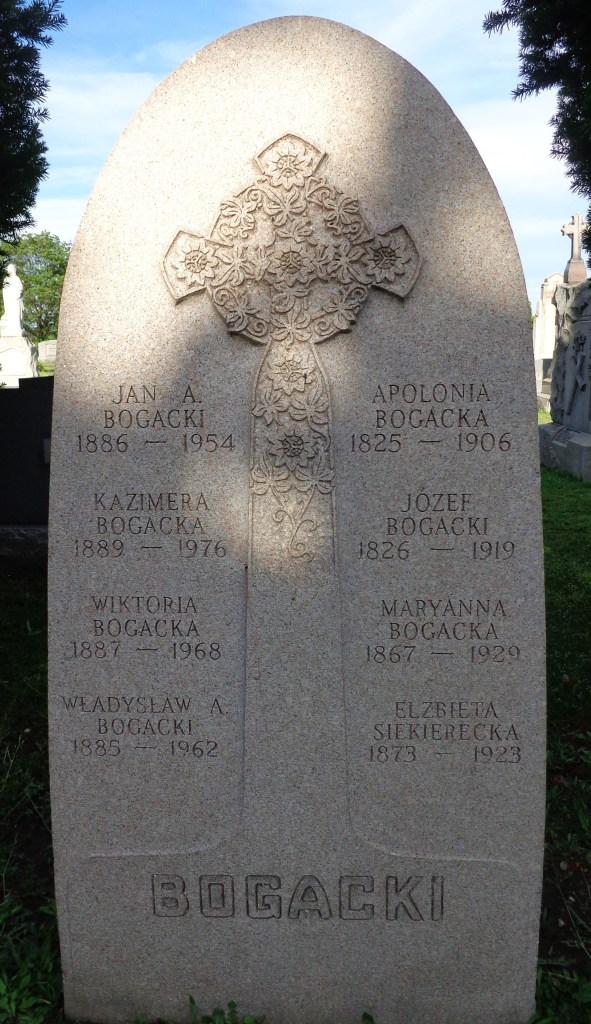
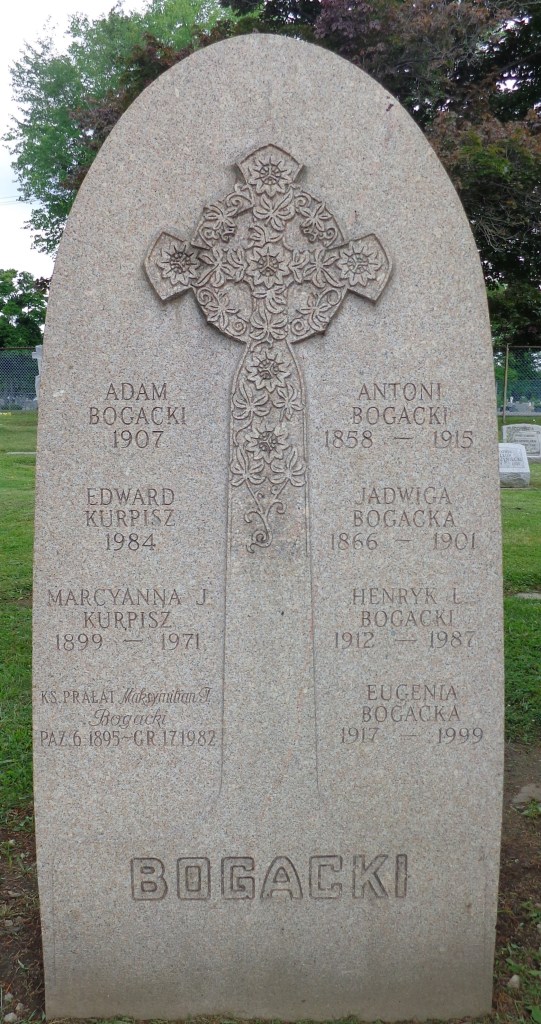


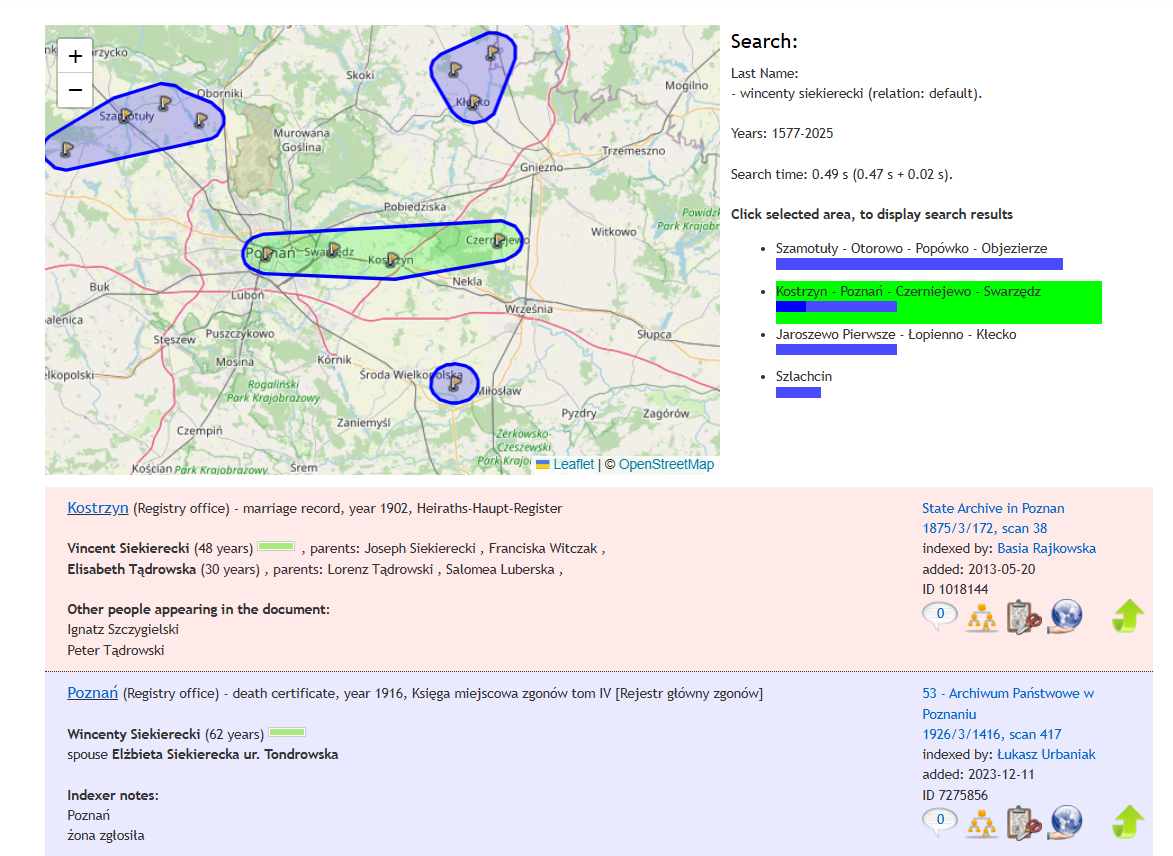



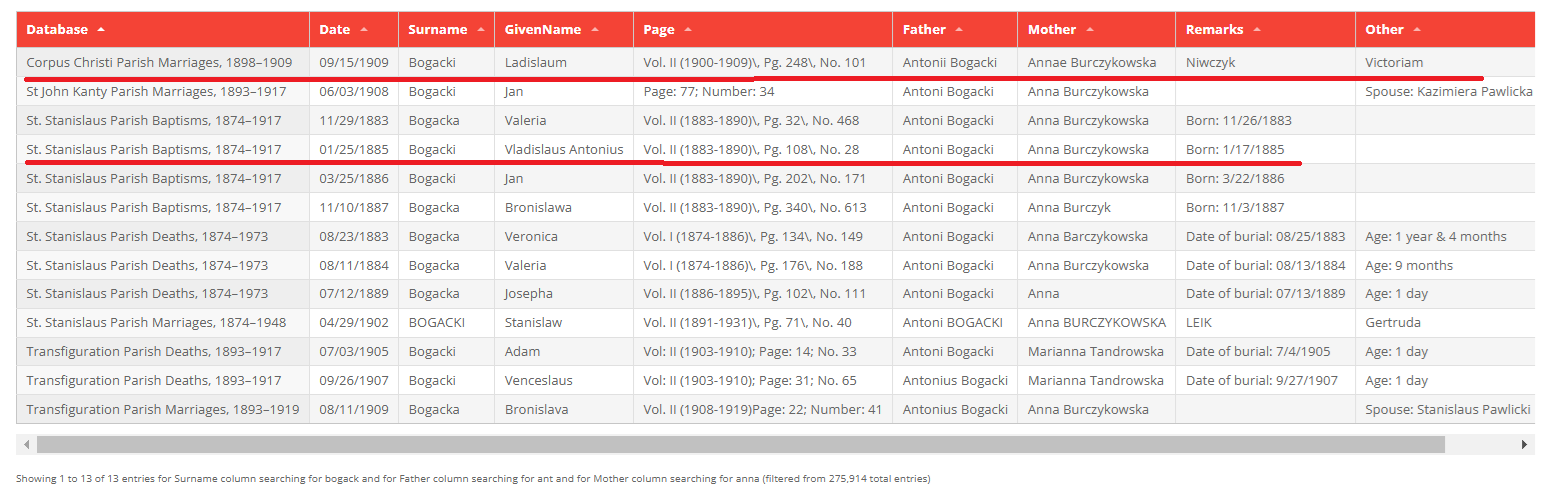
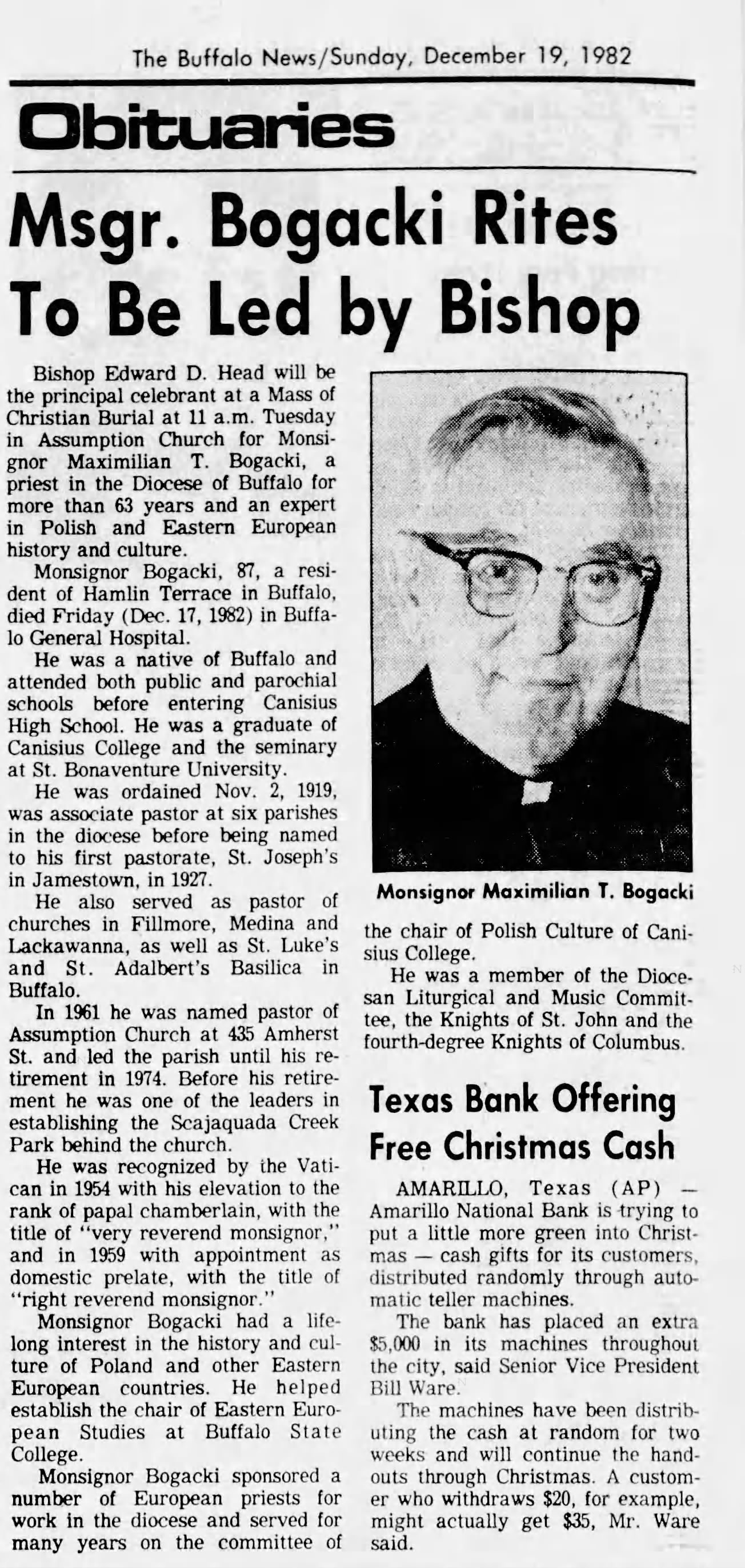

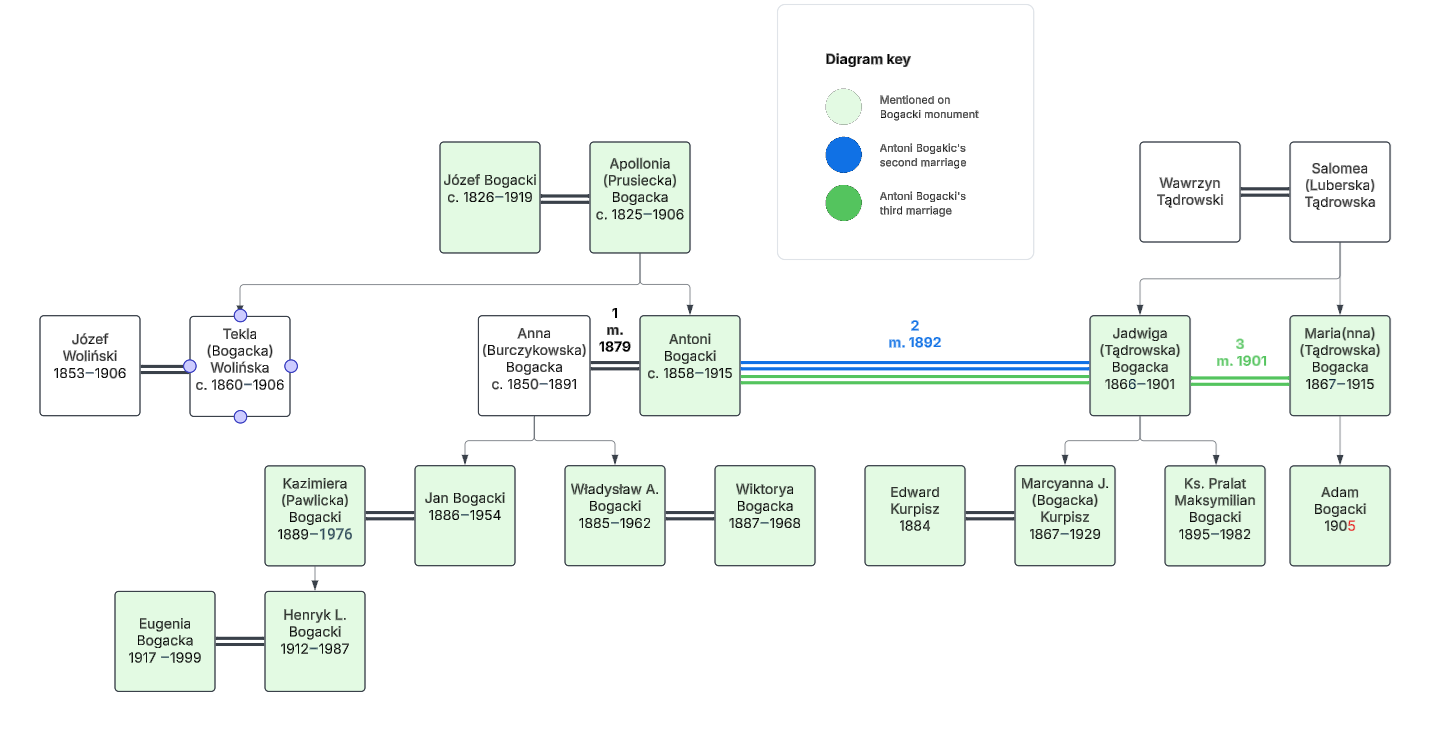
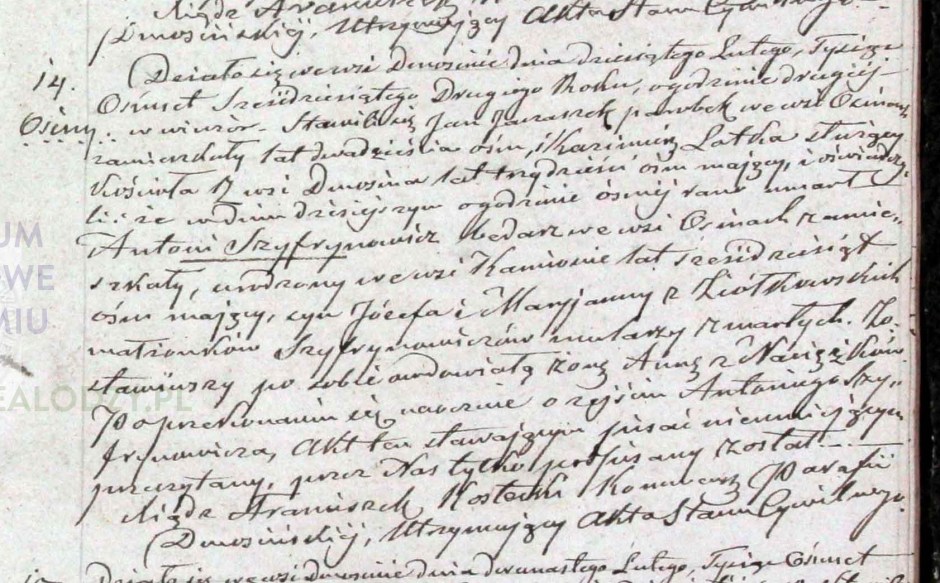


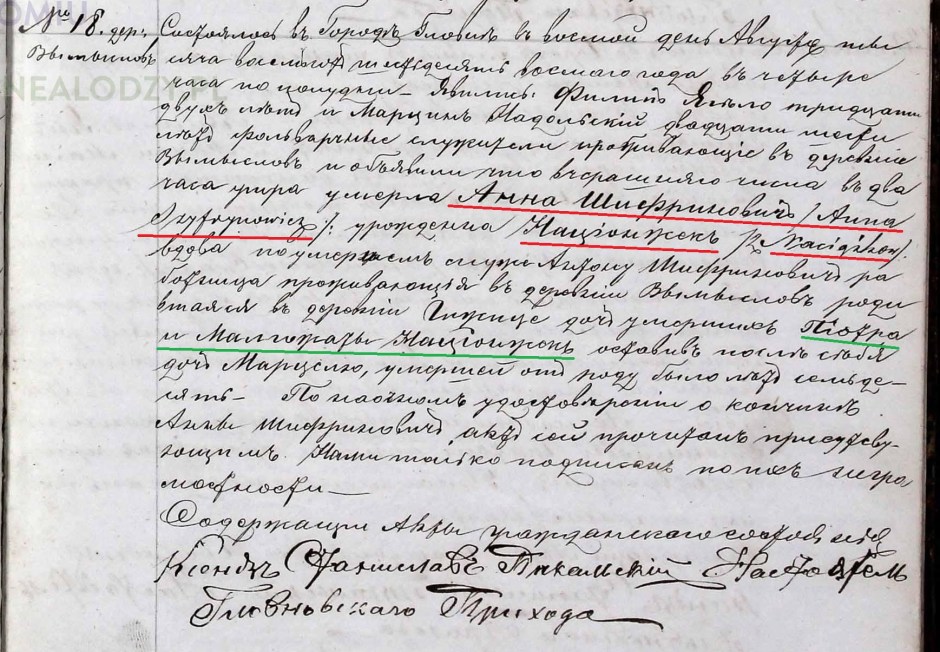


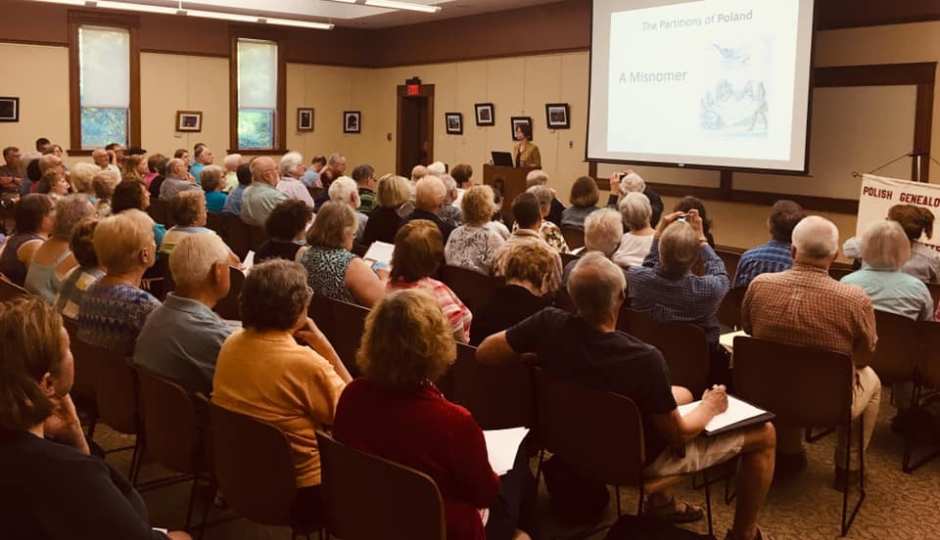

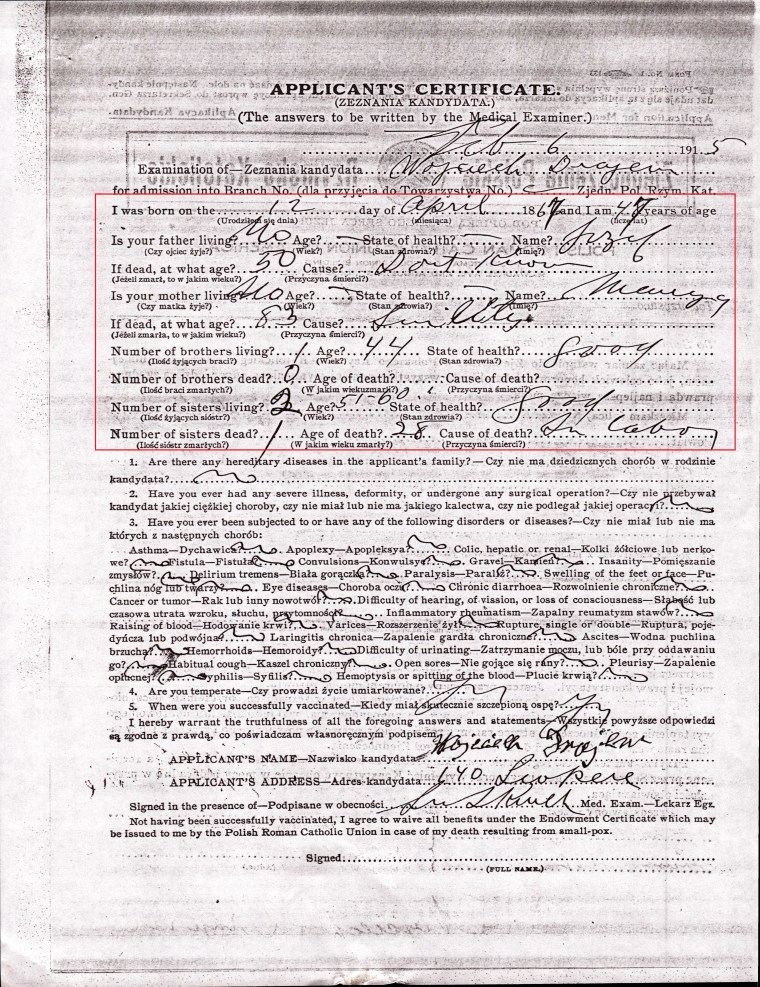

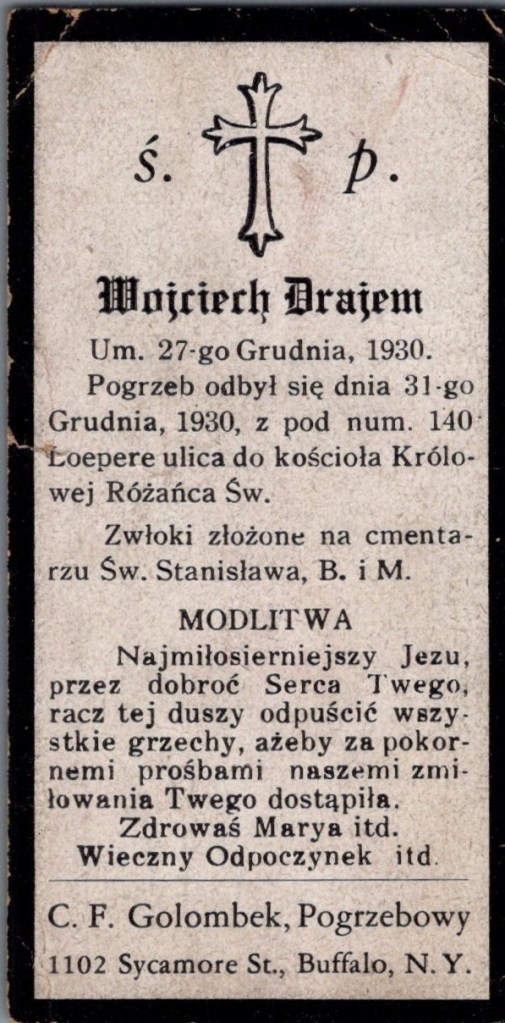


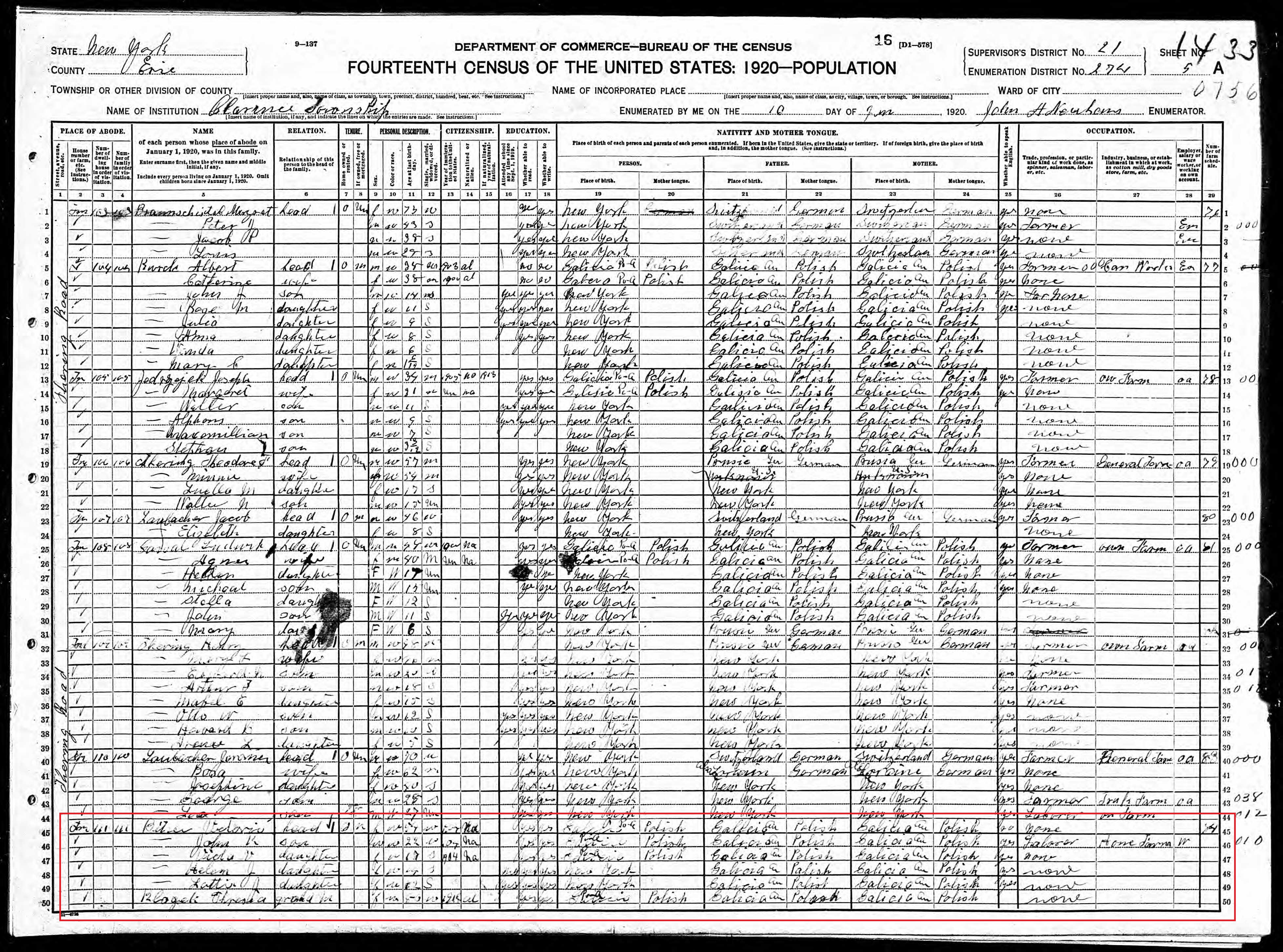

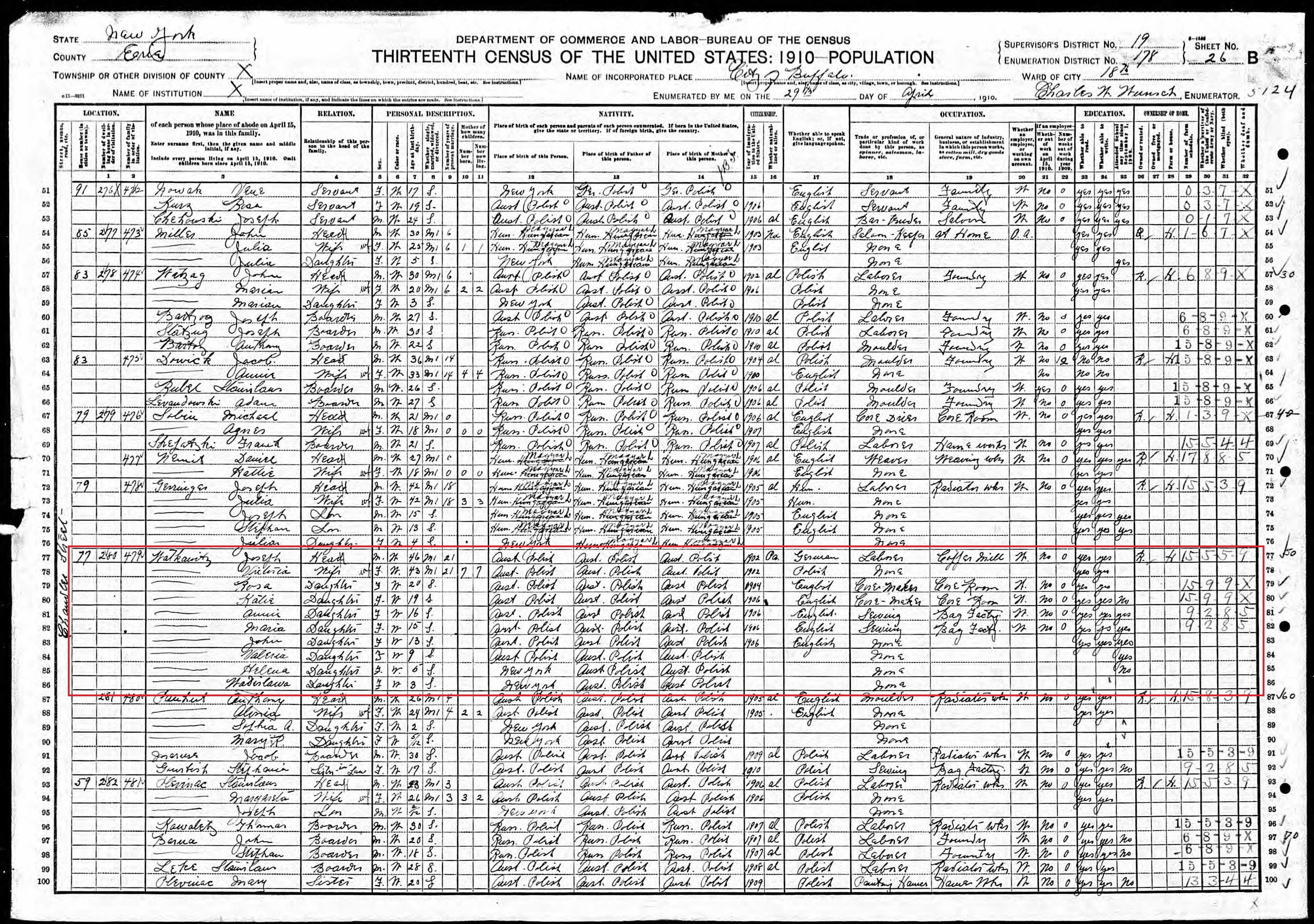


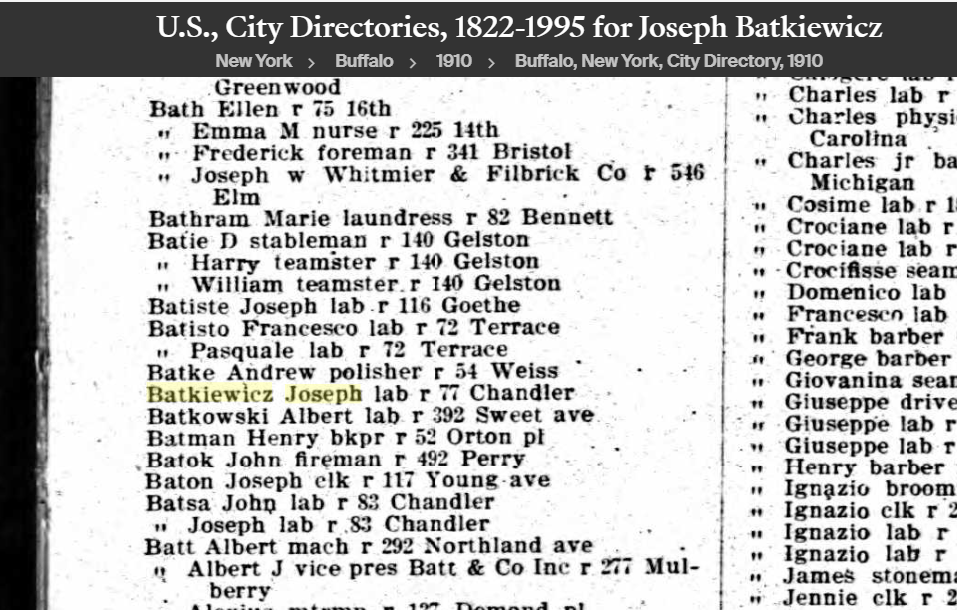






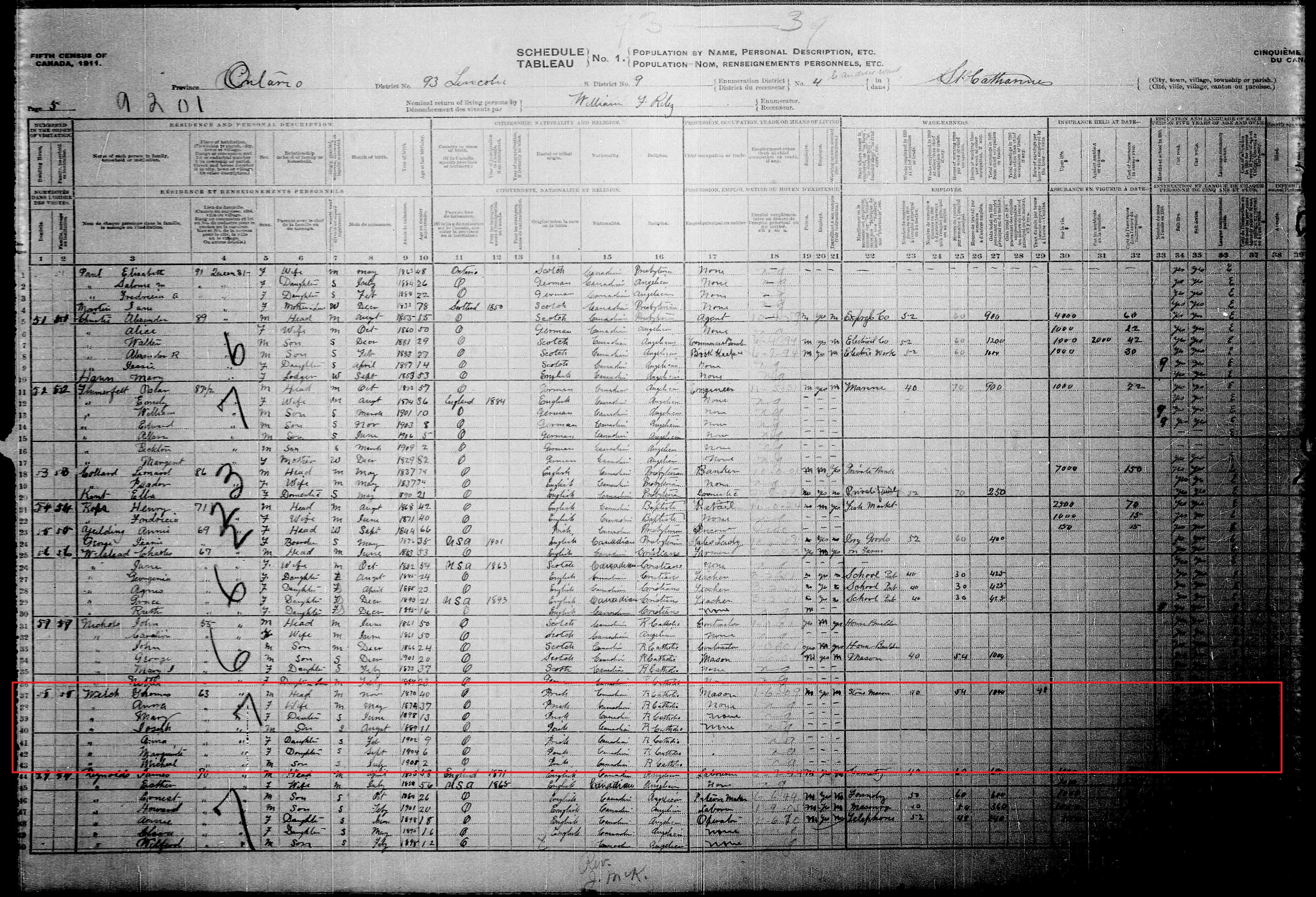
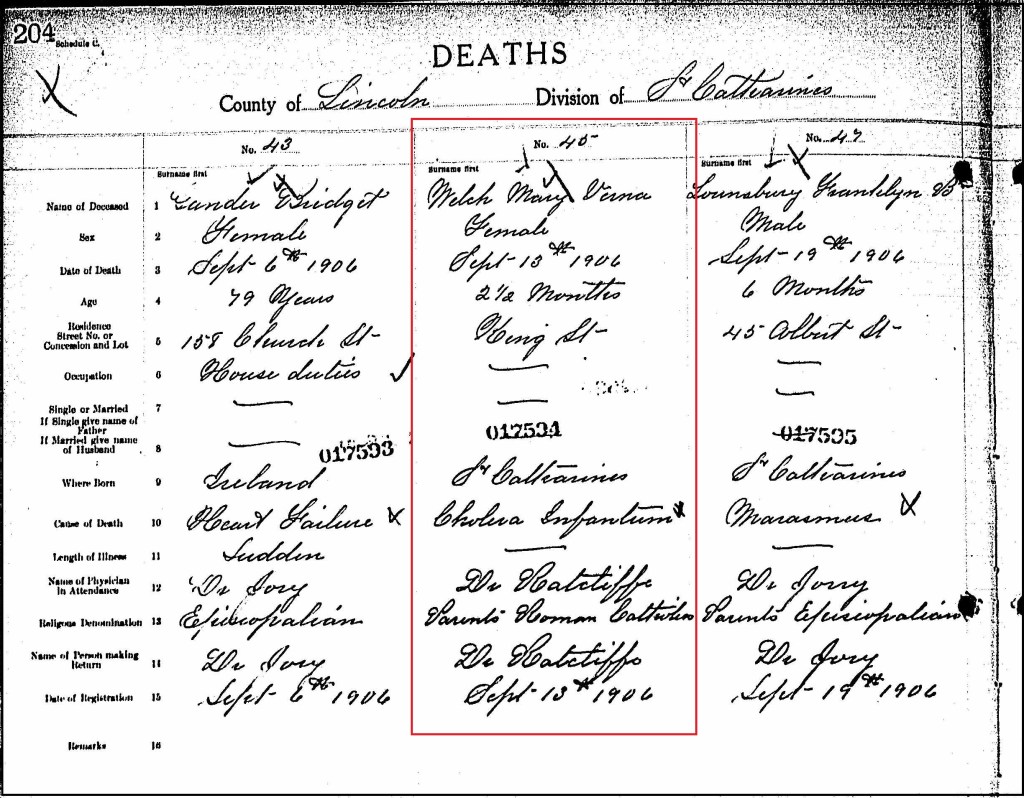

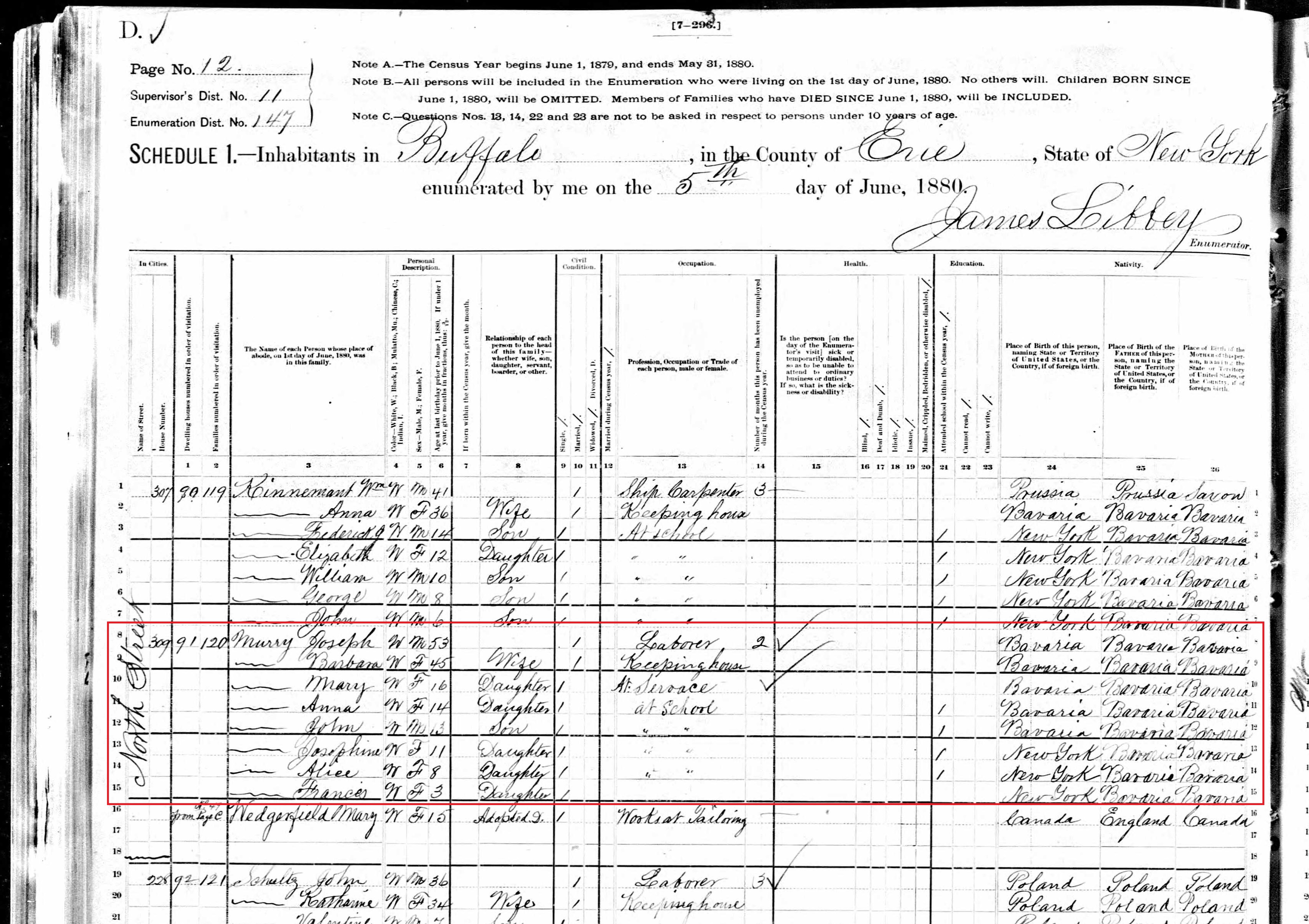
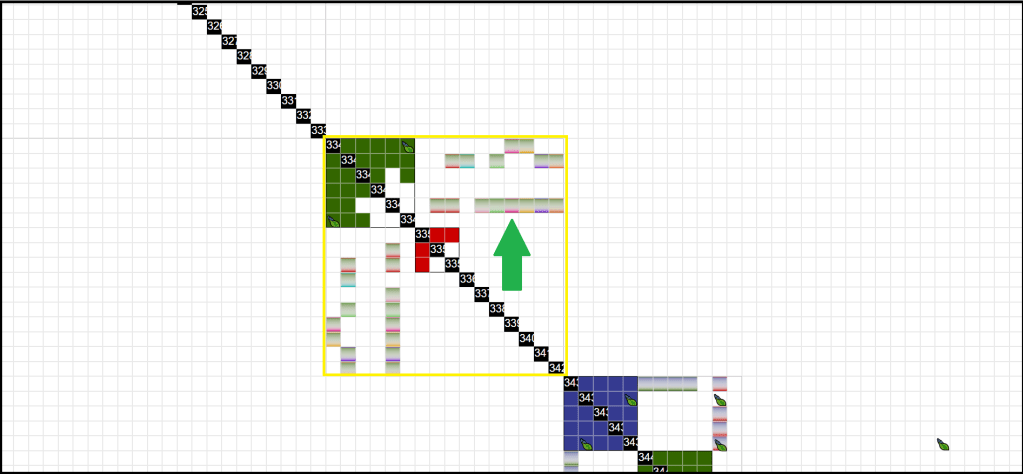

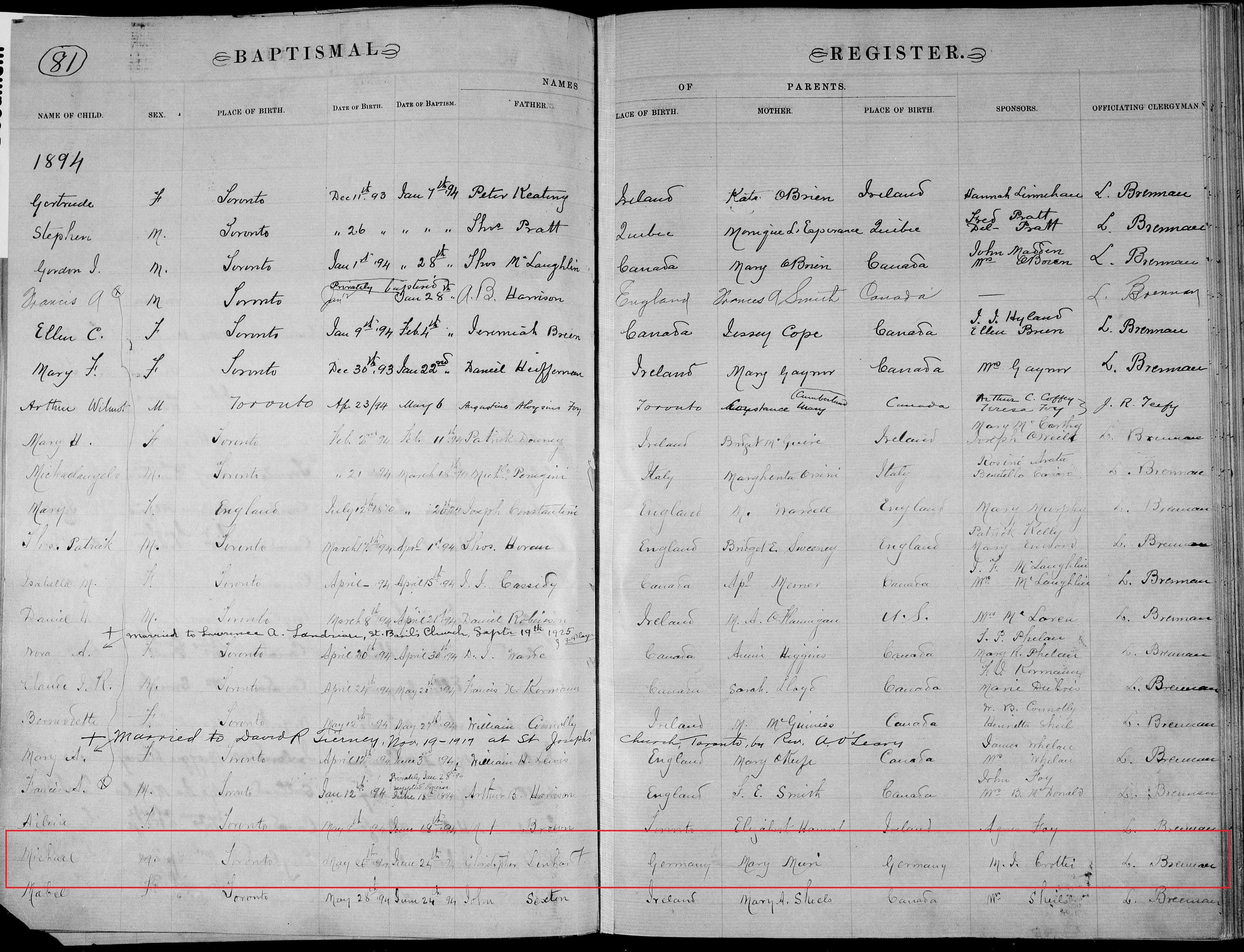


 From Shepherds and Shoemakers


