We genealogists love finding our ancestors’ signatures, right? Of course we do.
Well, recently I found what I believe are the authentic signatures of both my great-great-great-grandfather, Michael Roberts, and his son, my great-great-grandfather, Michael Frank (a.k.a Frank Michael) Roberts. Let me set the stage with a brief introduction to these gentlemen.
Michael Roberts (1834–1895)
It was the winter of 1894 when Michael Roberts lost his wife. It had been almost 37 years since Michael wed the former Maria Magdalena Causin in the beautiful Roman Catholic church of St. Joseph in Detroit, Michigan on 12 May 1857.1 The details of how they met, and whether it was a happy marriage or not, have been lost to time, but it is known that Michael was a German immigrant, born in the village of Heßloch in the Rhenish Hesse region of the Grand Duchy of Hesse (commonly known as Hesse-Darmstadt) to Franz Ruppert and Catherine, née Schulmerich.2 In 1853, he immigrated to Detroit, Michigan with his parents, his 17-year-old brother, Arnold, and his 15-year-old sister, Catherine.3 Although there is no notation on the manifest to reflect this, the family believed that Catherine died at sea, as explained in the following letter (Figure 1), written by Michael’s sister, Mary Roberts Standfield, to his grandson, John Frank Roberts.4
Figure 1: Undated letter from Mary Roberts Standfield (1862–1946) to her nephew, John Frank (aka Frank) Roberts, stating in the final sentence that “The daughter Katherine died on the ocean coming over.”
The letter also confirms that the family’s original surname, Ruppert, was changed to Roberts upon settling in Detroit, and that Michael’s oldest brother, Johann Georg, or George, as he was known in the U.S., arrived in Detroit before the rest of his family, settling there in 1851.4
Following his marriage, Michael worked as a carpenter to support his family.5 Michael and Mary had eight children, of whom the oldest four have living descendants. The family data are summarized below (Figure 2).
Figure 2: Family group sheet for Michael and Mary Magdalene (née Causin) Ruppert/Roberts.
Michael Frank (aka Frank Michael) Roberts (1858–1930)
Although I have no photographs of Michael Roberts, his oldest son, Michael Frank (known in later life as Frank Michael), is the stalwart Victorian gentleman shown here (Figure 3).
Figure 3: Michael Frank (aka Frank Michael) Roberts, 1858–1930.
In that winter of 1894, when his mother died, Frank was a 35-year-old architect living in Buffalo, New York;7 married, with four children. Frank had married Mary Elizabeth Wagner back in their hometown of Detroit, but they relocated their family to Buffalo about nine years earlier, in 1885.8 Mary Elizabeth was home, raising their four sons: 15-year-old Harry, 10-year-old John, 7-year-old George, and 3-year-old Bert.9
And so it was that on 27 February 1894, Mary Magdalene Roberts died intestate (without having written a will) in Nankin Township, Michigan. Her husband, Michael, petitioned the court for administration of her estate (Figure 4).10
Figure 4: Michael Roberts’ petition for appointment as administrator of the estate of his late wife, Mary (née Causin) Roberts.
According to this petition, Mary Roberts was in possession of an estate valued at approximately $800, which would be the equivalent of about $25,396 in today’s dollars.11 Since she died without naming an executor to handle her financial affairs following her death, her husband had to formally request this authority from the court. The document identifies Mary’s heirs at law, who were her children and husband, as
Michael F. Roberts, son, 36 years old, resides in Buffalo, N.Y.
Catherine Hecker, daughter, 34 years old, resides in Nankin, Wayne Co., Mich.
Mary P. Stanfield [sic], “, 32 ” ” ” ” Detroit, Wayne Co., “
Anna Carlston [sic], “30 ” ” ” ” Nankin, Wayne Co., “
and your petitioner, husband of deceased, who resides in Nankin, Wayne County, Michigan.
These children were named in birth order, and their ages and places of residence are reasonably consistent with prior evidence. It’s worth noting that Mary’s and Anna’s married surnames were misspelled as “Stanfield,” rather than “Standfield,” and “Carlston,” rather than “Carlson,” which underscores the variability in surname spellings that exists in historical records.
The handwriting throughout the document is fairly uniform, and the formation of the M’s and the R’s where they appear in “Michael” and “Roberts” is consistent, suggesting that the document was written by a single person; namely, the notary public. However, the handwriting in the signature is distinctly different, which suggests that it was written by Michael Roberts himself (Figure 5).
Figure 5: Signature of my great-great-great-grandfather, Michael Roberts, underlined in red.
Included within that same probate packet is a second petition for administration of an estate, this time written by Frank M. Roberts (Figure 6).
Figure 6: Frank M. Roberts’ petition for appointment of his sister, Mary P. Stanfield [sic] as administrator de bonis non of their mother’s estate.
This petition similarly identifies the children of Michael and Mary Roberts, but goes on to state, “…that Michael Roberts, husband of said deceased and her survivor and administrator of said estate, has departed this life,” and therefore Frank M. Roberts requested that administration de bonis non of the estate be granted to his sister, Mary P. Standfield. Presumably it was a matter of convenience for Mary (or any of his sisters) to handle the estate rather than Frank, since they were still living in the Detroit area, but this is somewhat speculative. In any case, Frank’s distinctive signature included at the bottom of the document (Figure 7), in addition to his father’s signature, made this probate packet an exciting find for me.
Figure 7: Signature of my great-great-grandfather, Michael Frank (or Frank Michael) Roberts.
1 Roman Catholic Church, St. Joseph’s parish (Detroit, Wayne, Michigan, USA), “Marriages, 1835-1866”, 1857, no. 15 (?), marriage record for Michael Ruppert and Magdalena Causin, Burton Historical Collection microfilm no. 1286, reel 32A, Detroit Public Library, 5201 Woodward Ave, Detroit, Michigan, USA.
2 Roman Catholic Church (Heßloch, Kr. Worms, Hesse, Germany), “Kirchenbuch, 1715-1876,” 1834, unnumbered entries in chronological order, baptismal record for Michael Ruppert, 1 February 1834, FHL microfilm no. 948719.
3 Manifest, SS Wm Tell, arriving 4 March 1853, p 9, lines 49-51, and p 10, lines 1-2, Franz Rupard family; imaged as “New York, U.S., Arriving Passenger and Crew Lists (including Castle Garden and Ellis Island), 1820-1957,” database with images, Ancestry (https://www.ancestry.com/ : 26 August 2021), citing National Archives microfilm publication M237, 1820-1897; List No. 146.
4 Mary Roberts Standfield (1862–1946), undated letter to her nephew, John Frank Roberts, Roberts family documents; privately held by Julie Roberts Szczepankiewicz, Hopkinton, Massachusetts.
4 Manifest, SS Vancluse, arriving 30 May 1851, p 5, line 23, Geo. Rupert; imaged as “New York, U.S., Arriving Passenger and Crew Lists (including Castle Garden and Ellis Island), 1820-1957,” database with images, Ancestry (https://www.ancestry.com/ : 24 August 2021), citing National Archives microfilm publication M237, 1820-1897; List no. 599.
6 1860 United States Federal Census, Wayne County, Michigan, population schedule, Detroit Ward 6, page 142, dwelling no. 1066, household no. 1148, Michael Roberts household; digital image, Ancestry (http://ancestry.com : 6 July 2021), citing NARA microfilm publication M653, roll 566 of 1,438 rolls; and
1870 United States Federal Census, Wayne County, Michigan, population schedule, Detroit Ward 6, page 476B, dwelling no. 998, household no. 1114, Michael Robert household; digital image, Ancestry (https://www.ancestry.com/ : 6 July 2021), citing NARA microfilm publication M593, roll 713 of 1,761 rolls; and
1880 United States Federal Census, Wayne County, Michigan, population schedule, city of Detroit, Enumeration District 298, page 123A, dwelling no. 92, household no. 92, Michael Roberts family; database with images, Ancestry (https://www.ancestry.com/ : 6 July 2021), citing NARA microfilm publication T9, roll 613 of 1,454 rolls.
8 George Whitcomb, compiler, Buffalo City Directory (Buffalo: The Courier Company, 1885), p 751, Roberts, Frank; browsable images, New York Heritage Digital Collections (https://nyheritage.org/ : 24 August 2021), image 763 of 1076.
9 1900 United States Federal Census, Erie County, New York, population schedule, Buffalo Ward 23, Enumeration District 190, Sheet no. 5B, house no. 439, family no. 127, Frank M. Roberts household; digital image, Ancestry (https://www.ancestry.com/ : 24 August 2021), citing National Archives and Records Administration microfilm publication T623, 1854 rolls, no specific roll cited.
10 Wayne County Probate Court (Detroit, Wayne, Michigan), Probate packet no. 19856, Mary M. Roberts, died 27 February 1894; browsable images, FamilySearch (https://www.familysearch.org : 24 August 2021), “Probate estate packets, 1797-1901,” FHL Film no.967194, path: Wayne > Probate packets 1894 no 19805-19856 > images 975-984.
For a genealogist, any day that brings three new death certificates in the mail is a good day.
Back at the end of April, I wrote about my discovery of my great-great-granduncle, Alexander Dodds, who disappeared from documentary evidence in Canadian records after the 1881 census. Thanks to clues provided by DNA matches, I was able to determine that Alexander migrated to Buffalo, New York where he married Hazel Jean (or Jennie Hazel) McCarroll and had two children, Della and Spencer, prior to his death in 1899. While searching for his death record in the Buffalo, New York Death Index, I serendipitously came across the entry for the death certificate of his brother, Gilbert M. Dodds, who died in 1898. Then, since I was already writing to the Buffalo City Clerk to request those records, I decided to add in a request for the death certificate of their older sister, Isabella (née Dodds) Smith. I’d known previously that Isabella died in Buffalo, but I’d never gotten around to requesting a copy of the record, so this seemed to be a good time to do it. After a long wait, those death certificates finally arrived, so let’s analyze them here, in the context of my existing research into my Dodds family.
Isabella Smith
My burning questions regarding my Dodds family concern the origins of my great-great-great-grandparents, Robert and Catherine Dodds, whom I’ve written about previously. Evidence points pretty consistently to a birth circa 1817 in England for Robert, and possibly a specific date of 28 January 1817 as was reported (probably by Robert himself) in the 1901 census.1 Less is known about Catherine’s place of birth, however, and there’s even some doubt about her maiden name, since it has been reported as both Irving2 and Grant.3 In that regard, the death certificate for Isabella (née Dodds) Smith was most informative, since it was the only one of the three death certificates to mention a maiden name for Catherine. (Figure 1).
Figure 1: Death certificate for Isabell [sic] H. Smith.4
Unpacking the other details from the certificate first, we can see that Isabell [sic] H. Smith of 381 Rhode Island Street in Buffalo, died on 22 September 1917 due to a cerebral hemorrhage which she suffered about 6 weeks previously. A contributing cause of death was chronic myocarditis. Isabella was noted to be a widow, born 4 November 1844 in Canada, and she lived in the U.S. for 24 years prior to her death, spending all of that time in Buffalo. That suggests an arrival in 1893, which is a few years off from the arrival in 1897 which she reported in the 1910 census, but still in the same ballpark.5 No immigration record can be sought to confirm her arrival date since the U.S. did not begin documenting Canadian-born immigrants until 1 October 1906.6 Isabella was laid to rest in the Buffalo Cemetery on 25 September 1917, and the informant on the death certificate was her oldest daughter, Margaret (née Smith) Moorhouse, who lived with her. Margaret reported that Isabella’s parents were Robert Dodds and Catherine Grant, which lends further support to the hypothesis that Catherine’s maiden name was Grant and not Irving. However, Margaret identified both Robert and Catherine as having been born in Canada, and this is almost certainly incorrect in Robert’s case, in light of the substantial body of evidence supporting the assertion that he was born in England.
Alexander Dodds
Next up, we have the death certificate for Alexander Dodds (Figure 2). The image I received is of rather low quality due to faded ink and darkened paper, but it’s nevertheless possible to read that Alexander Dodds died on 13 April 1899 due to pulmonary phthisis, which is more commonly known as tuberculosis. He was buried at Lakeside Cemetery on a date in April that’s difficult to make out, possibly the 23rd. Alexander was reported to be age 49 years, 1 month, and 25 days at the time of his death. Running that information through a date calculator points to a birth date of 19 February 1850, consistent with the expectation that he was born circa 1849-1850 based on his age reported in census records. He was a married laborer, born in Canada, who had been a resident in the U.S. for 15 years, and living in Buffalo for that entire time period. This suggests that he arrived in the U.S. circa 1884. Alexander’s parents’ names were reported to be Robert and Catherine, but no maiden name was given for his mother. Moreover, both parents were reported to have been born in England—a statement which is unlikely to be true in Catherine’s case. Alexander’s last place of residence was decipherable as Auburn Avenue, although the house number (212, perhaps?) is harder to read.
Figure 2: Death certificate for Alexander Dodds.7
The fact that Alexander was buried at Lakeside Cemetery is new information for me. Lakeside is an old, historic cemetery located in Hamburg, New York, about 10 miles south of Buffalo. Lakeside is managed by the Forest Lawn group of cemeteries, and they happen to have a fantastic website where one can search burials and even download cemetery records, such as this burial card for my great-great-grandmother, Martha Dodds Walsh, another sibling of Alexander, Isabella and Gilbert. Unfortunately, the information for Alexander which is offered on the website is much more limited. The service card (Figure 3) barely confirms the information on the death certificate, inasmuch as there is a burial record for an Alexander Dodds, but it offers no details about date of death, or parents’ names.
Figure 3: Service card for Alexander Dodds from Lakeside Cemetery, Hamburg, New York.8
Alexander’s age at the time of death, 40, is also in conflict with the information on the death certificate, which stated that he was 49 years old at the time of death. However, it may have been a transcription error, and in any case, the funeral director, “Geo. J. Altman,” is a match to the George J. Altman who was reported on Alexander’s death certificate as the undertaker.
Gilbert M. Dodds
Last, but not least, we have the death certificate for Gilbert M. Dodds (Figure 4).
Figure 4: Death certificate for Gilbert M. Dodds.9
The image quality here is only slightly better than that for Alexander’s death certificate, but the record states that Gilbert died on 4 January 1898 of pernicious anemia, a form of anemia caused by a deficiency in vitamin B12, with which he had been diagnosed five years previously. He was buried that same month in St. Catharines, Ontario, but the name of the cemetery was not provided, nor is the exact date of burial legible. Gilbert was reported to be age 42 years, 3 months and 25 days at the time of his death, suggesting a birth date of 11 September 1855. Estimates for his year of birth as suggested by census records and other documents ranged between 1855–1860, but the earliest records (e.g. the 1861 census)10 pointed to a birth year of 1855, so this certificate is in excellent agreement. He was married at the time of his death, and employed as a driver. As expected, Gilbert was born in Canada, but had been living in Buffalo for five years prior to his death, which implies an arrival in the U.S. circa 1893, so his arrival coincided with that of his sister, Isabella Smith. His last residence was at 408 Massachusetts Avenue, in close proximity to the final residences reported by his siblings (Figure 5). Finally, the certificate identifies Gilbert’s parents as Robert Dodds, born in England, and Catherine Dodds, born in Canada.
Figure 5: Map showing last residences of Dodds siblings Alexander, Gilbert, and Isabella Smith on Buffalo’s West Side. Google Maps.
Conclusions
Experienced genealogists know how valuable death records can be, especially when they identify the parents of the deceased. They’re also relatively easy to obtain, with just a letter and a check in the mail, so I’m always amazed by the fact that so many family historians only mention them in their trees when the scans are available online. The most significant drawback is that the information on a death certificate was not provided by the individual himself or herself, but rather by a family member or some other individual who was more or less acquainted with the deceased. Thanks to these death certificates, I was able to discover exact dates of birth for Dodds siblings Alexander, Gilbert, and Isabella Smith, as well as an exact date of death for Alexander. I identified Alexander’s final resting place as Lakeview Cemetery, which opens up the possibility of further research in cemetery records, in case they might have anything that’s not online. I obtained corroborating evidence for a number of previously-known facts in my family tree. And, although these certificates did nothing to dispel the confusion over Catherine Dodds’ place of birth, the certificate for Isabella Smith added to the growing body of evidence in support of the hypothesis that Catherine was a Grant by birth. All in all, that was a pretty good day, indeed.
11901 Census of Canada, Ontario population schedule, Lincoln and Niagara district no. 85, St. Catharines sub-district K, division no. 6, household no. 117, James Carty household; database with images, Library and Archives Canada (https://www.bac-lac.gc.ca/ : 17 August 2021), item no. 2026840, image no. z000079820, citing microfilm T-6480, RG31.
2 New York, Department of Health, Division of Vital Statistics, County of Erie, City of Buffalo, Death Certificates, 1935, vol. 820, no. 4549, Martha Dodds Walsh, 11 August 1935; Buffalo, New York, City Clerk, 1302 City Hall, 65 Niagara Square, Buffalo, New York.
3 “Ontario Deaths, 1869-1937 and Overseas Deaths, 1939-1947,” database, FamilySearch, (https://familysearch.org/ : 8 May 2021), Hannah Carty, 3 June 1914; Deaths > 1914 > no 19125-22410 > image 370 of 1638; citing Registrar General. Archives of Ontario, Toronto.
4 New York, Department of Health, Division of Vital Statistics, County of Erie, City of Buffalo, Death Certificates, 1917, vol. 273, no. 6001, Isabell H. Smith, 22 September 1917, Buffalo, New York, City Clerk, 1302 City Hall, 65 Niagara Square, Buffalo, New York.
5 1910 United States Federal Census, Erie County, New York, population schedule, Buffalo Ward 21, Enumeration District 206, Sheet 7A, house no. 18 1/2, family no. 27, William Smith household; digital image, Ancestry (https://www.ancestry.com/ : 18 August 2021), citing NARA microfilm publication T624, roll 947 of 1,178 rolls, FHL microfilm 1374960.
7 New York, Department of Health, Division of Vital Statistics, County of Erie, City of Buffalo, Death Certificates, 1899, Vol. 34, no. 258, Alexander Dodds, 13 April 1899; Buffalo, New York, City Clerk, 1302 City Hall, 65 Niagara Square, Buffalo NY 14202.
8 Forest Lawn Cemetery Group, burial records database, Forest Lawn (https://forest-lawn.com/ : 18 August 2021), service card for Alexander Dodds, buried Lakeside Cemetery, block one, grave 142.
9 New York, Department of Health, Division of Vital Statistics, County of Erie, City of Buffalo, Death Certificates, 1898, vol. 21, no. 71, Gilbert M. Dodds, 4 January 1898; Buffalo, New York, City Clerk, 1302 City Hall, 65 Niagara Square, Buffalo NY 14202.
10 1861 Census of Canada, population schedule, Canada West, Lincoln, Grantham, Enumeration District 4, p 80, lines 1-9, Robert Dodds household; digital images, Library and Archives Canada (https://www.bac-lac.gc.ca/eng/Pages/home.aspx : 19 April 2021 ), Item no. 1884852, citing Microfilm C-1048-1049.
If you’re reading this, you probably know how time-consuming genealogy can be. The supply of historical documents and individuals to research is endless, so before sitting down for a research session, it’s important to always be asking ourselves, “What is it I want to know?” Having a specific question in mind can help drive you toward the sources of information that are most relevant to the problem.
When I’m researching a DNA match, for example, my essential question is, “How am I related to this person?” I’m not interested in fully documenting that person’s family history; I just want to get to the documents that will allow me to connect him or her to my family tree. I think of this method as “quick and dirty genealogy,” but “goal-focused genealogy” might be a more accurate description. During or after the research session, I’m still careful to create source citations for each document I find, extract each piece of information from each document (e.g. name, date and place of birth, place of residence, etc.), and attach those source citations to each fact I create in my family tree. Nonetheless, keeping my focus on the goal permits me to ignore a lot of “low-hanging fruit”—documents that turn up quickly in a search of historical records databases (e.g. Ancestry or FamilySearch), but aren’t likely to give me the information I need to solve the problem. For example, if the 1940 census and the 1920 census both turn up in a database search for a given research target, I’m likely to ignore the 1940 census and investigate the 1920 census result. Why? Because the 1940 census didn’t ask questions about year of immigration or year of naturalization, while the 1920 census did ask those questions, and the information provided by that census record about immigration and naturalization is relevant to the process of tracing immigrant ancestors back to the Old Country. Recently, staying goal-focused enabled me to discover, in about 20 minutes, how a DNA match was related to me, and it made me so happy that I want to share that story with you today.
Introducing Fred Kowalski
Since this is a story about our Polish origins, I’ll call my DNA match Fred Kowalski (not his real name). Fred appeared in my list of autosomal DNA matches at 23&Me, and we were reported to share DNA in a single segment consisting of 51 centimorgans (cM, a unit for measuring genetic distance) on Chromosome 15. Shared matches gave me no clues regarding how we might be related; I didn’t recognize a single name in the list. In his profile on 23&Me, Fred reported that all four grandparents were born in Poland, and he gave me six family surnames to work with, including one that was familiar to me: Słoński. Painting the match onto my chromosome map at DNA Painter revealed that the segment shared with Fred falls into a larger segment of DNA which I inherited from my maternal grandmother, consistent with my preliminary hypothesis that our relationship might be through the Słoński family. Fred’s real surname is not especially popular, so a quick internet search turned up an online obituary for his father. From there, I used the subscription database at Newspapers to find an obituary for his grandmother. I’ll begin the story with her.
The Bengier Family of Steubenville, Ohio
Fred’s grandparents were Peter J. and Constance A. Bengier of Steubenville, Ohio. Constance’s obituary was very informative, but for the sake of this narrative, the most important information was that she was born in Poland on 6 April 1889 to Joseph and Anna Kujawa, and that she married Peter Bengier on 4 February 1907.
Figure 1: Newspaper obituary for Constance A. Bengier.1
Constance’s Social Security application (Figure 2) provided somewhat different information about her parents’ names, in that her father’s name was reported to be Stanley, rather than Joseph. Since Constance would have provided the information for this form herself, rather than another family member providing it after her death, we can consider the information from the Social Security Applications and Claims index to be more reliable than the obituary in this regard.
Figure 2: Information from Social Security Applications and Claims Index for Constance Anna Bengier.2
The 1930 census (Figure 3) provided additional details relevant to tracing the family back to Poland. Although the information on the entire family group is important when documenting the family history, my focus was on tracing the family back to Poland, and the data that was most germane to that issue is contained within the red box.
Figure 3: Image extracted from the 1930 census for German township, Harrison County, Ohio, showing the Bengier family.3 Click image to enlarge.
According to the census, Constance Bengier was age 41, suggesting a birth year circa 1889, nicely consistent with previous data from the Social Security application and her obituary. The census record offers enough additional evidence (such as names of other family members) for us to be certain that this Constance Bengier is a match to the Constance Bengier in the obituary. Once we establish that fact, then the most important piece of new information found in this record is her year of immigration, 1910, and the fact that her husband and oldest daughter also reported immigrating in that year. We would expect to find all of them on the same passenger manifest, or possibly on two different manifests, if Peter came over first to secure employment and lodging before sending for his wife and child.
The critical pieces of information that are required at minimum in order to locate an immigrant in records from his or her home country are the person’s name, approximate date of birth, parents’ names, and specific place of origin. With Constance Kujawa Bengier, I was nearly ready. The missing piece was evidence for her place of origin.
The Bengier Family of Wola, But Which One?
Since the 1930 census provided information about the year of arrival, I decided to seek a passenger manifest next. The Hamburg emigration manifest popped up first, revealing that Konstancia (or Konstancja, modern Polish spelling) Bengier departed from the port of Hamburg on 29 September 1910 at the age of 21, along with her 3-month-old daughter, Walerya (or Waleria, in modern Polish; Figure 4).
Figure 4: Detail from the Hamburg emigration manifest of the SS Cleveland, departing Hamburg on 29 September 1910, showing passengers Konstancia Bengier and her 3-month-old daughter, Walerya.4
The ages matched well with my expectations based on previous data. Given the propensity of immigrants for adapting their given names to sound more “American,” I was not surprised to find that the original name of the daughter, “Voila” (or Viola) from the 1930 census, was actually Waleria. If additional confirmation were required before concluding that this was the correct passenger manifest, the corresponding Ellis Island arrival manifest could also be located. In those days, it took about 2 weeks for a steamship to cross the Atlantic. Assuming no manifest turned up with a search of indexed records, one could browse the manifests in Ancestry’s database, “New York, U.S., Arriving Passenger and Crew Lists (including Castle Garden and Ellis Island), 1820-1957,” and look for the arrival of the Cleveland at the port of New York some time in mid-October 1910. However, as it happens, Ancestry’s database is incomplete, and there are instances such as this where the arrival manifest is not found. If this happens, Ellis Island arrivals can be searched directly at the Ellis Island site, or via Steve Morse’s more sophisticated One-Step search form. (Konstancja’s Ellis Island arrival manifest is here. It confirms and extends the information found in the Hamburg emigration manifest, but I won’t discuss it in detail since it was not part of my original research process.)
The key piece of information found in this manifest that permitted me to advance the search was her place of residence, which was recorded as “Wola,” in Russia. (If you’re wondering why a woman who said she was Polish in 1930 might have been coming from Russia in 1910, there’s an overview of those border changes here.) Now, if this were an ordinary research process, and not one guided by DNA, I would have needed a time-out here to fall back and regroup, and seek additional sources of documentation for Konstancja’s place of birth. That’s because “Wola” is one of those Polish place names that’s so common that it strikes fear into the hearts of even seasoned Polish genealogists. Just how common is it? Mapa.szukacz.pl, which is an interactive Polish map site, reveals that there are 848 places called Wola, or containing Wola in the full name, within the borders of Poland today. And that’s not counting all the additional places called Wola that were previously part of Poland, but are outside of Poland’s current borders.
The situation would have been ameliorated somewhat by the fact that Konstancja’s Wola was recorded as being located in the Russian partition, so we could safely ignore all the places called Wola that were within the German and Austrian partitions. Nonetheless, that would still leave us with a lot of places called Wola to check, unless we could find some additional documentation (naturalization records, church records, military records, etc.) that might provide some geographic clues to help us narrow the field. However, this was not an ordinary research process; it’s a genetic genealogy story, and one with a happy ending.
The Missing Link
Since my hypothesis was that I was related to Konstancja Kujawa Bengier through the family of her mother, Anna Słońska, I immediately suspected that “Wola” might be Wola Koszucka, a village belonging to the Roman Catholic parish of Kowalewo-Opactwo, where I’d found records for my Słoński ancestors. This Wola was in the Russian Empire in 1910, so it would fit the description found in the passenger manifest. Records for this area are indexed in a number of different databases, including Geneteka, BaSIA, the Poznan [marriage] Project and Słupca Genealogy. Each of those databases has its strengths and weaknesses, and there’s a fair amount of overlapping coverage between them. I decided to cut to the chase and search for a marriage record for Stanisław Kujawa and Anna Słońska first, since that would tell me Anna’s parents’ names, rather than searching for a marriage record for Piotr Bengier and Konstancja Kujawa, or a birth record for Konstancja. I plugged in my search parameters at the Słupca Genealogy site, and there it was, bada boom, bada bing! The marriage record for Stanisław Kujawa and Anna Słońksa which connected the dots (Figure 5).
Figure 5: Marriage record for Stanisław Kujawa and Anna Słońska from the parish of Kowalewo Opactwo.5
The record is in Russian, and here’s how I translate it:
“No. 12
Wola Koszutska
This happened in Kowalewo on the first/thirteenth day of November in the year one thousand eight hundred eighty-two at three o’clock in the afternoon. We declare that in the presence of witnesses Antoni Zieliński, age fifty, and Józef Buczkowski, age forty, both owners* of Wola Koszutska, on this day was celebrated a religious marriage between Stanisław Kujawa, bachelor of Wilczna, born in Cienin Kościelny, 27-year-old son of the laborers Łukasz and his deceased wife, Wiktoria née Przybylska Kujawa, and Anna Słońska, single, born and residing with her parents in Wola Koszutska, daughter of Antoni and Marianna Słoński née Kowalska, age twenty-two. The marriage was preceded by three announcements published on the eighth, fifteenth, and twenty-second days of October of this year in the local parish churches of Kowalewo and Cienin Kościelny. The newlyweds declared that they had no prenuptial agreement between them. This Act was read to the illiterate newlyweds and witnesses, and was signed by Us only. [Signed] Fr. Rzekanowski.”
*хозяева, a word which can mean hosts, landlords, owners, proprietors, or masters. In my experience, it’s used to describe the same individuals who were described in Polish-language records as gospodarze, peasant farmers who owned their own land.
The record stated that Anna was the daughter of Antoni Słoński and Marianna Kowalska, and her age at the time of her marriage 22, suggested a birth year circa 1860. I checked my family tree, and there she was, quietly sitting there the whole time, waiting to be rediscovered. Many years ago, I had added Anna to my family tree when I found her birth record, but I had never gone further with seeking a marriage record for her, or birth records for her children. Anna was born on 14 July 1860,6 and she was in my tree because her father, Antoni, was the son of Bonawentura Słoński and his second wife, Marianna Muszyńska, as evidenced by both Antoni’s birth record7 and the record of his marriage to Marianna Kowalska.8 But wait, there’s more! Bonawentura Słoński was the brother of my great-great-great-great-grandmother, Barbara (nee Słońska) Dąbrowska. Barbara and Bonawentura were both children of Wojciech Słoński and Marianna Duras,9 and it is they who are the most recent shared ancestors between me and this DNA match, whom I can now state is my documented fifth cousin once removed. Wojciech Słoński and Marianna Duras are the genetic and documentary link that connects me to the Bengier family of Steubenville, Ohio.
1 “Deaths and Funerals: Mrs. C.A. Bengier,” The Weirton Daily Times (Weirton, West Virginia), 3 August 1970, p. 2, col. 1; Newspapers (https://www.newspapers.com/ : 8 August 2021).
2 “Social Security Applications and Claims Index, 1936-2007,” database, Ancestry (https://www.ancestry.com : 8 August 2021), Constance Anna Bengier, born 6 April 1889, SSN 268447885.
3 1930 United States Federal Census, Harrison County, Ohio, population schedule, Geman township, E.D. 34-10, Sheet 7B, dwelling no. 174, family no. 175, Pete Bengier household; database with images, Ancestry (https://www.ancestry.com : 8 August 2021), citing National Archives and Records Administration microfilm publication T626, 2,667 rolls, no specific roll cited.
4 Manifest, SS Cleveland, departing 29 September 1910, p 2226, lines 288 and 289, Konstancia Bengier and Walerya Bengier; imaged as “Hamburg Passenger Lists, 1850-1934,” database with images, Ancestry (https://www.ancestry.com/ : 8 August 2021), citing Staatsarchiv Hamburg; Hamburg, Deutschland; Hamburger Passagierlisten; Volume: 373-7 I, VIII A 1 Band 226; Page: 2222; Microfilm No.: K_1815.
Yesterday was a bittersweet day for me. We closed the sale of my parents’ home, the home they custom-built in 2004 with an in-law apartment for my Grandma, Helen Zielinski, so she could live with them after Grandpa died. There were a lot of memories in that home, although (mercifully) not so many as there would have been had they lived there all their married lives. Nonetheless, cleaning it out prior to the sale was an enormous task, and one that fell entirely to my husband and me, since my mother passed away last October, my Dad was unable to participate due to his own health concerns, and my only sibling was unable to travel due to the pandemic. Since Mom and Dad’s home was located in Western New York, it was a solid 440 miles away from where I live in Massachusetts, necessitating a dedicated trip and a week of vacation days to go back and deal with the clean-out. Fortunately, my husband still has family in that area as well, so my sisters-in-love, Kristi and Kerri, generously made time to help with the sorting, shredding, donating, unpacking, and repacking that go with the job.
If you’ve ever cleaned out a house before, you know how overwhelming the task can seem. Mom and Dad had a very large basement that was packed with furniture, antiques, holiday decorations, unused home furnishings, and family treasures, all carefully organized in plastic storage bins and cardboard boxes. Mom had all of the boxes neatly labelled regarding their contents, but she and Dad saved everything. Pretty much every greeting card ever received, every report card, college notebook, every drawing made by a grandchild—it was all down in that basement, in rows of boxes stacked along the walls around the perimeter of the basement. It reminded me of that final scene from Raiders of the Lost Ark. And it wasn’t just Mom and Dad’s stuff. There were things in that basement from my grandparents and great-grandparents on both sides of the family, as well as my Mom’s maternal uncle, Joseph “J” Zazycki, whom she cared for in his final years. Grandma and Grandpa Zielinski’s entire bedroom set was there, with bed, mattress and both dressers, along with Grandma’s sewing machine, which I have vivid memories of watching her use when I was a child. There were the paintings that used to hang in their living room, the glider that once stood in front of their garage, the photo album that Grandma made with all the photos from her honeymoon, and the lamps that I remembered from the spare bedroom where my sister and I shared a bed during sleepovers at Grammy and Grandpa’s house. There was the old greeting card box that Grandma repurposed for storing crayons so my sister and I could color pictures when we came to visit. Grandma was from the generation that wasted nothing, so the box included some of the free crayons given out by restaurants so small diners could color their paper menus—crayons that were not discarded after the meal, but carefully and lovingly preserved by Grandma. The smell from that box of crayons immediately took me back to Grandma’s kitchen table circa 1973. Love, care, and memories were packed into every box and every corner.
It wasn’t just the basement that needed going through. Although I’d moved some of their furniture and belongings out of the house when I moved Mom and Dad into an assisted living apartment near me, there were living areas that remained untouched, including Dad’s office. My mother was a first-rate bibliophile, and she had at least a thousand books, many of which were beautifully bound, gilt-edged, hardcover editions of literary classics that were precious to her, still filling the shelves on either side of the fireplace. I wish I could have kept all of it, but where? My own attic and basement are already full from the accumulation of treasures that accompanies years of raising children, and we don’t have as much storage space as my parents did. What does one do with all this stuff? As the old saying goes, “You can’t take it with you.” I had to get in touch with my inner Marie Kondo and make some hard choices.
Some things ended up being easier to let go of than others, like the school desks. My mother had gone to elementary school at Our Lady of Częstochowa in North Tonawanda, New York, and at some point in the 1970s when the school was modernizing, they sold off the old-fashioned student desks. My parents decided to purchase two pairs of the desks, and Dad painstakingly refinished the wood, painted the metal legs, and mounted them on wood runners, after which my parents displayed them in the family room of our home in Cincinnati when I was growing up. My sister and I used to sit at them and play “school” when we were little, but I can’t see where they’d fit into my home today. Similarly, my Great-Grandpa John Boehringer’s fishing tackle box didn’t even make the “donate” pile, as it was all full of rusted fishing hooks and lures that seemed like a bad case of tetanus waiting to happen.
As a family historian, I hoped to balance the need for getting the job done quickly and efficiently, with the need for careful preservation of the family history. I’m not sure I was entirely successful in that regard, and I may live to regret some of the things that were donated, discarded, or sold at the estate sale. I prioritized saving photographs and any documents with historical value, although I decided to let go some of the newspapers they saved over the years, such as the last issue of Buffalo’s newspaper, the Courier-Express that was printed in 1982. (Probably half the population of Buffalo has a copy in their basement.) I saved the oak porch swing that Dad made that used to hang in front of the rose trellis at their house on Patton Place, but I said goodbye to the old Cardinal phonograph that my parents bought when we lived in Cincinnati.
Mom and Dad’s Cardinal phonograph, circa 1920.
Our old Fisher-Price toys had to go, as did the cedar chest, but I saved the afghans made by my Mom and by Nana Boehringer, my mother’s journals, and my Dad’s flight log books from when he obtained his commercial pilot’s license in 1971. Many of the documents from my Dad’s youth, such as his old report cards, were charred by the house fire that largely destroyed my paternal grandparents’ home in 1978 while they were vacationing in Florida, and I discovered all the documentation—insurance records, building receipts—related to rebuilding that house after the fire, which had been carefully saved by my grandfather.
As I sifted through the ephemera of half a dozen lifetimes, I was struck not only by what people chose to save, but also by how these things were saved. The heart-shaped wreath of roses that adorned her father’s casket was preserved by my mother with such care that not a petal was lost. All of her school report cards were organized into neat little packets. Uncle J’s wallet, address book, check registers, and vital records were all boxed together with his collection of family photos. My Dad, on the other hand, had a whole pile of letters and postcards from family, stashed in the bottom of his duffel bag from Vietnam, buried underneath his boots and flight suit. His Air Force dress uniform, on the other hand, was hung neatly in a wardrobe box, with all of his medals and ribbons still attached to the coat. My paternal grandfather’s wallet was intact, with all his credit cards, driver’s license, and precisely $37 in cash, exactly as he left it when he passed away in 1996. The money is worth less now than it was then, thanks to inflation, and one wonders why it was never removed. The wallet was tucked safely within a steel lockbox that previously belonged to his father-in-law (Grandpa John Boehringer), which also contained stock certificates from the 1930s from companies which no longer exist, and property tax receipts dating back to the 1950s for my grandparents’ home on Grand Island.
Stock certificate from 1935 for 250 shares of stock in Lakeland Gold Limited, owned by my great-grandmother, Anna (née Meier) Boehringer.
Such careful preservation serves as a silent testimony to each person’s values and circumstances. We come to know and understand our loved ones better through the cherished things they left behind.
Here are a few additional photos of some of my favorite finds:
Small change purse containing pocket watches and rings belonging to my great-grandfather, John Boehringer. I checked with my Aunt Carol, who’s pretty sure that the rings are costume jewelry, since Nana Boehringer’s real engagement and wedding bands were stolen in a burglary in the 1950s.
Undated photograph of my great-grandmother, Veronica (née Grzesiak) Zazycki and her daughter, Antonette (née Zazycki) Topolski.
I’m pretty sure this is a photo of my grandmother’s brother, Roman Zazycki (1902-1926). Uncle Roman was the twin brother of Uncle Bolesław (“Ben”) Zazycki, but he died young, after injuring his leg in a factory accident and subsequently developing tuberculosis in the bone of that same leg. I’d never seen a photo of him before, but from this photo, I’d say that he and Uncle Ben were identical twins, rather than fraternal!
Undated photo (circa 1950s) of my mother, her cousin Fred Zazycki, and Uncle J (the “horse”).
Oldest known photo of my great-great-grandmother, Mary Elizabeth (née Wagner) Roberts, circa 1880s. This photo wasn’t in my parents’ things, but was given to me by my Aunt Carol while we were in town. This version was downloaded from MyHeritage after being uploaded there for enhancement and cleanup.
It’s going to take me quite a while to sort through all the boxes of photos, papers and sentimental artifacts which I brought home from New York. Nothing is promised, but I hope to live long enough to organize the photos and documents in such a way that my kids will have a cohesive family history collection to preserve and pass on, or to dispose of as they see fit. Although family history is my passion, I don’t know if any of my kids will eventually take up the torch, and I know first-hand how material goods can quickly become burdensome if they were precious only to someone else. In the end, our greatest legacy is the love we show to our families, and the memories we make with them. The “stuff” is secondary; yet within those collections, there are stories waiting to be told.
Discoveries on my Dodds line are coming thick and fast these days, thanks to hints found in my paternal aunt’s DNA match list. This past week, I discovered the fate of one John H. Dodds, the fifth child of my great-great-great-grandparents, Robert and Catherine (Grant or Irving?) Dodds. I’ve written about my Dodds family recently, and the question of Catherine’s parentage is one of the brick walls in my research, which was summarized here.
Introducing John Dodds
Like his brother, Alexander, who was the subject of my last blog post, John Dodds was first found to be living with his family in St. Catharines, Ontario, in 1861 (Figure 1). John was seven years old, suggesting a birth year circa 1854. His father, Robert Dodds, was a laborer, born circa 1822 in England, and a W[esleyan] Methodist. His mother, Katherine [sic] Dodds, was born in Upper Canada circa 1830, according to this document, but that year is suspect since their oldest child, Hannah, was recorded as being 19 years of age, which would imply that Catherine gave birth to her at the age of 12.
By 1871, the family had moved to Yarmouth Township in Elgin County (Figure 2). John H. Dodds was reported to be 18 years of age, which suggests a birth year circa 1853. He was born in Ontario, was employed as a laborer, and was reported to be of English origin through his father, but of the Presbyterian faith, along with his Scottish mother. Despite the family’s varying religious practices, the names and ages of the family members confirm that this is the same Dodds family found in 1861. This census also suggests a more reasonable birth year of 1820 for John’s mother, Catherine Dodds, since she and her husband were both noted to be 51 years of age.
After this census, however, John H. Dodds seemed to disappear. There were no good matches for him living anywhere near other members of his family, and his name was sufficiently common that chasing down each John Dodds living in North America after 1871 seemed like a thankless task. As was the case with Alexander, the trail grew cold in absence of better clues.
DNA Shows the Way, Again
However, buoyed by my recent success with tracking down Alexander Dodds, I went back to Ancestry DNA to see if I could use my paternal grand-aunt’s match list to find any additional clues to illuminate my Dodds research. Although I most often use the “shared matches” feature for this, this time around I did a search of the match list for any matches which mentioned the surname Dodds in their family tree. A match came up to a woman whom I’ll call B.Y. (again, not her real initials) whose public, linked tree featured a great-great-grandfather named John Dodds. Although the parents of this John Dodds were not known, there was some promising evidence in the tree that suggested that this might be “my” John Dodds, son of Robert and Catherine. For starters, the 1900 census showed that John Dodds was born in February 1860 in English Canada, i.e. Ontario (Figure 3).
Figure 3: Detail of 1900 U.S. census showing John Dodds household.
A birth year of 1860 would make him a few years younger than “my” John Dodds ought to be, given previous evidence that suggested a birth year circa 1853-1854. However, this census also notes that his wife, Lena Dodds, was born in January 1874, so it may have been that John was fudging a bit to minimize the 20-year age difference between him and his wife. The Dodds family was living in Pike township, Potter County, Pennsylvania—a rural area about 125 miles due south of Rochester, New York. Without this clue from DNA evidence, it’s safe to say I never would have thought to look for “my” John Dodds there, nor would I necessarily have recognized him as the same John Dodds, even if he did turn up in a search of this census. According to this census, John Dodds’ father was born in Canada and his mother was born in England, while the reverse is true for “my” John Dodds. Between that, and the discrepancy in his age, it would have been easy to dismiss any connection, based solely on this one document. But just wait.
By 1900, John had been married to his wife, Lena, for eight years, suggesting that they married circa 1892. John was employed as a farmer who owned his own farm. He was further reported to be an alien who had been living in the U.S. for 19 years, following his arrival in 1881. The year of arrival would explain his absence from the 1881 census of Canada. Lena Dodds was born in Pennsylvania, as were both of her parents. She was noted to be the mother of two children, both of whom were living at that time and appear in this census. Those children were Flossie H. Dodds, born February 1895, and Robert L. Dodds, born August 1897.
The death certificate for John and Lena’s son, Robert L. Dodds, confirmed the information in B.Y.’s linked tree, that Lena Dodds’ maiden name was Frazier (Figure 4).4
Figure 4: Detail of Robert L. Dodds death certificate showing parents’ names.4
We can be certain that the Robert L. Dodds described in this death certificate is the same Robert L. Dodds as the son who appeared in the 1900 census because the date and place of birth, 20 August 1897 in [West] Pike, Pennsylvania, are a match.
John Dodds’ own death certificate confirmed that his father’s name was Robert Dodds (Figure 5).
According to this document, John Dodds died on 24 June 1941 in Ulysses, Pennsylvania—a borough in Potter County, the same county in which John was living in 1900. He was married, and his wife’s name was given only as Lena M. Dodds, no maiden name indicated. He was reported to have been born on 24 February 1860 in Canada, a data consistent with the date of February 1860 reported on the 1900 census. The day and month of birth may well be correct, even if the year is off. His father was identified as Robert Dodds, born in England, and his mother’s place of birth was identified as Canada, although her name was not known by the informant, Mrs. William Straitz of Coudersport, Pennsylvania.
So far, so good. Based on the preliminary evidence from these three documents, we can hypothesize that John Dodds of Potter County, Pennsylvania, who was the husband of Lena Frazier Dodds and was born in Canada circa 1860 to Robert Dodds and an unknown mother, is the same as the John H. Dodds in my family tree. If this hypothesis is correct, then B.Y. would be a second cousin twice removed (2C2R) to my Dad’s aunt. The amount of DNA shared between them, 51 centimorgans (cM), is consistent with this relationship, although other relationships are also possible, including 1/2 2C2R, which is statistically more probable than 2C2R. (That’s another question for another day.) At this point, I figured we could really use a marriage record for John Dodds and Lena Frazier, indicating parents’ names, to tie all this together.
Midnight Madness
You know those late-night research sessions where you’re on a roll, and things are moving fast, and in the heady excitement of the moment, you’re not making notes about the process as carefully as you should? If you’re reading this, of course you do. Well, that happened to me when I made the breakthrough discovery on my John Dodds research, and for the life of me, I can no longer recall exactly what it was that inspired me to look for the record of his marriage to Lena Frazier in New York, rather than in Pennsylvania. But for some reason, I did just that: I checked the Allegany County, New York pages of the New York GenWeb project. If you’re unfamiliar with the USA GenWeb Project, you should definitely check it out, drilling down to your particular counties of interest, because it’s a fantastic resource that has been a favorite of mine since its inception in the late 1990s. In this case, the Allegany County page offers vital records transcriptions, including a page of marriage transcriptions from the town of Willing, New York, covering 1849-1920 (Figure 6).
And there it is! Smoking-gun evidence that John Dodd [sic], the 34-year-old farmer residing in Potter County, Pennsylvania, who married Lina [sic] Frazier, was the son of Robert Dodd [sic] and Catherine Grant. John’s age suggests a birth year of 1857, a bit closer to the probable reality of 1853-1854, and he was born in Canada, as expected. One wonders if this was perhaps a second marriage for him, since a “1” was recorded in the “No. of marriage” column for Lena (indicating this was her first marriage) but there is no notation in the corresponding column for the groom. Of course, it may be that this information was merely omitted from the transcription. In a column on the far right, which does not appear in this image, it states that the marriage took place on 20 April 1891, which is an approximate match to the information from the 1900 census that they were married in 1892. In fact, when I wrote to the Willing town clerk to request a copy of the actual marriage record, she informed me that the marriage date according to their records was 20 April 1892, not 1891, so mistakes do happen. It may be that the original record is exceptionally faded or illegible, which impacted the indexer’s ability to read both the marriage date, and any information that may have been recorded in the “no. of marriage” column for the groom.
Tag-Team Genealogy
Of course, there’s quite a bit more research that can, and should, be done to tell this family’s story. Nonetheless, by this point I was so excited that I emailed my Aunt Carol to tell her I’d found our John Dodds, after which a busy week ensued with little time for additional research. However, Aunt Carol took up the cause and was able to fill out the family tree quite nicely with loads of additional documents. Among her discoveries were two documents that I found to be especially noteworthy. The first was an entry in the 1880 census from Foster Township in McKean County, Pennsylvania, for the household of Gilford [sic] and Jno. [sic] Dodd [sic], two laborers who were lodgers at a boarding house run by David and Caroline White (Figure 7).
Figure 7: Detail of 1880 census showing Gilford [sic] and Jno. Dodd [sic].7
The township of Foster is located just south of the New York-Pennsylvania border, and about 50 miles west of Willing, New York, where John Dodds would eventually marry Lena Frazier. “Jno” is an old-fashioned abbreviation for “John” commonly found in genealogical documents. John was reported to be single, and age 24, which suggests a birth year circa 1856. We’re inching ever closer to the years 1853-1854 reported in the earliest documents, which are likely to be the most accurate. He was born in Canada, to Canadian-born parents. A residence within the U.S. in 1880 would be fairly consistent with the immigration year of 1881 which John Dodds reported in the 1900 census.
John and “Gilford” Dodd were enumerated as their own household, separate from the household of the boarding-house owner and the other tenants, which might be construed as evidence for a family relationship, rather than John and “Gilford” being two random boarders who happened to share a surname. In fact, “Gilford” is likely to be Gilbert M. Dodds, John’s brother, who was age 15 in the 1871 census, suggesting a birth year circa 1856. Gilbert does not appear in the 1881 census of Canada, and this record does a nice job of explaining why that might be. According to this census, “Gilford” was single and age 22, which points to a birth year circa 1858. He, too, was said to have been born in Canada of Canadian-born parents. Gilbert would eventually marry Annie Mann on 11 November 1885 in Port Stanley, Elgin County, Ontario8 and I’m pretty sure he died in Buffalo, New York,9 but that’s another story for another day. (I’m still waiting for his death certificate to arrive in the mail!)
The second neat bit of evidence that Aunt Carol found was the World War I draft registration card for John’s son, Robert Lawrence Dodds—the same Robert L. Dodds whose death certificate is shown in Figure 4. The subject of the draft card (Figure 8) resided at 504 Sullivan Street in Elmira, New York. He was born on 20 August 1897 in West Pike, Pennsylvania—information which matches that found on the death certificate for Robert L. Dodds exactly. His nearest relative was noted to be Lena Dodds, living in Ulysses, Pennsylvania, and a further identification of “mother” was written to the right of her name. Although his father’s name was not mentioned on this document, the form included a space for the father’s birthplace, and here it was noted that Robert Lawrence Dodds’ father was born in Port Stanley, Canada.
Port Stanley, Ontario, no longer exists as an independent municipality today. It’s a small place that was amalgamated with the village of Belmont and with Yarmouth Township—where the Dodds family was known to be living in 1871—to form the municipality of Central Elgin in 1998.11 Since the earliest document found to date for John Dodds was that 1861 census in which the family was living in St. Catharines, Ontario, the information from this draft card, if accurate, suggests a different timeline for the family of Robert and Catherine Dodds than the one I’ve been envisioning for them. If the family were living in Port Stanley circa 1853 when their son John was born, then perhaps Robert and Catherine started their marriage in Elgin County and then moved to St. Catherines, rather than the reverse. Of course, this is all speculative, and there are still many questions which have yet to be answered about the early life of the Dodds family, their migrations, and about the identities of Robert’s and Catherine’s parents. But little discoveries like the ones I’ve made this week give me hope that maybe, if I keep chipping away at it, those brick walls will eventually crumble.
Sources:
1 Census of Canada, 1861, population schedule, Canada West, Lincoln, Grantham, E.D. 4, p 80, lines 1–9, Robert Dodds household, accessed as digital images, Library and Archives Canada (https://www.bac-lac.gc.ca/eng/Pages/home.aspx : 28 April 2021 ), Item no. 1884852, citing Microfilm C-1048-1049.
2 Census of Canada, 1871, population schedule, Ontario, East Elgin, Yarmouth, David Parish, division no. 2, p 73, lines 2–8, Robert Dodds household, accessed as digital images, Library and Archives Canada (https://www.bac-lac.gc.ca/eng/Pages/home.aspx : 28 April 2021 ), item no. 454129, citing Microfilm:C-9898, Reference:RG31.
3 1900 United States Federal Census, Potter, Pennsylvania, population schedule, Pike Township, enumeration district (ED) 107, sheet no. 2B, dwelling 35, family 38, John H. Dodds household; digital image, Ancestry (http://www.ancestry.com : 8 May 2021); citing NARA microfilmT623, 1854 rolls, no roll specified.
4 “Pennsylvania, U.S., Death Certificates, 1906-1967,” database, Robert L. Dodds, 13 April 1968, certificate no. 040689-68; digital image, Ancestry (https://www.ancestry.com/ : 8 May 2021), certificate no. range 039901-042750, image 804 of 2909; citing Pennsylvania (State). Death certificates, 1906-1968. Series 11.90 (1,905 cartons). Records of the Pennsylvania Department of Health, Record Group 11. Pennsylvania Historical and Museum Commission, Harrisburg, Pennsylvania.
5 “Pennsylvania, U.S., Death Certificates, 1906-1967,” database, John Dodds, 24 June 1941, certificate no. 7817, digital image, Ancestry (https://www.ancestry.com/ : 8 May 2021), certificate no. range 005251-008250, image 3142 of 3654; citing Pennsylvania (State). Death certificates, 1906-1968. Series 11.90 (1,905 cartons). Records of the Pennsylvania Department of Health, Record Group 11. Pennsylvania Historical and Museum Commission, Harrisburg, Pennsylvania.
6 Charlie Barrett, “Historic Records – Willing, Allegany Co., New York, Marriages, 1849-1920,” database, John Dodd and Lina Frazier, 20 April 1891, “Allegany County, New York,” NYGenWeb (http://allegany.nygenweb.net/index.html : 8 May 2021).
7 1880 United States Federal Census, McKean County, Pennsylvania, population schedule, Foster Township, Enumeration District (E.D.) 77, Sheet 51A, household no. 787, Gilford and Jno. Dodd, digital image, Ancestry (https://www.ancestry.com : 8 May 2021), citing NARA microfilm publication T9, roll 1153 of 1,454 rolls.
8 “Ontario Marriages, 1869-1927,” database, 1885, no. 2663, marriage record for Gilbert M. Dodds and Annie Mann; digital image, Family Search (https://familysearch.org : 8 May 2021); citing Registrar General of Ontario, Archives of Ontario; Toronto, Ontario, Canada.
9 Buffalo, Erie, New York, Death Index, 1897-1902, p. 206, Gilbert M. Dodds, Vol. 21, no. 71, 1898, and Alexander Dodds, Vol. 34, no. 258, 1899, digital images, Internet Archive (https://archive.org/ : 17 April 2021), image 225 of 1140, citing Index to Deaths, in Buffalo, New York, 1852-1944, 65 Niagara Square, Buffalo, New York.
10 “United States World War I Draft Registration Cards, 1917-1918,” database with images, FamilySearch, (https://www.familysearch.org/ : 8 May 2021), Robert Lawrence Dodds; Pennsylvania > Potter County; A-R > image 1017 of 3424; citing NARA microfilm publication M1509 (Washington, D.C.: National Archives and Records Administration, n.d.).
In the days before direct-to-consumer autosomal DNA testing, my Dad used to joke, “Maternity is a fact; paternity is an opinion.” Despite this assertion, we sometimes find conflicting evidence in historical documents that raises questions about the identity of an individual’s mother. Recently, I was able to resolve such a conflict, identify the great-grandparents of a DNA match, and discover how that DNA match was related to my family.
An Unknown Cousin
The DNA match, whom I’ll call S.C., was not known to our family, yet we share a significant amount of DNA in common. With my Dad’s paternal aunt, S.C. shares 158 centimorgans (cM, a unit of genetic linkage) across 4 segments, and he shares even more DNA with my Dad—172 cM across 7 segments. He also shares DNA with a number of documented cousins who are also descendants of Dad’s great-great-grandparents, Robert and Catherine (__) Dodds. S.C. has an online tree which indicates that his grandfather was named Spencer Alexander Dodds, so this seemed to be a promising start. Spencer’s Canadian Expeditionary Forces personnel card is shown in Figure 1.
The card states that Spencer Alexander Dodds was born in Buffalo, New York, on 7 September 1895, a fact which was immediately intriguing. Although my great-great-great-grandparents, Robert and Catherine Dodds, lived in St. Catharines, Ontario, and Yarmouth township, Ontario, several of their children were known to have migrated to Buffalo, including my great-great-grandmother, Martha Agnes (née Dodds) Walsh. The name Alexander was also familiar to me, as one of Martha’s brothers was named Alexander Dodds.
Alexander/Abraham Dodds
The first documentary appearance of Alexander Dodds is in the 1861 Canadian Census, where he was found to be living with his parents, Robert and Catherine Dodds, in St. Catharines. He was their fourth child, and first son, born in Upper Canada about 1850 (Figure 2). His family’s religion was noted to be Methodist.
By 1871, the family had moved to Yarmouth Township in Elgin County (Figure 3). By this time, the older daughters had married, and Alexander was reported to be 21 years of age, which again suggests a birth year circa 1850. He was born in Ontario, was employed as a baker, and was reported to be of English origin through his father, but of the Presbyterian faith, along with his Scottish mother. Despite the family’s varying religious practices, the names and ages of the family members confirm that this is the same Dodds family found in 1861.
At first glance, this might not appear to be the correct marriage record for Alexander Dodds, since his given name was recorded as Abraham, not Alexander. However, “Abraham” was noted to be a resident of Aylmer, which is only 7 miles from Yarmouth Centre, where the Dodds family was living when the 1871 census was enumerated. His age, 21 years, points to a birth year of 1850, which is the consistent with the year of birth of Alexander Dodds. The parents’ names, Robert and Catherine, are the same; he was born in Ontario, and he was a Methodist. Check, check, and check. However, Abraham was noted to be employed as a a teamster, rather than a baker. Taken together with the different name, this might be construed as evidence that Abraham and Alexander Dodds were two different individuals. However, if that were true, then we should be able to find an 11-year-old Abraham Dodds in the 1861 census, living with parents Robert and Catherine. A search of the entire 1861 census for Ab* Dod* at the Library and Archives Canada site results in a negative find—no good matches. Of course, one could argue that Abraham might have been missed by the census taker, or was living outside of Canada in 1861; there’s still room for doubt.
The 1881 census helps to resolve that doubt, however. Back in St. Catharines, where many of the Dodds children returned following the death of their mother in 1872, Alexander Dodds was found to be living with his wife, Elizabeth (Figure 5).
Alexander’s age points to a birth year of 1849 in Ontario. His religion, Church of England, falls under the broad umbrella of Protestantism that would be consistent with the Dodds’ religious practices. Alexander was employed as a teamster, his wife’s name was Elizabeth, and her ethnic origins were noted to be Dutch— consistent with a maiden name of Ostrander. In light of the entire body of evidence, it seems clear that Alexander and Abraham are the same individual, and that “Abraham” was recorded on the marriage record either by mistake, or because it was a middle name which he used occasionally.
The 1881 census was the last time that Alexander/Abraham appeared in a census of Canada. Searches for either Alex* or Ab* Dod* in the 1891 census produced no unequivocal matches for “my” Alexander Dodds anywhere in Canada. Neither were there any unequivocal matches for him in databases of U.S. or Canadian death records, or U.S. census records. The name is sufficiently common that the trail grew cold, in absence of better clues.
Until now.
Connecting the Dodds
In light of this DNA match to S.C., a new hypothesis began to emerge. What if Spencer Alexander Dodds were the son of Alexander Abraham Dodds? The timeline works—Alexander would have been 45 years old when Spencer was born, not too old to father a child. If this proposed relationship is correct, it would mean that S.C. and my Dad’s paternal aunt would be second cousins once removed (2C1R). According to the Shared Centimorgan Project Tool, the amount of DNA shared between “Aunt Betty” and S.C., 158 cM, is extremely typical for a 2C1R relationship. The amount of DNA shared between S.C. and my Dad (172 cM) would also fit their proposed relationship (3C), according to this hypothesis, although it is on the high side. However, this hypothesis required some additional documentary research before it could be accepted. S.C.’s tree did not offer any clues about the father of Spencer Alexander Dodds. There was only that Canadian Expeditionary Forces personnel card that stated his mother’s name as Hazel Grand. Who was she, and what happened to Elizabeth (née Ostrander) Dodds?
To solve this mystery, I turned to the paper trail for Spencer Alexander Dodds. Since Spencer was born in Buffalo in 1895, I first sought him in the 1900 U.S. Federal census. He was not there. However, there was exactly one search result for Spencer Dodds in the 1901 census of Canada, living in the village of Lucknow, Bruce County, Ontario (Figure 6).
Figure 6: Detail of 1901 Census of Canada showing Spencer A. Dodds in the Boland household.6
In this document, Spencer A. Dodds’ date of birth was reported as 27 August 1895, and it was noted that he was born in the U.S. Both of these facts are reasonably consistent with the information found on the military personnel card, which stated that he was born 7 September 1895 in Buffalo. Combined with the fact that there were no individuals named Spencer Dodds who were found to be living in the U.S. in 1900, it is very likely that this is the same Spencer Dodds who was described in that personnel card. The census further identifies Spencer as the son of 28-year-old Jane Dodds, born 21 March 1873 in Ontario. Significantly, Jane was noted to be a widow, and (less significantly) a Presbyterian of Irish extraction. In addition to her son, Spencer, Jane Dodds had a daughter, Della Dodds, born 8 October 1892 in the U.S. Both Della and Spencer were noted to be of Scottish extraction, which must have been a reference to their late father’s heritage.
Jane Dodds and her children were identified as the daughter and grandchildren of head-of-household Christiana Boland, a single, 47-year-old woman who was a Presbyterian of Irish extraction, born 15 July 1853 in Ontario. One suspects that the census-taker may have intended to record her as a widow since it would have been unusual in those days for a single woman to have four children living with her. However, there may have been some communication difficulties between Christiana and the census-taker, since Christiana’s native language was reported to be Gaelic, rather than English. (This fact is noted on the second column from the right in the census record, not shown in Figure 6.) The family group included Christiana’s sons, Alex, David, and Charles, as well as her 45-year-old brother, Michal [sic].
Jane, Hazel, and Elizabeth
From this information, we can infer that Jane and her husband, the putative Alexander Dodds, lived in Buffalo circa 1892–1895 when their children were born; that Alexander passed away some time between 1895 and 1901, and that Jane took her children back to Ontario to live with her family of origin after her husband’s death. However, the names are a problem. If Jane Dodds was the daughter of Christiana Boland, then her maiden name should have been Jane Boland, not Jane Grand. So then, if this theory is correct, how do we go from Jane Boland to Hazel Grand, and what happened to Elizabeth Ostrander?
A search of the 1900 U.S. Federal census produced a likely match for Jane Dodds (Figure 7).
She was living as a boarder in Buffalo, New York, at 145 East Ferry Street, in the household of William and Anna Watson. William Watson was reported to be a 45-year-old Scottish immigrant, born in September 1854, who immigrated to the U.S. in 1883. He was working as an electrician, and had only been married to his wife, Anna, for 2 years. Anna was William’s junior by 10 years, born in New York in May 1865, and the couple had no children. Their boarder was Jennie Dodds, a 28-year-old widow, born in “Canada Eng[lish],” i.e. Ontario, in March 1872—a date which agrees well with Jane Dodds’ date of birth as reported in the 1901 census. Jennie was the mother of 2 children, both of whom were still living, although neither one of them was living with her at the time of the census. This implies that they must have been living with other family members elsewhere, and in light of the 1901 census, it seems probable that these two children were Della and Spencer, already living with their grandmother in Lucknow, Ontario. Jennie reported that she immigrated to the U.S. in 1889. If this date is accurate, and if we assume that she and Alexander were married for about a year before Della’s birth in October 1892, then it suggests that they were married in Buffalo, rather than Ontario. The fact that Jane was already a widow by 1900 narrows down the timeframe for Alexander’s death, so we can now assume that he died between 1895 and 1900.
Dodds in the Death Index
My next step was a search of the Index to Deaths in Buffalo, New York. A search of the volume that covers 1895–1896 produced only one match for Dodd (Lillian H. Dodd) and no matches for Dodds. The volume that covers 1897–1902 was also searched, browsing all the D’s, which covered pages 189–228; pages 197 and 211 were noted to be missing. I was pleasantly surprised to find the death record for Alexander Dodds’ brother, Gilbert M. Dodds, in 1898, since he was previously believed to have died somewhere in Canada. In addition to Gilbert, this volume contained index entries for five additional individuals with the Dodd or Dodds surname: Catherine Dodds and Clara F. Dodd, both of whom died in 1898; Mary Ethel Dodds and Charles V. Dodds, both of whom died in 1900; and—drumroll, please!—Alexander Dodds, who died in 1899.8 I have no idea if, or how, those other Dodds may be more distantly related to me, but the death certificates for Gilbert and Alexander were ordered from the City of Buffalo and I’m waiting with bated breath for their arrival in the mail.
Banishing the Elephant
Although this evidence of Alexander Dodds’ death in 1899 lends further support to my hypothesis about the relationship between S.C. and my family, it does nothing to banish the elephant in the room—the conflicting evidence for the name of Spencer’s mother, Hazel Grand/Jane Boland. Even if we assume that she was a second wife following the death of Elizabeth, it’s imperative that we obtain some sort of resolution to this discrepancy. Since the Canadian Expeditionary Forces personnel card noted that Spencer’s mother, Hazel Grand, was living in the town of Bracebridge in the Muskoka District in 1918, I sought evidence for her there. Lo, and behold! Her death certificate provided the key to this mystery (Figure 8).
The death certificate states that Hazel Jean Grant died in Muskoka Township on 7 December 1936 at the age of 67. She was born in Ontario on 21 March 1869, consistent with prior evidence indicating a date of birth of 21 March 1872 or 1873. She was reported to have been living in the township where the death occurred (Muskoka) for 33 years, which suggests that she moved there circa 1903, two years after her residence in Lucknow in 1901. Her husband was Chas. [Charles] H. Grant. Her father’s name was recorded as “Robt. A. McCarrol,” born in Scotland, and her mother was Christina Borland, born in Canada. The informant was her husband, Charles H. Grant, of Bracebridge, Muskoka.
I just love this death certificate for the instant resolution it brings to the problem. Jane, Jennie and Jean are all versions of the same name,10 and she had an additional given name of Hazel. The surname Grant (i.e. “Grand”) became her surname upon her remarriage after the death of Alexander Dodds. Her mother’s maiden name was Christina Borland, which confirms that this document pertains to the Jennie Dodds described in the 1901 census. Possibly due to that same language barrier, noted previously, Christina gave the census-taker her maiden name and not her married name (McCarrol). Spencer Alexander Dodds’ mother, Hazel Grand, was really Hazel Jean (or perhaps Jane Hazel) McCarrol Dodds Grant.
But Wait, There’s More!
As if this weren’t enough, a search for Jane McCarrol turned up a delightfully informative birth record for Charles Grant, Jr. (Figure 9).
This birth record reveals that Jennie H. McCarrol and Charles H. Grant had a son, Charles Grant, who was born in Bracebridge, Muskoka, on 26 October 1912. There was no house number available, but the family was living on Concession 13, Lots 7–8. The father, Charles H. Grant, was a farmer, and he and Jennie McCarrol were married on 7 January 1902 in Barrie (Simcoe County), Ontario. The birth record states that Jennie had been married previously, to Alexander Dodd [sic], and the birth was reported by the baby’s half-sister, Della Dodd—information which just wraps up the whole problem nicely with a big, shiny bow on top.
Of course, my research is not yet finished. (Is genealogy research ever finished?) There are still questions that need to be answered in order to have a more complete understanding of this family’s history, and there’s even some low-hanging fruit (such as baby Charles Grant’s death certificate) that I’m not going to take the time to harvest via analysis here. A death certificate for Elizabeth (Ostrander) Dodds, a marriage record for Alexander Dodds and Jennie McCarrol, and birth records for Della and Spencer Dodds, will provide further confirmation of the facts in this case, and those items have been added to my research plan. However, the DNA evidence, in combination with a growing body of documentary evidence, makes it clear that Alexander Dodds, son of Robert and Catherine (__) Dodds of St. Catherines and Elgin County, Ontario, is undoubtedly the same Alexander Dodds who married Jane/Jennie/Jean McCarrol and became the father of Della Dodds and Spencer Alexander Dodds before his death in Buffalo in 1899.
1 “Canada, World War I CEF Personnel Files, 1914-1918,” database, Ancestry (https://www.ancestry.com/ : 28 April 2021), 12 M.D., 1st Depot Battalion, Saskatchewan Regiment, Regimental no. 3355666, Spencer Alexander Dodds, digital images, images 2157-2176 of 2726, citing Library and Archives Canada; Ottawa, Ontario, Canada; CEF Personnel Files; RG 150, Volume: Box 2558 – 44, Box 2558 (Dodds, Harry – Dods, Thomas Edward).
2 Census of Canada, 1861, population schedule, Canada West, Lincoln, Grantham, E.D. 4, p 80, lines 1–9, Robert Dodds household, accessed as digital images, Library and Archives Canada (https://www.bac-lac.gc.ca/eng/Pages/home.aspx : 28 April 2021 ), Item no. 1884852, citing Microfilm C-1048-1049.
3 Census of Canada, 1871, population schedule, Ontario, East Elgin, Yarmouth, David Parish, division no. 2, p 73, lines 2–8, Robert Dodds household, accessed as digital images, Library and Archives Canada (https://www.bac-lac.gc.ca/eng/Pages/home.aspx : 28 April 2021 ), item no. 454129, citing Microfilm:C-9898, Reference:RG31.
4 “Ontario Marriages, 1869-1927,”, database and images, FamilySearch (https://familysearch.org : 28 April 2021), Abraham Dodds and Elizabeth Ostrander, 28 December 1871, citing Marriages – registrations, 1869-1927; original index, 1869-1876; index, 1873-1927; and delayed registrations, 1892-1919, Vol. 15, Parry Sound District, Ontario, Perth, Bruce, Elgin, Grey, and Huron counties, p 265, image 270 of 399.
5 Census of Canada, 1881, population schedule, Ontario, Lincoln District no. 145, St. Catharines Sub-district A, Division no. 1, p 21, lines 6–7, Alexander Dodds household, accessed as digital images, Library and Archives Canada (https://www.bac-lac.gc.ca/eng/Pages/home.aspx : 28 April 2021 ), item no. 3788256, citing Microfilm:C-13254, Reference:RG31.
6 1901 Census of Canada, population schedule, Ontario, Bruce West District no. 50, Lucknow Sub-district F, Division no. 1, p 9, lines 12–19, Christiana Boland household, accessed as digital images, Library and Archives Canada (https://www.bac-lac.gc.ca/eng/Pages/home.aspx : 28 April 2021 ), Item no. 2026868, citing Microfilm: T-6462, Reference: RG31.
7 1900 United States Federal Census, Erie County, New York, population schedule, Buffalo Ward 17, E.D. 129, Sheet no. 1B, house no. 145., family no. 23, Jennie Dodds in William Watson household; digital image, FamilySearch (https://www.familysearch.org : 28 April 2021), citing NARA digital publication T623, roll 1029.
8 “Buffalo, Erie, New York, Death Index, 1897-1902,” p. 206, Gilbert M. Dodds, Vol. 21, no. 71, 1898, and Alexander Dodds, Vol. 34, no. 258, 1899; digital images, Internet Archive (https://archive.org/ : 28 April 2021), image 225 of 1140, citing Index to Deaths in Buffalo, New York, 1852-1944, City Clerk’s Office, 65 Niagara Square, Buffalo, New York.
9 “Ontario Deaths, 1869-1937 and Overseas Deaths, 1939-1947,” database and images, FamilySearch (https://familysearch.org/ : 28 April 2021), Hazel Jean Grant, 7 December 1936, Muskoka, Ontario, certificate no. 025223; FHL film no. 2426606/DGS no. 4530550, image 1105 of 1796.
11 “Ontario Births, 1869-1912,” database, FamilySearch (https://www.familysearch.org : 28 April 2021), Charles Grant, 26 October 1912, certificate no. 032677; digital images, FHL film no. 2434985/DGS no 4530279, Births, stillbirths, and delayed registration with indexes > Births, no. 31030-38905 (v. 14-17) 1912 > 358 of 1626.
My mother and her music have always been with me. As a very small child, one of my favorite things to do was “rock-a-mama.” The term itself was an evolution of the phrase, “Rock with Mama,” which Mom would say to me as an invitation to climb up into her lap in the rocking chair. She would snuggle me in her arms and rock with me and sing to me, and all would become right with the world. I remember being five or six years old, far too big to comfortably fit on her lap anymore, yet squeezing myself in there and somehow making it work, because “rock-a-mama” still felt like the thing to do when I was sad or hurt or tired.
I remember my maternal grandparents singing to me and rocking me as well. One of my earliest memories was of a night spent sitting in the dark in the living room at my grandparents’ house on Fredericka Street in North Tonawanda, rocking first with Grandma, and then with Grandpa, as they sat in two rocking chairs, side by side. I remember looking out over their shoulders at the street lights outside, feeling safe and warm and loved as we rocked together.
The songs they sang were a vehicle for transmitting family culture from one generation to the next. They told the story of who we were, where we came from, and what we valued. Grandma always said she couldn’t sing, so she didn’t sing to me as often as Mom did. But I remember Grandma singing “Immaculate Mary” in both English and Polish, and “You Are My Sunshine,” as well as Elvis Presley’s “For the Heart,” with the words, “Treat me nice, treat me good, treat me like you really should. ‘Cause I’m not made of wood, and I don’t have a wooden heart,” which seemed to be an early lesson in interpersonal relations. My mother had a lovely alto voice, and her repertoire was considerably more varied. Some favorites stood out, though: “Gilly Gilly Ossenfeffer Katzenellen Bogan by the Sea,” “Tammy,” “Too-Ra-Loo-Ra-Loo Ral,” “Dear Hearts and Gentle People,” “My Blue Heaven,” “Mockingbird Hill,” and Doris Day’s, “Till We Meet Again.” Interspersed with these were Catholic hymns, including Marian favorites like, “Sing of Mary, Pure and Lowly,” “Salve Regina,” and “Bring Flowers of the Fairest,” as well as the occasional Polish folk song like, “Góralu, czy ci nie żal,” which tells the story of a Polish highlander who must leave his beloved homeland in order to earn his living.
Even beyond rock-a-mama, Mom filled my childhood with song. On rainy days, she’d sing, “Pitter Patter on the Windowpane,” and when I was scared of a thunderstorm, she’d sing, “Who’s Afraid of Thunder?” If Mom had to drive in heavy city traffic, or if she got lost, she’d sing, “Blessed be God Forever.” That cheerful ditty, with its refrain, “Whenever we’re together, in warm or stormy weather, oh we can’t go wrong if we sing our song; Blessed be God forever!” was her way of whistling in the dark.
Mom would also playfully adapt songs for other purposes. When it was time for bed, she used to have us “march” to our bedrooms while singing “Marsz, marsz, Dąbrowski, Z ziemi włoskiej do Polski. Za twoim przewodem Złączym się z narodem.” It was decades before I realized that these were the words to the Polish national anthem, and not just a bedtime song. She rewrote “Bringing in the Sheaves” in a similar fashion, changing, “Bringing in the sheaves, bringing in the sheaves, we will go rejoicing, bringing in the sheaves,” to “Marching along, marching along! Mommy, Anne Shell and Julie, marching along.”
When I was about six years old, living in Cincinnati, my parents decided that piano lessons were a priority for us girls. Money was a little tight, and there were certainly other things that they could have spent money on, such as a formal dining table and chairs to fill the big empty space that was our formal dining room. Nonetheless, they bought a beautiful cherry upright piano so my sister and I could each start lessons. Mom would also play sometimes in the evenings, having kept all her old piano books from when she herself was a girl taking lessons. I wasn’t an especially enthusiastic piano student, but Mom was always encouraging. There was one Easter morning when I went to search the house for my basket full of chocolate treats, and discovered that “the Easter Bunny” had hidden it inside a rather obvious “house of cards” made from piano lesson books. Mom observed that the Easter Bunny must be trying to tell me that I should practice more.
When I was about nine, Mom decided that I should learn to sing harmony. She was very fond of the “Hawaiian Wedding Song,” and had a piano arrangement that included vocal harmonies, which she tried to teach me. I remember being very frustrated because the line of harmony didn’t sound right to me, accustomed as I was to always singing melody. Then one day it finally clicked, and I learned to hear the harmonies in my head. As a teenager, I would sing with my mother and sister, returning to our old repertoire of rock-a-mama songs, Broadway show tunes, and music from the 1940s, ‘50s and ‘60s, adding in harmonies as we sat and rocked on the porch swing in front of the rose trellis on summer evenings.
Music had a place in times of distress as well as in those happier times. Our last December in Cincinnati, in 1978, was a hectic one. Dad’s work required him to relocate, so he had put in a request for the Buffalo, New York office, which was approved. He had to be in the new office in January, so we were in the middle of selling our house and packing, amid Christmas preparations, and I was also in the hospital for several days before Christmas, following minor surgery on my arm. The night after the surgery, I was in so much pain that I couldn’t sleep. Mom stayed by my bed in the hospital all night long, singing the Advent carol, “O Come, Divine Messiah” over and over again: “O Come, Divine Messiah, the world in silence waits the day when hope shall sing its triumph, and sadness flee away!”
In her late 30s, Mom developed a progressive, debilitating, metabolic bone disorder for which the doctors could never seem to find an entirely adequate diagnosis, despite consultations with the best medical minds at the Mayo Clinic, Toronto General, Washington University Hospital in St. Louis, and more recently, at Tufts Medical Center in Boston. Despite her chronic pain and the frustration of disability, music could still brighten Mom’s day. She loved to listen when my sister and I would play the piano or sing, and when I started dating Bruce (whom I eventually married), she would encourage him to bring his guitar whenever he came over for dinner.
Mom’s music was there as I married and raised my own family. The cherished tradition of rock-a-mama was shared with a new generation, and “O Come, Divine Messiah” became my go-to song through all their ear infections, teething pains, bouts of croup, and other childhood ailments, whether it was Advent or not. Mom loved being a grandma, and made it a priority to be part of her grandchildren’s lives despite the many miles which separated our family. She was always happy to celebrate each grandchild’s unique talents, interests, and achievements, often through little songs of congratulations which she would sing to them over the phone.
In more recent years, after surgeries in 2016, 2017, and 2019, I found myself singing by Mom’s bedside in the hospital, just as she had done for me so many years ago. Over the past year, when I was with her almost daily, Mom would often ask me to bring her printed copies of the lyrics to songs that were stuck in her head. Billy Joel’s “The Longest Time” was one of those songs, and on many occasions, she would ask me to sing that with her. I will also cherish the memory of the evening that Bruce and I spent with her and Dad a couple weeks before she passed, when we played a YouTube game in which they had to guess the theme songs from TV shows of the 50s and 60s. The game brought back so many memories for them both, and although Mom generally hated computers and modern technology, she loved the fact that theme songs from her favorite shows like Petticoat Junction, Maverick, and Sugarfoot could be played again on YouTube.
In her final days, when Mom was home on hospice, there was music as well. Interspersed with stories and tears and rosaries and parting words, two generations sang her those “rock-a-mama” songs that she once sang to us. We sang those songs that brought her comfort: “On Eagle’s Wings,” “I Am the Bread of Life,” and, “Be Not Afraid.” And we sang, “O Come, Divine Messiah.”
My darling mother has gone home to be with our Lord, but I am so blessed to have had her as my Mom. She taught me by example what it means to be a daughter, wife, mother, and friend. She was my teacher, cheerleader, confidante, and ally. She knew the song in my heart, and sang it back to me whenever I forgot how it goes. For Mom, our Divine Messiah has finally come, and that day has arrived “when hope shall sing its triumph, and sadness flee away.” Until we meet again, rest in peace, Mama.
It’s probably happened to all of us: you get an email from a DNA match, and your curiosity is piqued to figure out the match. Some may think of this kind of research as pursuit of a BSO (Bright Shiny Object); others may think of it as a serendipitous research prompt. Today, I’m thinking it’s the latter, because it was thanks to this kind of spontaneous, drop-everything-and-go-down-the-rabbit-hole research, that I broke through a brick wall and discovered a new generation of names in my husband’s ancestry.
The Party of the First Part
It all started when Karen Benson (whose name I’m using with her permission) wrote to me regarding DNA matches on Ancestry between her family and my family. Specifically, both Karen and her brother were matches to my husband (Bruce), and two of our sons, and she was hoping I might be interested in collaborating to determine precisely how our two families are related. Since Bruce’s family is of entirely Polish ethnicity, she suspected that the connection was through one of her Polish grandparents, Franciszek/Frank Kondzik or Antonina “Anna” (née Kocot) Kondzik, rather than through the Slovak side of her family.
Karen had obtained good evidence that both Frank and Antonina were from the same part of Poland; namely, the area around the town of Różan. To briefly summarize, Frank’s naturalization petition stated that he was born in “Rozan, Poland” circa 9 July 1883 (Figure 1), and on his World War II draft registration card, his birth was reported as 8 June 1883 in “Roziun, Poland” (Figure 2).
Figure 1: Extract from naturalization petition for Frank Kondzik with date and place of birth boxed in red.1
Figure 2: Extract from Frank Kondzik’s World War II draft card with place and date of birth boxed in red.2
Those birth dates are reported to a degree of precision that was typical for Polish immigrants of this era, so it’s okay that they don’t match exactly. There’s only one place within the borders of Poland today called Różan (and no places called Rozuin), so the evidence is consistent so far, and we’re off to a good start. Although vital records from Różan are indexed in Geneteka, coverage doesn’t begin until 1897, so it’s not possible to find Franciszek’s birth record to confirm the location. However, this surname does exist in this parish, as shown in Figure 3.
Figure 3: Search result from Geneteka for birth records from Różan parish with surname Kondzik. “Inne nazwiska Kondzik” means that the father of the person whose birth record was indexed, Franciszka Kłendzik, was noted to go by an alternate surname, Kondzik, in addition to Kłendzik.
Unfortunately, a search of PRADZIAD (the vital records database of the Polish state archives), accessed through Szukajwarchiwach, indicates that no Roman Catholic civil birth records for Różan prior to 1897 are in the holdings of the Polish state archives. It may be that these early records are available onsite at the parish, or in the diocesan archive in Łomża, but for now, we’re at a standstill.
Although Frank’s naturalization declaration stated only that his wife’s name was Anna and that she was born in Poland, Karen had other evidence to help us locate Anna’s family in Polish records. The Social Security Death Index (SSDI) for Anna Kondzik provided her date of birth as 21 November 1890 and her date of death as 4 June 1992 (Figure 4).
Figure 4: Entry from SSDI for Anna Kondzik.3
Her grave marker confirmed that this same “Anna” Kondzik was originally Antonina (Figure 5), and her entry in the Social Security Applications and Claims index provided her parents’ names as “Vincent Kocot” and “Rosalie Kacmarchek” (Figure 6).
Figure 5: Antonina Kondzik in Ancestry‘s Find-a-Grave index.4
Figure 6: Anna Kondzik in the Social Security Applications and Claims Index.5
Anna’s parents’ given names are translated, while her mother’s maiden name is transliterated, so we can expect that their names in Polish records will be Wincenty Kocot and something along the lines of Rozalia Kaczmarczak.
Anna/Antonina’s passenger manifest is the final clue needed to locate her family in Polish records. According to the manifest, 20-year-old Antonina Koczot [sic] was a Polish immigrant from Russia. (If you’re puzzled as to why a Pole might be living in Russia in this era, this might help.) She departed from the port of Hamburg in 1913, leaving behind her father, “Vincenti Kocot” in their home village of “Dusababa,” transcribed by Ancestry as Busababa (Figure 7). There’s no place in Poland today or within Polish borders historically that was called Dusababa or Busababa, but the village of Dyszobaba is a good fit, phonetically—and as a bonus, it’s located just north of the town of Różan, where Anna’s husband Frank was born (Figure 8).
Figure 8: Map courtesy of Google Maps, showing relative locations of Dyszobaba and Różan, presently located in the Mazowieckie province of Poland.
The Słownik Geograficzny Królestwa Polskiego i innych krajów słowiańskich[Geographical Dictionary of the Kingdom of Poland and Other Slavic Lands] informs us that the village of Dyszobaba belonged to the Roman Catholic parish in Sieluń, which appears north of Dyszobaba on the map in Figure 8, so we’ll need to start with parish records from Sieluń in order to find records of Antonina’s family.7
Birth records from Sieluń circa 1890 when Antonina Kocot was born are not indexed in Geneteka. Nonetheless, a quick search in the database reveals a number of marriage records for children of Wincenty Kocot and Rozalia Kaczmarczyk (Figure 9).
Figure 9: Results of a search in Geneteka for marriage records from Sieluń with parents’ names Kocot and Kacz*, searching as a pair.
The Party of the Second Part
Now that we’ve got a good handle on the region in Poland where both of Karen’s Polish grandparents were from, the question remains as to how they might be connected to Bruce’s family. Since this part of Poland was under Russian control throughout most of the 19th century, my first thought was that the connection must lie within one of Bruce’s family lines which also originated in Russian Poland. The majority of his immigrant Polish ancestors were from Prussian Poland, leaving only three immigrants from the Russian partition for us to consider: Michał Szczepankiewicz, Stanisław Skolimowski, and Helena Majczyk. Michał’s family was from Kleczew and other parishes in what is now Konin County, Wielkopolska—not especially close to the Różan area. Helena Majczyk was born in Rostowa, a village belonging to the parish in Gradzanowo Kościelne, and Stanisław Skolimowski was born in Garlino-Komunino, a village belonging to the parish in Grudusk. These places are shown on the map in Figure 10.
Figure 10: Map courtesy of Google Maps, showing locations of Bruce’s ancestral parishes relative to Karen’s.
Since Grudusk is a little less than 40 miles from Sieluń, I thought perhaps the Skolimowski family was the key. However, as I wrote recently, the deeper roots of Stanisław Skolimowski’s father, Tadeusz, lay in Boleszyn, a village located in Prussian Poland, rather than in the Grudusk area. Maybe then the match was through Stanley Skolimowski’s mother, Marianna Kessling? Could be, but what about those Majczyk lines? It occurred to me that, if the shared DNA came from the Majczyk side, I’d never know, because my research into Bruce’s Majczyk ancestors was fairly shallow. I’d only gotten as far as the marriage record for his great-great-grandparents, Stanisław Majczyk and Aniela Nowicka, who were the parents of his immigrant great-grandmother, Helena (née Majczyk) Skolimowska, when I hit a snag. The marriage record is shown in Figure 11.
Figure 11: Marriage record from the parish of Gradzanowo Kościelne for Stanisław Majczyk and Aniela Nowicka, 17 September 1888.8
The record is in Russian, and states in translation,
“Rostowa and Bojanowo. It happened in the village of Gradzanowo on the fifth/seventeenth day of September in the year one thousand eight hundred eighty eight at seven o’clock in the afternoon. We declare that—in the presence of witnesses, Jan Woźniak, homeowner [хозяин], age forty-four years, of the village of Bojanowo, and Paweł Krogulski, homeowner, age forty-five years, of the village of Gradzanowo Kościelne—on this day a religious marriage was performed between Stanisław Majczyk, bachelor, reserve soldier, twenty-seven years of age, born in the village of Bronisze and residing in the village of Rostowa as a homeowner; son of Józef and the late Katarina née Smiadzinska, the spouses Majczyk; and Aniela Nowicka, single, nineteen years of age, born in the village of Bojanowo and residing there with her parents, homeowners; daughter of Antoni and his wife Jadwiga, née Krogulska, the spouses Nowicki. This marriage was preceded by three announcements before the assembled people on Sundays here in the parish on the seventh/nineteenth [and] fourteenth/twenty-sixth days of August, and the twenty-first day of August/ second day of September of the current year. The newlyweds stated that they contracted a prenuptial agreement with the notary of the town of Sierpc, Domagalski, on the twenty-second day of August/third day of September of the current year, [document] number six hundred sixty-fourth. Permission of the father of the bride, present in person at the marriage ceremony, was given orally. The religious ceremony of marriage was performed by Us. This document was read to the illiterate newlyweds and witnesses and was signed by Us only. [signed] Civil Registrar, Administrator of Gradzanowo Parish, Fr. Julian Kaczyński.”
The Snag
The part underlined in red states, “урожденномъ въ деревни Бронишъ,” and a bit further down, his mother’s maiden name is written as “Смядзинской.” We’ll revisit that maiden name later, but the first bit translates as “born in the village of Bronisz.” That’s all we get, “born in the village of Bronisz,” before the priest continues by telling us where Stanisław was residing at the time of his marriage, and who his parents were. Normally when the bride or groom was born in a village that was in a different parish from the one in which the marriage was being conducted, the priest would note the parish that the birthplace was in. Similarly, if the birthplace was in a different partition (e.g. Kingdom of Prussia or Kingdom of Austria) that would also be noted. No such clues were provided in this record, however, so we’re left to fend for ourselves when it comes to figuring out where Stanisław Majczyk was born.
Since there’s no place in Poland called Bronisz, it’s probable that the village of Bronisze was meant. The Skorowidz Królestwa Polskiego, a gazetteer of places in Russian Poland published in 1877, informs us that there were two such places in Russian Poland (Figure 12).
Figure 12: Extract from the Skorowidz Królestwa Polskiego showing entries for Bronisze.9 Column headings are place name, gubernia (province), powiat (county), gmina (administrative level comparable to a township), and parish.
The two candidates for the parish in which Stanisław Majczyk’s baptismal record might be found are Żbików and Karniewo, and neither one is especially close to Gradzanowo. Could I have mistranslated the place name? Figuring that a second pair of eyes couldn’t hurt, I ran my translation of the place name past a Polish genealogy colleague, and he read it as Bronisze as well.
I set off to find a birth record for Stanisław Majczyk circa 1861 in records from one of these parishes. I first discovered that marriage record back in August 2014, and at that time, according to my research notes, Karniewo records were online at Metryki GenBaza, but only for a very limited range of years (1884; 1890-1912). Zbików, however, had records online from 1808-1912. I checked birth records from Zbików between 1857–1864 for a baptismal record for Stanisław Majczyk, to no avail. Not only was there no record of Stanisław’s birth, the Majczyk surname did not even appear in the parish records. There were some Maciaks and Marczaks in the parish, but no Majczyks. I took this to mean that he was probably born in Karniewo, and I commented in my research notes that records for Karniewo from 1775-1890 were at the diocesan archive in Płock, along with some earlier records from the 1600s. I wrote to that archive back in September 2014 and never received a reply. (Presently, those records from the diocesan archive in Płock are digitized and available at FamilySearch.) In the meantime, I busied myself with other research, and pretty much forgot about poor Stanisław Majczyk—until Karen wrote to me about that DNA match.
Geneteka to the Rescue, Again!
As I pondered the match, I realized that six years is a long time in the world of internet genealogy, and there are many more scans and indexed records online now, than there were back in 2014, when I first discovered Stanisław Majczyk’s marriage record and hit the snag with Bronisze. Birth records for Żbików are now indexed in Geneteka from 1808–1914, with just a few gaps, and a quick search confirmed my earlier findings: no Majczyks in general, and no Stanisław in particular. That left Karniewo, which also happens to be in Maków County—the same county in which Różan and Dyszobaba are located! That seemed to be a promising sign that things were moving in the right direction toward figuring out this DNA match. Karniewo is also indexed now, with an uninterrupted chunk of birth records from 1843–1875, so I eagerly repeated the search for Stanisław in that parish and found…nada. What the heck? I opened up the search to all indexed parishes in the Mazowieckie province and searched for Stanisław Majczyk, born between 1857–1866…and there it was, in all its glory, the birth record for my husband’s great-great-grandfather! (Figure 13)
Figure 13: Search result from Geneteka for a birth record for Stanisław Majczyk, born in any indexed parish in Mazowieckie province between 1857–1866.
Quite honestly, this one would have been tough to find using old-school methodology, but the index entry states that he was born in 1860, father’s name Józef, and mother’s name Katarzyna, as expected. The mother’s maiden name, Radzińska, is in the same phonetic ballpark as Smiadzinska, if we assume that Fr. Julian Kaczyński was a little hard of hearing. The hypothesis that Fr. Kaczyński was either hard of hearing, or a bit careless, or perhaps tired and overworked, is supported by the fact that Stanisław was actually born in Bromierz, not Bronisze. And apparently this problem plagued the parish priest in Rogotwórsk, as well, because another search for additional children born to Józef and Katarzyna, no maiden name specified, produced yet another variation of her maiden name (Figure 14).
Figure 14: Search result from Geneteka for children of Józef and Katarzyna Majczyk baptized in Rogotwórsk parish.
Birth records for two of Stanisław’s siblings, Jan Majczyk and Marianna Majczyk, report their mother’s maiden name as Śledzieńska, rather than Radzińska, which is somewhat closer to the “Smiadzinska” version recorded on the marriage record. The best part is that when we click over to the “Marriages” tab, Józef and Katarzyna’s own marriage record has been indexed, which provides the names of their parents—another generation back in the family tree! (Figure 15)
Figure 15: Search results in Geneteka for marriage records mentioning Józef Majczyk and Katarzyna in Rogotwórsk parish.
Coming Full Circle
I’ll have a lot of fun researching all these new Majczyks in a brand-new parish in the coming days and weeks, but there’s a bit of irony here. None of these new Majczyk discoveries are likely to help me determine how Bruce and his DNA match, Karen, are related. Although I initially approached the DNA match from the angle of historical records, reasoning that the match was most likely through Bruce’s Russian-partition ancestors since Karen’s immigrant Polish ancestors were from the Różan area in Russian Poland, there was a very basic step I should have taken first. Both of Bruce’s parents have contributed DNA samples for autosomal testing, so what I should have done was first checked to see which of his parents was also a match to Karen and her brother. When I went back and did that, after my heady, rapid progress on the Majczyk line, I realized that Karen and her brother are a match to my mother-in-law, not my father-in-law.
None of my mother-in-law’s immigrant ancestors came from the Russian partition, at least as far back as I’ve managed to research each line. They were all from Prussian Poland. The joke’s on me, I guess! Shared matches suggest that the match is through Bruce’s maternal Bartoszewicz line, which is another line I’ve been neglecting to research due to time constraints. However, preliminary research in U.S. records point to origins in the vicinity of Toruń, some 225 km/140 miles from Karen’s ancestral area of Różan, so this match will definitely take some time and research to figure out.
Even though progress toward understanding the DNA match has currently left me with more questions than answers, I’d say this was a worthwhile rabbit hole to go down, after all. It led to the parish of Rogotwórsk, Stanisław Majczyk’s birth record, and abundant new discoveries to further my understanding of Bruce’s Majczyk ancestry. I’ll take it!
Sources:
1 Frank Kondzik, declaration of intention for naturalization no. 125740 (10 September 1928); imaged in “Pennsylvania, Federal Naturalization Records, 1795–1931,” database and images, Ancestry (http://www.ancestry.com : accessed 18 July 2020), citing Records of District Courts of the United States, 1685–2009; National Archives at Philadelphia; Philadelphia, Pennsylvania; Record Group 21, no specific roll cited.
2 “U.S., World War II Draft Registration Cards, 1942,” digital images, Ancestry (http://www.ancestry.com : accessed 18 July 2020), Frank G. (only) Kondzik, serial no. U-2382, no order no., Draft Board 23, Philadelphia, Pennsylvania; citing World War II Draft Cards (Fourth Registration) for the State of Pennsylvania, State Headquarters ca. 1942, NARA microfilm publication M1951; no specific roll cited.
3 “U.S., Social Security Death Index, 1935–2014,” database, Ancestry (http://www.ancestry.com : accessed 18 July 2020), entry for Anna Kondzik, 1992, SS no. 161-50-9266; citing “U.S. Social Security Administration, Death Master File, database (Alexandria, Virginia: National Technical Information Service, ongoing).”
4 “U.S., Find A Grave Index, 1600s–current,” database, Ancestry (http://www.ancestry.com : accessed 18 July 2020), entry for Antonina Kondzik (1890–1992), citing memorial page 62609270, originally created by Margaret Janco; citing Saint Mary’s Cemetery, Lower Burrell, Westmoreland County, Pennsylvania, USA; maintained by Karen Benson (contributor 49425389).
5 “U.S., Social Security Applications and Claims Index, 1936–2007,” database, Ancestry (http://www.ancestry.com : accessed 18 July 2020), entry for Anna Kondzik, 1992, SS no. 161-50-9266; citing U.S. Social Security Administration, Numerical Identification (NUMIDENT) Files, 1936 – 2007, NARA Record Group 47.
6 Manifest, SS Pretoria, arriving 23 May 1913, p 185, line 20, Antonina Koczot; imaged as “New York, Passenger and Crew Lists (Including Castle Garden and Ellis Island), 1820–1957,” database with images, Ancestry (http://www.ancestry.com : accessed 18 July 2020); citing National Archives microfilm publication T715, 8892 rolls, no specific roll cited.
7 Filip Sulimierski, et al., Słownik geograficzny Królestwa Polskiego i innych krajów słowiańskich [Geographical Dictionary of the Kingdom of Poland and Other Slavic Lands] (Warszawa: Nakładem Władysława Walewskiego, 1880-1902), Tom II, 258, “Dyszobaba,” DIR—Zasoby Polskie (http://dir.icm.edu.pl/pl/ : 18 July 2020).
8 “Akta stanu cywilnego parafii rzymskokatolickiej Gradzanowo 1873-1907,” 1888, Małżeństwa, no. 36, marriage record for Stanisław Majczyk and Aniela Nowicka, accessed as browsable images, Polskie Towarzystwo Genealogiczne, Metryki.genealodzy.pl: Projekt indeksacji metryk parafialnych (http://metryki.genealodzy.pl/ : 18 July 2020), Zespół 0619/D, citing 76/619/0 Akta stanu cywilnego Parafii Rzymskokatolickiej w Gradzanowie, Archiwum Państwowe w Warszawie Oddział w Mławie [Mława Branch, State Archive of Warsaw].
9 I. Zinberg, Skorowidz Królestwa Polskiego czyli Spis alfabetyczny miast, wsi, folwarków, kolonii i wszystkich nomenklatur w guberniach Królestwa Polskiego, z wykazaniem: gubernii, powiatu, gminy, parafii, sądu pokoju lub gminnego, oraz najbliższej stacyi pocztowej, wraz z oddzielnym spisem gmin podług najświeższej ich liczby i nazwy ułożony, wykazujący: odległość każdej danej gminy od miasta powiatowego i sądu swojego gminnego; czy i jakie znajdują się w gminie zakłady fabryczne lub przemysłowe, szkoły itp. oraz ludność każdej gminy, obejmujący także podział sądownictwa krajowego świeżo urządzonego, Tom 1 (Warsaw: W. Drukarni, I.J. Ałapina 1877), p 55, “Bronisze,” digital images, Śląska Biblioteka Cyfrowa (https://www.sbc.org.pl/ : 18 July 2020).
In my last post, I offered some tried-and-true tips for learning to translate Polish and Russian genealogical documents. Today I’d like to offer a couple additional recommendations for strategies that I’ve found to be extremely helpful for deciphering surnames and place names found in vital records.
As mentioned previously, vital records are very formulaic. There’s a lot of standard language in them, but the parts that frequently give us the most trouble are the names and places. Unfortunately, these are also the most interesting parts, so when it comes to deciphering this information, it’s important to pull out all the stops, and use every resource at your disposal. For research into Polish ancestors, here are a few of my favorites:
The Słownik Nazwisk database
The Słownik nazwisk database is a searchable database of over 800,000 surnames that were in use in Poland in 1990. William F. Hoffman provides a nice explanation of the database and offers instruction on how to use it here. The capacity for using wildcards to search the database makes it a great starting point when struggling to decipher a particular surname in a record. If, for example, you’re pretty sure that the surname starts with “Cie-,” followed by some letters you can’t make out, and then ends in “-rski,” you can do a wildcard search for “Cie*rski” and see the surnames that were extant circa 1990 that might fit the bill. The only drawback here may be, “extant circa 1990,” since the database will not pick up surnames that might have died out long before then.
Geneteka
Where would we be without Geneteka? Not only is it our go-to finding aid for Polish vital records, but it can also be used to help decipher surnames when translating. Sometimes it happens that the particular record you’re translating is from a parish that is indexed in Geneteka, but falls outside the range of years that is indexed. For example, birth records for the parish of Wyszyny Kościelne are presently indexed in Geneteka from 1826–1909 with a gap from 1898–1900. (Since new indexes are added to Geneteka all the time, this range of years may be extended at some point.) But let’s say you’re translating a birth record from Wyszyny from 1823, online here. The indexed records are nonetheless useful to you because they can inform you of the surnames that were found in that parish. As with the Słownik Nazwisk, wildcard searches (“exact search”) are your friend when using Geneteka this way. If a surname clearly starts with “Wa-,” you can search within that parish for “Wa*” and use the resulting list of surnames to help decipher the name in the record. Remember, too, that you can broaden the search by adding in indexed parishes within a 15-km radius, or even search indexed parishes within a whole province, to pick up individuals who might have been from another parish originally. Using Geneteka in this manner gets you around the problem of the Słownik Nazwisk being limited to surnames that were in use in Poland circa 1990.
When it comes to deciphering place names, it’s helpful to fall back on both maps and gazetteers, to wit:
Magnificent Maps
This is probably Step 1 in your problem-solving process. When translating a vital record, you presumably know the location of the parish in which the record was created. Pull up a map of that location, and use it to identify other villages in the area. However, you may find that very small villages which were mentioned in vital records no longer appear on modern maps, possibly because they were absorbed by larger towns in the area. In such cases, it’s helpful to check an older map, preferably one from the same period (more or less) in which the record was created. Here are some good online sources for period maps of Poland and historically Polish lands.
Gazetteers are also incredibly helpful when translating vital records because they typically provide information on the administrative hierarchy for a location, as well as parish assignment. It was common for priests to provide some descriptive details, such as the parish or district in which the place was located, when identifying the birthplaces of key individuals in a vital record, and gazetteers can help you make sense of those details.
A good example of this is shown below in Figure 1. This is an extract from the marriage record for Tadeusz Skolimowski and Marianna Kessling, who were married in Wyszyny Kościelne on 28 January 1877. Tadeusz and Marianna were my husband’s great-great-grandparents, and my further research depended on my ability to correctly identify the birthplaces of the bride and groom.
Figure 1: Extract from marriage record of Tadeusz Skolimowski and Marianna Kessling, Wyszyny Kościelne, 28 January 1877, with details about the groom underlined in red.1
The text underlined in red starts with the groom’s name in Polish instrumental case, “Skolimowskim Tadeuszem,” and then continues in Russian, “тридцати шести лҍтъ отъ роду холостымъ садовникомъ и жителемъ деревни Косинки Капличне уроженцемъ деревни Болешинъ тогожѣ прихода въ прусскомъ королествҍ,” which means, “age thirty-six, a single gardener and a resident of Kosinki Kapliczne, born in the village and also parish of Boleszyn in the Kingdom of Prussia.”
There are two places to identify here, Tadeusz’s place of residence at the time of his marriage, and his place of birth. Although his place of residence looks to me like Косинки Капличне (Kosinki Kapliczne), a quick look at the map tells me it’s got to be Kosiny Kapiczne, a few kilometers west of Wyszyny Kościelne (Figure 2).
“I clearly read the name of the village as Kosinki Kapliczne. I’m guessing that may be a local variant of the name. The Kosiny vs. Kosinki is no big deal, that kind of thing goes on all the time with Polish names. But KapLiczne vs. Kapiczne appears to be a mistake, or, maybe, a regional form. I looked this place up in a series on the history of place names, and that name was consistently -picz-, not -plicz-. Russian does sometimes insert an -л- in palatalized situations where we wouldn’t expect it: for instance, the verb for “to love” is любить, but “I love” is я люблю. So perhaps the priest thought Капличне might be a proper Russified form. But I suspect I’m being too clever here. Maybe it’s a simple mistake. For a priest, confusion with kaplica, “chapel,” might explain how that -l- snuck in there where it doesn’t belong. It seems certain Kosiny Kapiczne is the right place. Scholars say the Kapic- part comes from association with a local fellow named Piotr Kapica — no -L-.”
Great Gazetteers
For kicks, I also looked up this location in the Skorowidz Królewstwa Polskiego (T. 1), which is a gazetteer of places in the Kingdom of Poland (i.e. Russian Poland), published in 1877. The Skorowidz tells me that Kosiny Kapiczne, village and folwark (manorial farm), was located in the Płock gubernia (province), Mława powiat (county), and Kosiny gmina (community, consisting of several villages), and that it belonged to the parish in Bogurzyn (Figure 3). The village of Bogurzyn can be seen just to the west of Kosiny Kapiczne on the map in Figure 2.
Figure 3: Entry for Kosiny Kapiczne in the Skorowidz Królestwa Polskiego.2
The parish assignment is an important detail, from the standpoint of translations. In situations where the bride and groom were living in different parishes, it was customary for the banns to be read in both parishes, so that anyone with any objections to the marriage might come forward. If we were in any doubt at this point about whether or not we had read the name of Tadeusz’s place of residence correctly, we could use the name of the parish to test our hypothetical identification of the village. In this case, we can predict that the parish of Bogurzyn will be named further down in the record when the banns are mentioned. Sure enough, Figure 4 shows that it is.
Figure 4: Extract from marriage record of Tadeusz Skolimowski and Marianna Kessling, Wyszyny Kościelne, 28 January 1877, with details about the marriage banns underlined in red.
This section states, “Браку зтому предшествовали три оглашенія публикованнъл въ Вышинскоемъ и Богурзинскоем приходскихъ костелахъ,” which means, “This marriage was preceded by three announcements published in the parish churches of Wyszyny and Bogurzyn.” Bingo.
Moving on to Tadeusz’s birthplace, the record tells us that he was born in Boleszyn in the Kingdom of Prussia. An internet search informs us that this is not a unique place name in Poland: there is a village called Boleszyn that’s presently in the Świętokrzyszkie voivodeship, and another village by that name in the Warmińsko-mazurskie voivodeship. A quick look at a rough map of the borders between Russia and Prussia in the late 19th century is enough to suggest that the latter village is the one we want. Nonetheless, this is still a hypothetical identification until we find a record of Tadeusz’s birth in the parish of Boleszyn. In this case, it’s simple to do that. Records for Boleszyn are freely available on FamilySearch, and Tadeusz’s marriage record informs us that he was 36 years old in 1877, suggesting a date of birth circa 1841. A few minutes of searching results in his birth record, shown in Figure 5.
Figure 5: Birth record from the parish in Boleszyn for Tadeusz Skolimowski, born 17 September 1841.3
This record confirms that Thaddeus/Tadeusz was born 17 September 1841 in Słup, baptized on September 26, and that he was the son of Laurentius (Wawrzyniec, in Polish) Skolimowski and Marianna née Zwolińska. Godparents were Mateusz Kalinoski (sic) and Franciszka Winter, wife of the church organist. Although not included in the underlined text in Figure 1, the next section of his marriage record identified Tadeusz’s parents as Wawrzyniec Skolimowski and Marianna (née Zwolińska) Skolimowska, both of whom were already deceased. Since the child’s name, parents’ names, year of birth and the baptismal parish all line up with the body of evidence accumulated for Tadeusz, we can overlook the fact that he was actually born in the village of Słup rather than in the village of Boleszyn as stated on the marriage record.
If this record were not so easy to find—if perhaps these records were only available onsite at the parish, and we’d need to hire an onsite researcher to get a copy of Tadeusz’s birth record—then we might want to take an extra step to confirm the location of Boleszyn before sending someone off on a wild-goose chase. The marriage record provided a small but important detail about the village of Boleszyn with the statement, “деревни Болешинъ тогожѣ прихода,” which indicates that the particular Boleszyn we’re looking for had a Catholic church located right in the village. We can therefore predict that if we look up the village of Boleszyn in a gazetteer of places in the German Empire, the correct village will be the seat of a parish. So what gazetteer should we use? Well, the Meyers Gazetteer is always good, except it requires us to know what the village of Boleszyn would be called in German, and we only have the Polish name (transliterated from Russian) available. We could transliterate again, guess that the village name might be something like Bolleschin, and do a search for that name in the Meyers Gazetteer, and in this case, we’d be right. Even if that weren’t exactly correct, we could do a wild-card search for “Bol*” which will produce all villages starting with “Bol-” and we can sift through the results. But sometimes the German names for places in Poland aren’t simple transliterations (e.g. the German name for the Polish town of Zagórów is Hinterberg), so this method might not pan out.
For these reasons, my first-choice gazetteer in this case would be Kartenmeister, since that gazetteer allows the input of Polish place names. Kartenmeister quickly informs us that the village of Boleszyn was also known as Bolleschin or Bolleßyn, and was the seat of both a Catholic parish and a German Standesamt (civil registry office). Moreover, both gazetteers confirm that there was only one village by this name in the German Empire, so we can be confident that this is the place mentioned in the marriage record.
As you can see, the various surname databases, maps, and gazetteers can be valuable resources to tap into when translating vital records pertaining to your Polish ancestors. Even situations in which village names are misspelled, such as Tadeusz Skolimowski’s place of residence, or misidentified, such as his place of birth, present only minor obstacles when armed with the correct tools for understanding the problem. Hopefully some of these tools will be useful to you, and if they are, I’d love to hear about it in the comments. Happy researching!
Sources:
1 Roman Catholic Church (Wyszyny Koscielne, Mlawa, Mazowieckie, Poland), “Akta stanu cywilnego parafii rzymskokatolickiej Wyszyny powiat mlawski, 1826-1909,” 1877, Małżeństwa, no. 3, marriage record for Tadeusz Skolimowski and Maryanna Kessling, accessed as browsable images, Metryki.Genealodzy.pl (https://metryki.genealodzy.pl/metryka.php?ar=13&zs=0629d&sy=1877&kt=2&plik=003.jpg#zoom=1&x=1976&y=126: 24 June 2020)
2 I. Zinberg, Skorowidz Królestwa Polskiego czyli Spis alfabetyczny miast, wsi, folwarków, kolonii i wszystkich nomenklatur w guberniach Królestwa Polskiego, z wykazaniem: gubernii, powiatu, gminy, parafii, sądu pokoju lub gminnego, oraz najbliższej stacyi pocztowej, wraz z oddzielnym spisem gmin podług najświeższej ich liczby i nazwy ułożony, wykazujący: odległość każdej danej gminy od miasta powiatowego i sądu swojego gminnego; czy i jakie znajdują się w gminie zakłady fabryczne lub przemysłowe, szkoły itp. oraz ludność każdej gminy, obejmujący także podział sądownictwa krajowego świeżo urządzonego, Volume 1 (Warsaw: W. Drukarni, I.J. Ałapina 1877), “Kosiny kapiczne w. i fol.,” page 286.
3 Roman Catholic Church, St. Martin’s parish (Boleszyn, Nowe-Miasto, Warminsko-mazurskie, Poland), Taufen 1761-1852, 1841, no. 29, baptismal record for Thadeeus Skolimowski, accessed as browsable images, “Kirchenbuch, 1644-1938,” FamilySearch (https://www.familysearch.org/ark:/61903/3:1:3Q9M-CSZY-H425?i=302&cat=310222 : 24 June 2020), path: Taufen 1701-1759, 1761-1852 Heiraten 1644-1862 Tote 1761-1787, 1789-1845 (DGS no. 7948735) > image 303 of 635.
For me, migration patterns are one of the most fascinating elements of family history. So many of our European ancestors made trans-Atlantic migrations, enduring difficult journeys to arrive in North America and begin new lives among people whose culture and language were foreign. But there are other relocation stories I’ve discovered through my research, too. What prompts a shoemaker in Podlachia to move 150 miles away from his place of birth, and settle in a small village in Mazovia circa 1800? And why does a young girl working as a domestic servant in 1900, leave her job, home, and family in St. Catharines, Ontario, and move to Portland, Oregon? Financial considerations and work opportunities seem to be logical answers, but there are probably other, more personal answers as well. A sense of adventure? Love? A desire to escape difficult circumstances?
I’ve made moves like this myself, both actively and passively. My first home was on Grand Island, New York, but I have no memory of it. When I was about 2, my Dad took a new job and we moved a thousand miles away, to Omaha, Nebraska, where we lived for about a year, until he was transferred to another office in Cincinnati, Ohio. When I was 10, we moved back to Western New York, where I finished my schooling and obtained my bachelor’s degree from the State University of New York at Buffalo, before moving on to graduate school at the University of California, Berkeley. Primed by those early moves, I felt confident in my choice to move 2,600 miles across the country, and I remember the feeling of excitement as I stepped onto the airplane, bound for California, ready to claim my future. Did my ancestors share that sense of hope and eagerness, or were their moves made in a spirit of resignation, bitterness, or sorrow at what they were leaving behind? Certainly we sacrifice less today than they did, given the ease with which we can stay in touch with our loved ones via Skype, Zoom, and texting, not to mention airline travel.
Or do we? It seems that nowadays, our moves are more solitary. My then-fiancé, now husband came with me to California, also intending to obtain a graduate degree, but it was just the two of us there for five years. There was no chain migration, no steady flow of friends and family from Buffalo coming to join us in Berkeley and establish a new community there. When our oldest son was born, and I was an exhausted, anxious young mother, confronted with the reality that I didn’t know a thing about taking care of an infant, I didn’t have my mother or mother-in-law there to comfort and guide me. Despite their supportive phone calls, we were on our own.
I think that “big moves” of more than a few hundred miles help us understand and define ourselves. Living in California, Bruce and I discovered that our identity derived, in part, from our origins in Buffalo. Buffalonians are like an ethnic group, Bruce observed on one occasion, bound together by our shared experiences and common culture. Moving to a new place forces us to choose—whether consciously or not—the elements of our original culture that are preserved, and the elements that are left behind. Unable to last five years without Buffalo’s famed “beef on weck,” Bruce learned to make his own kummelweck rolls. Unable to find a good Polish deli locally, I ordered kiełbasa from Redliński’s Meats in the Broadway Market and paid an arm and a leg for shipping, despite our impoverished graduate student status, because it was unthinkable to not have kiełbasa for our Święconka celebration at Easter.
Although we chose to preserve these elements of our Buffalo culture, other elements were discarded. The Seven Churches Visitation on Holy Thursday is a lovely custom, but it’s not universally practiced in Catholic communities throughout the U.S., so it was absent from our family culture as we moved from California to Illinois to Massachusetts. Czarnina, or duck’s blood soup, which was popular in Western New York’s Polish community and a favorite of both our mothers, has been jettisoned from the family’s culinary legacy. Although I’m saddened by the fact that our family no longer speaks Polish or German, the languages of (most) of my ancestors, I’m guilty of making the same kinds of cultural choices, keeping what works and what we like, and letting go of the rest.
As family historians, our ability to understand our ancestors’ culture, history, and environment is often the key to breaking through brick walls. By studying their FANs (Friends, Associates and Neighbors), we gain insight into our ancestors’ motivation and thought process. Can’t find documentary evidence for great-great-grandpa’s hometown in Germany? See where his FANs came from. Can’t determine which port he sailed into? Even details such as specific travel routes were often repeated by immigrants from the same villages. In earlier times, people retained their social connections, recreating whole communities on the other side of an ocean. Today, not so much. Nowadays, when people move across the country or across the world in isolation, it can be harder to guess their motivation. Unless, of course, they write a genealogy blog.

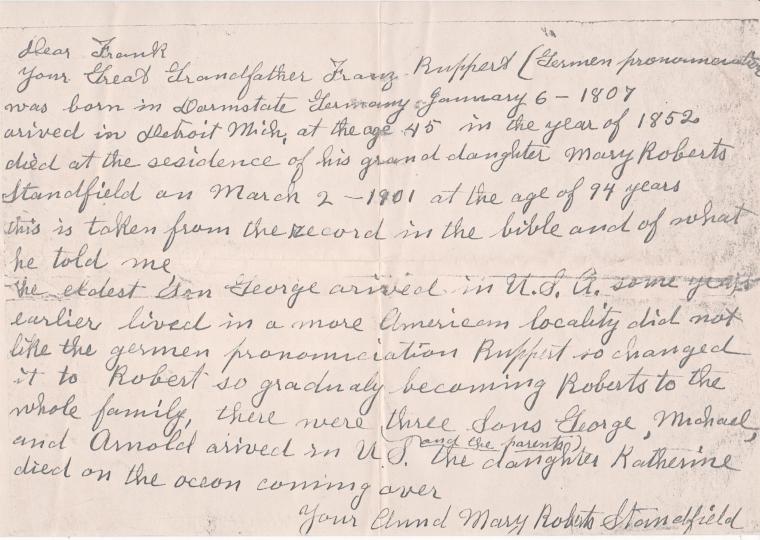
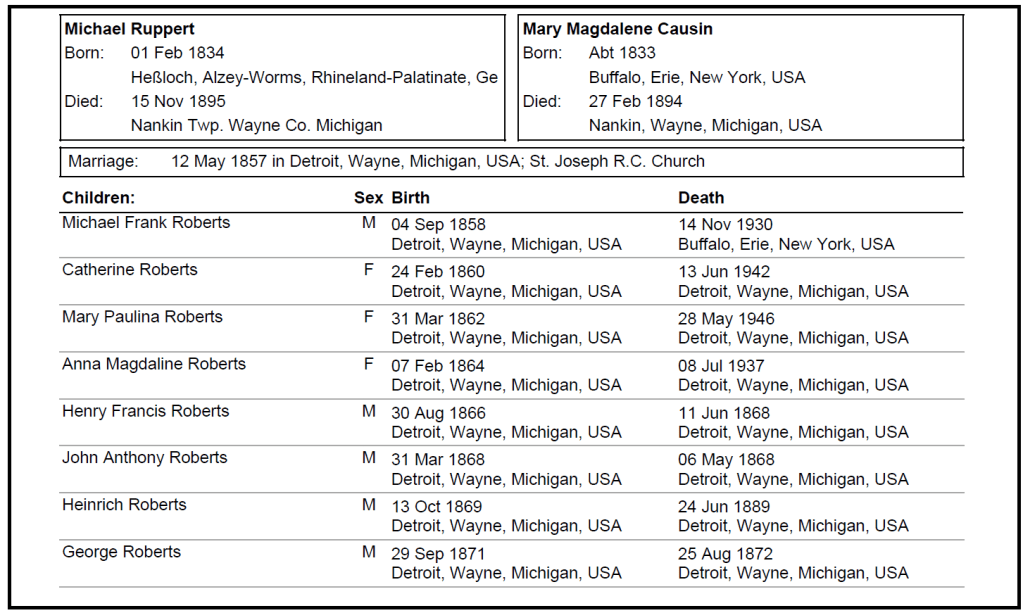


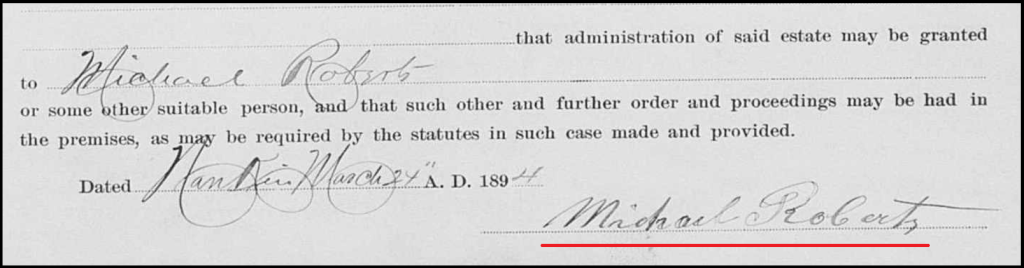
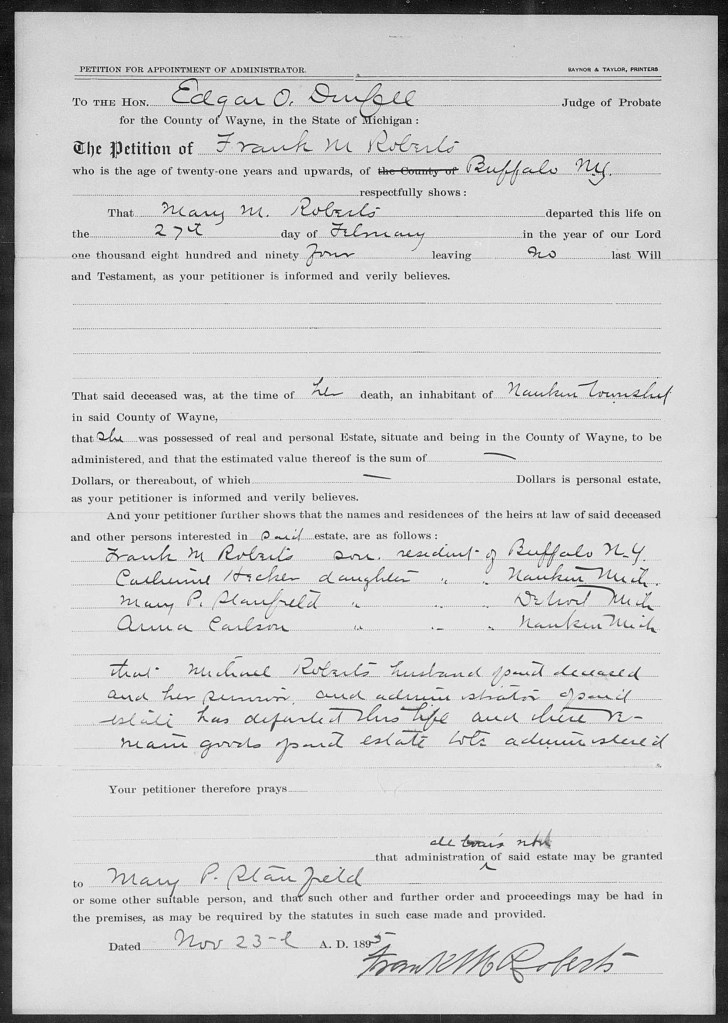
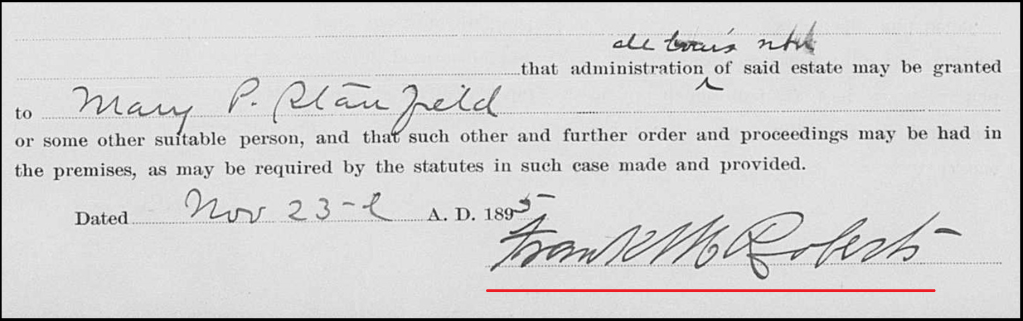
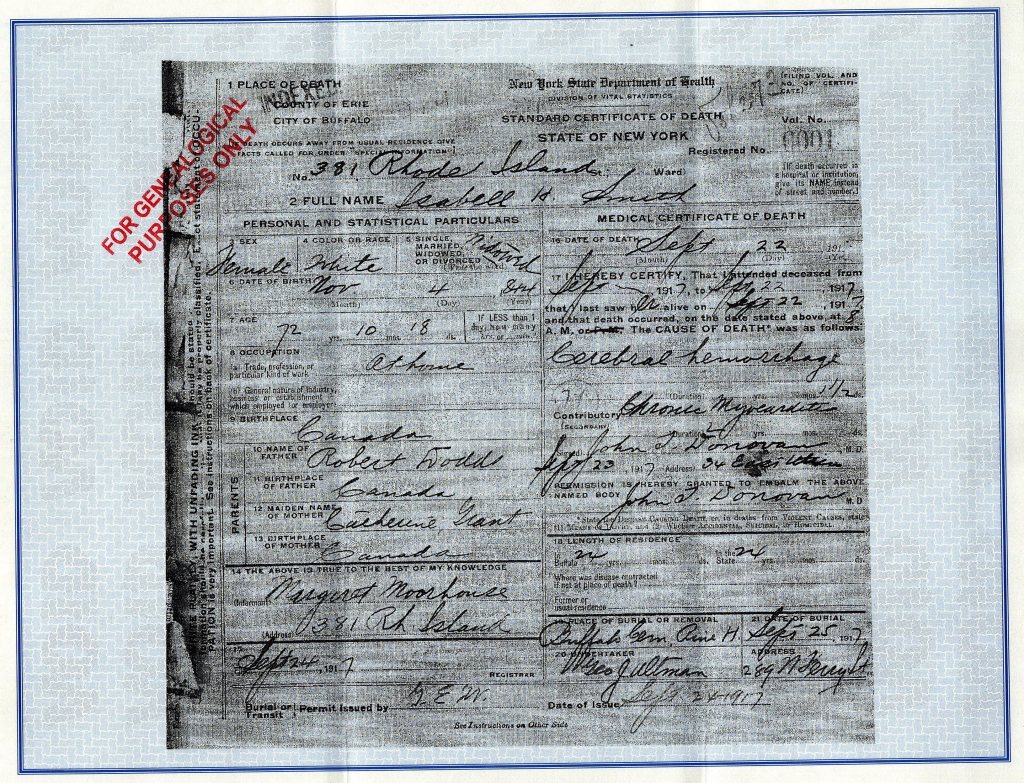
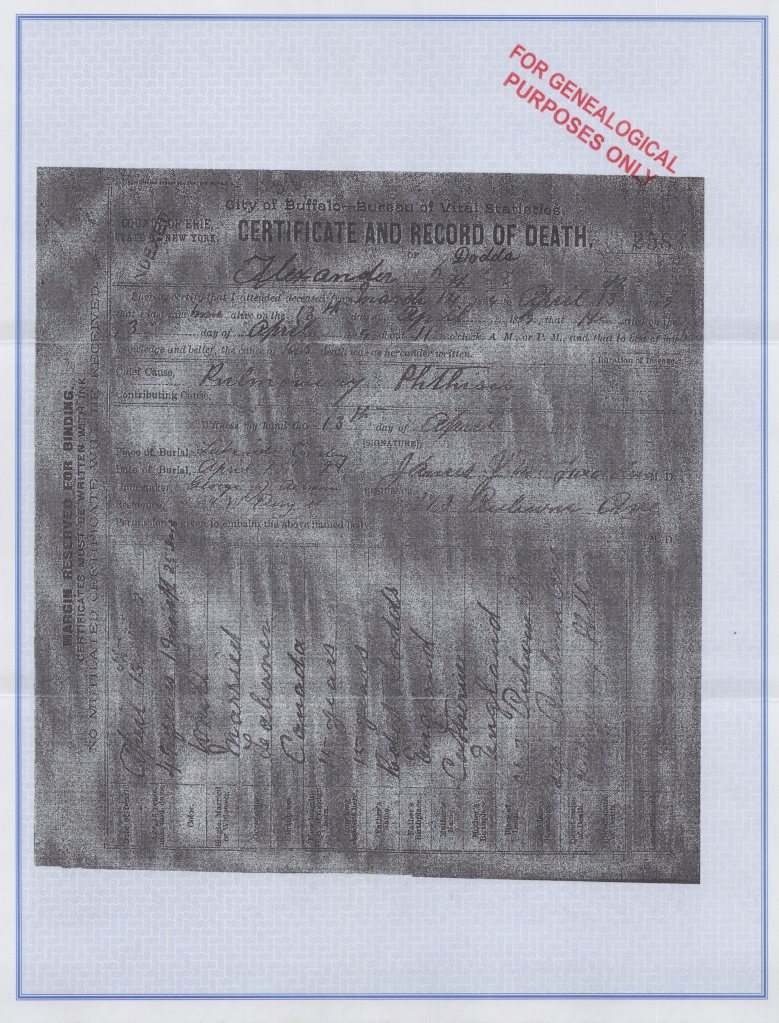
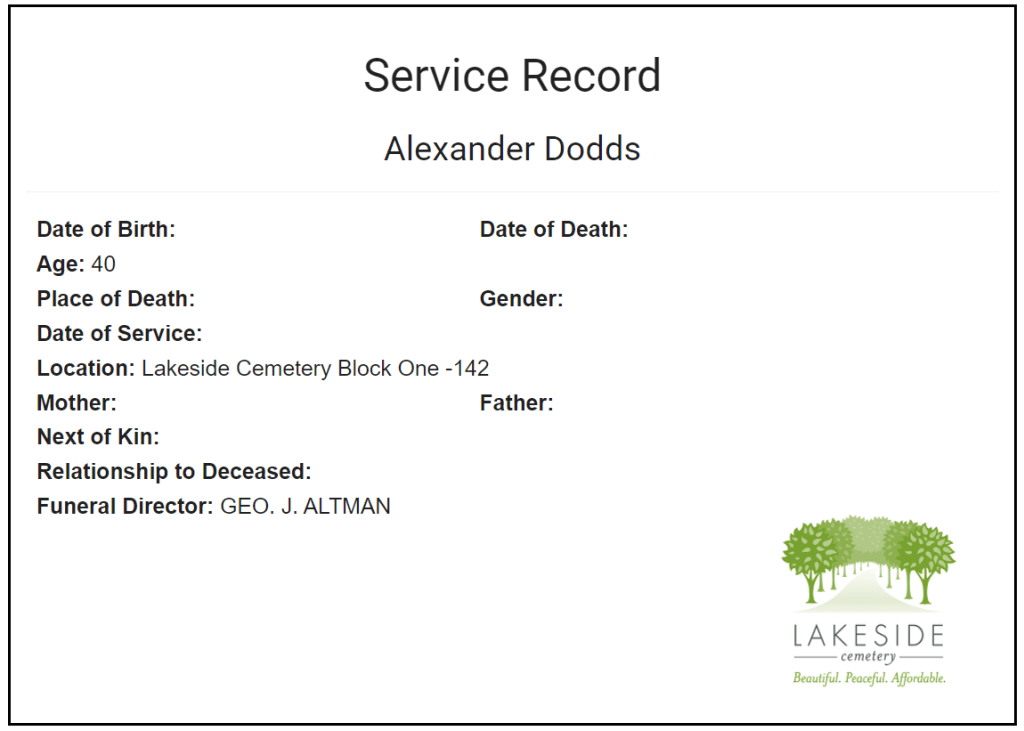
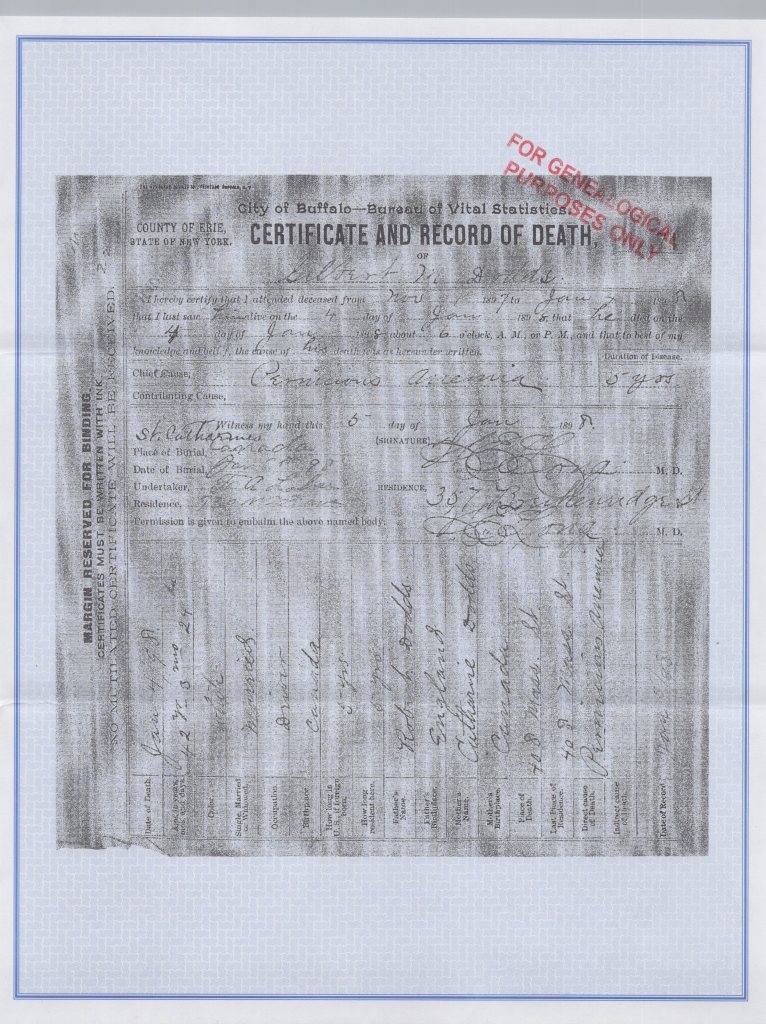
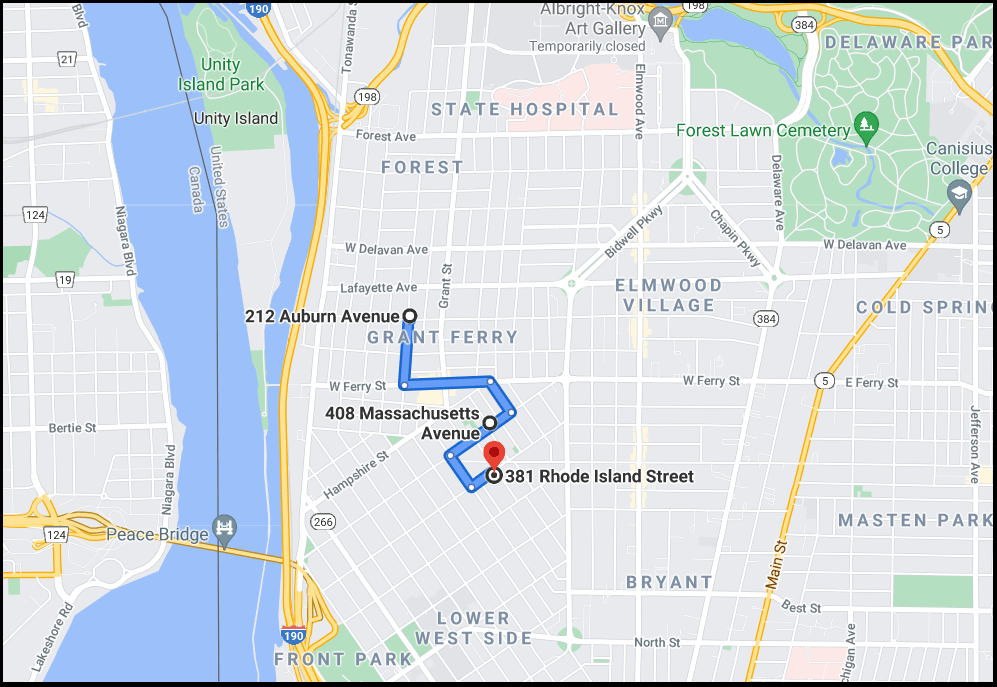

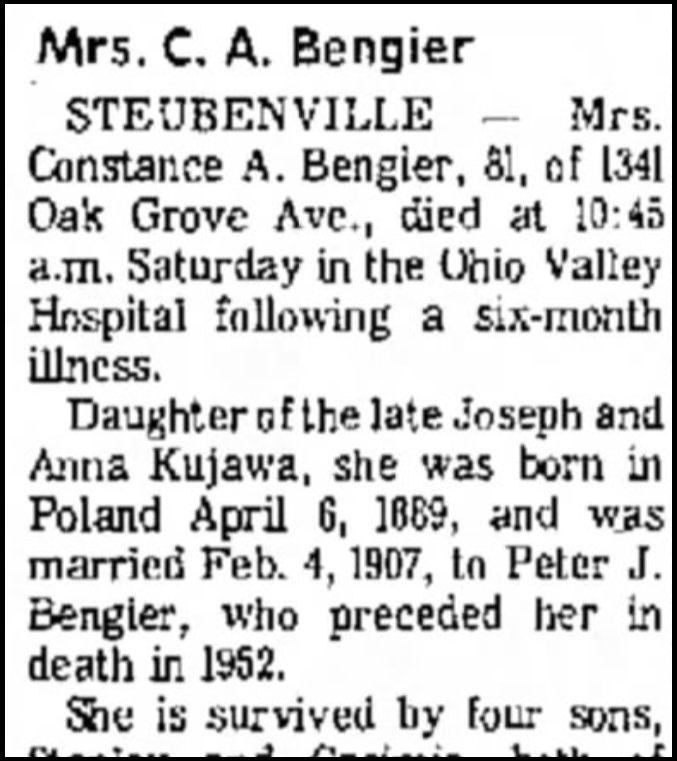


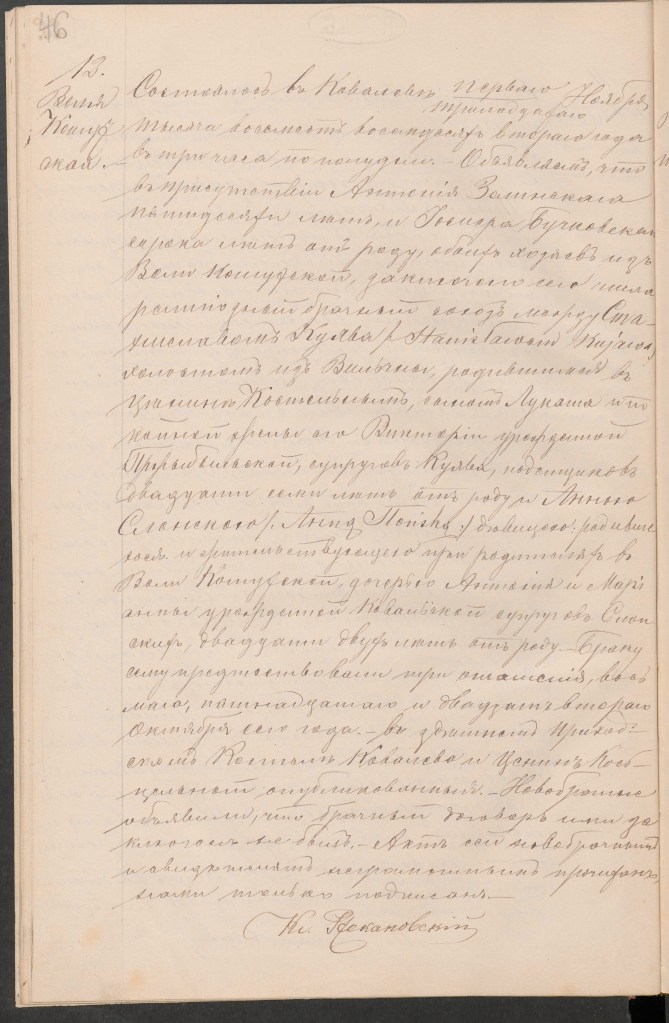


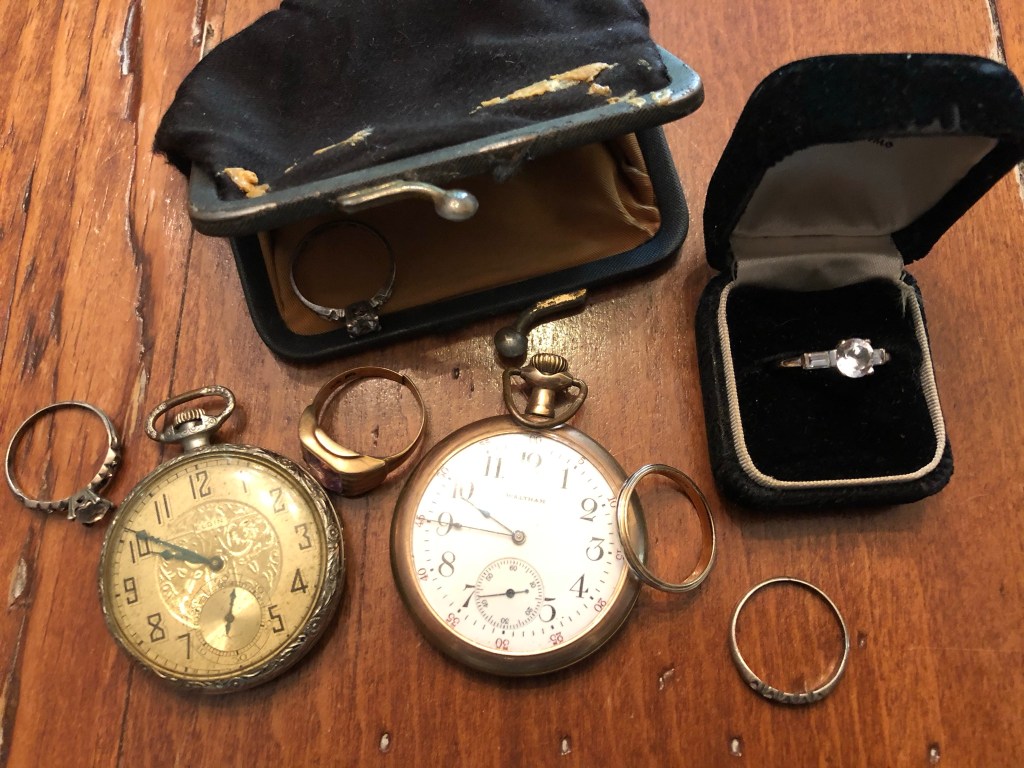

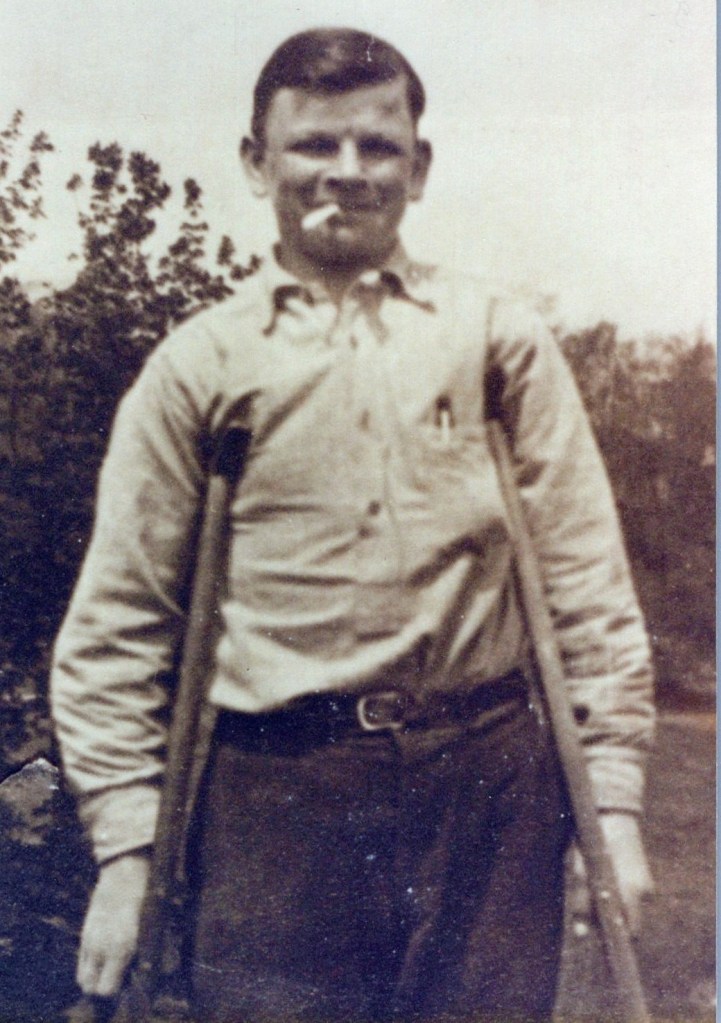

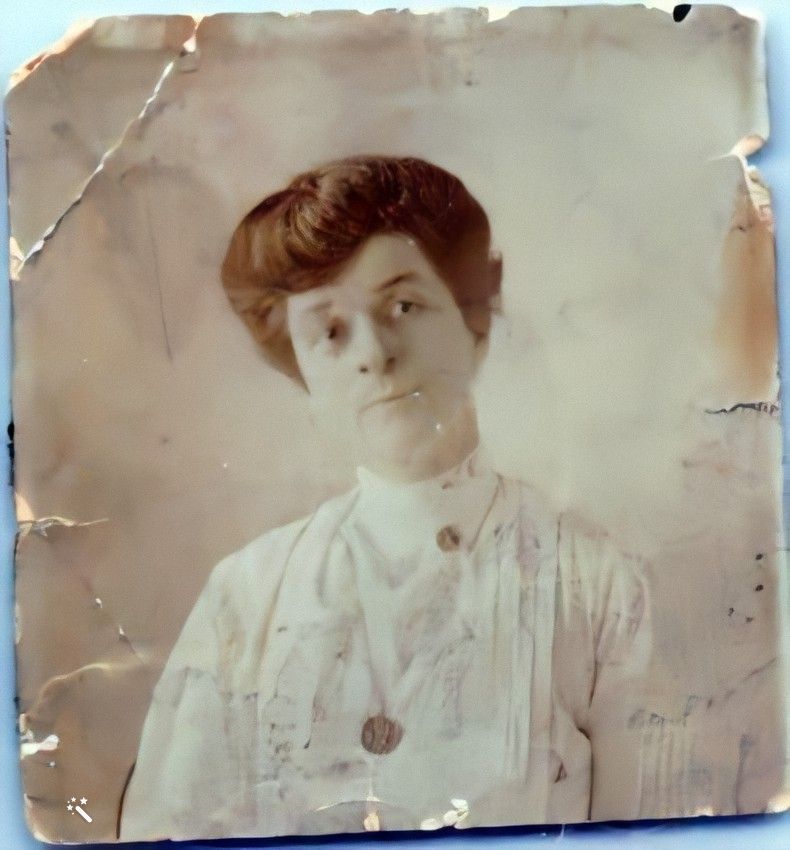


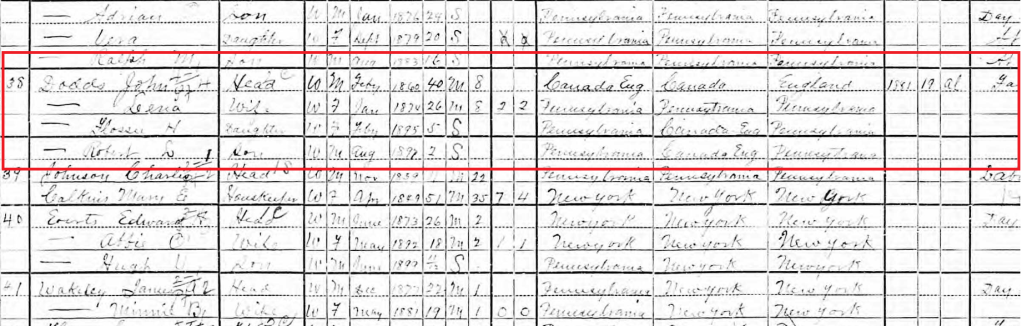


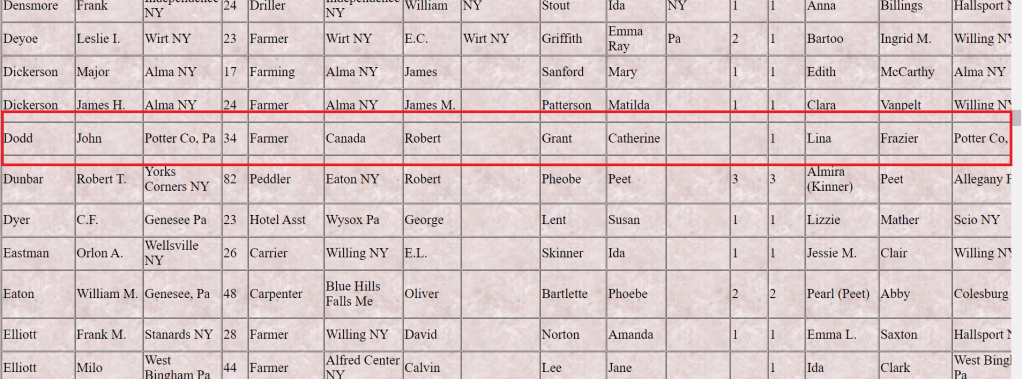
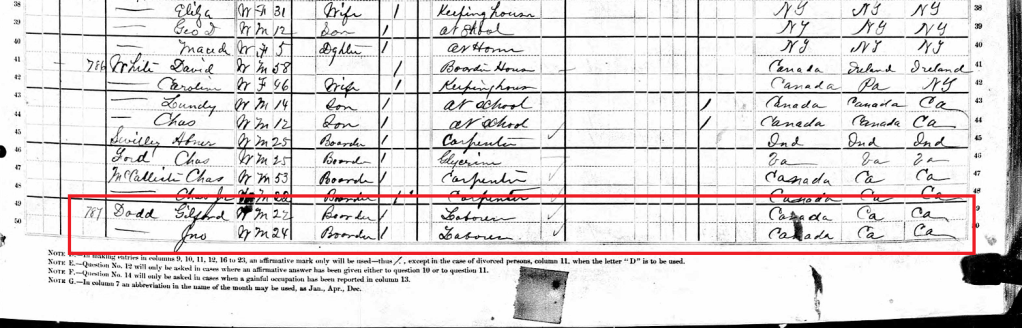
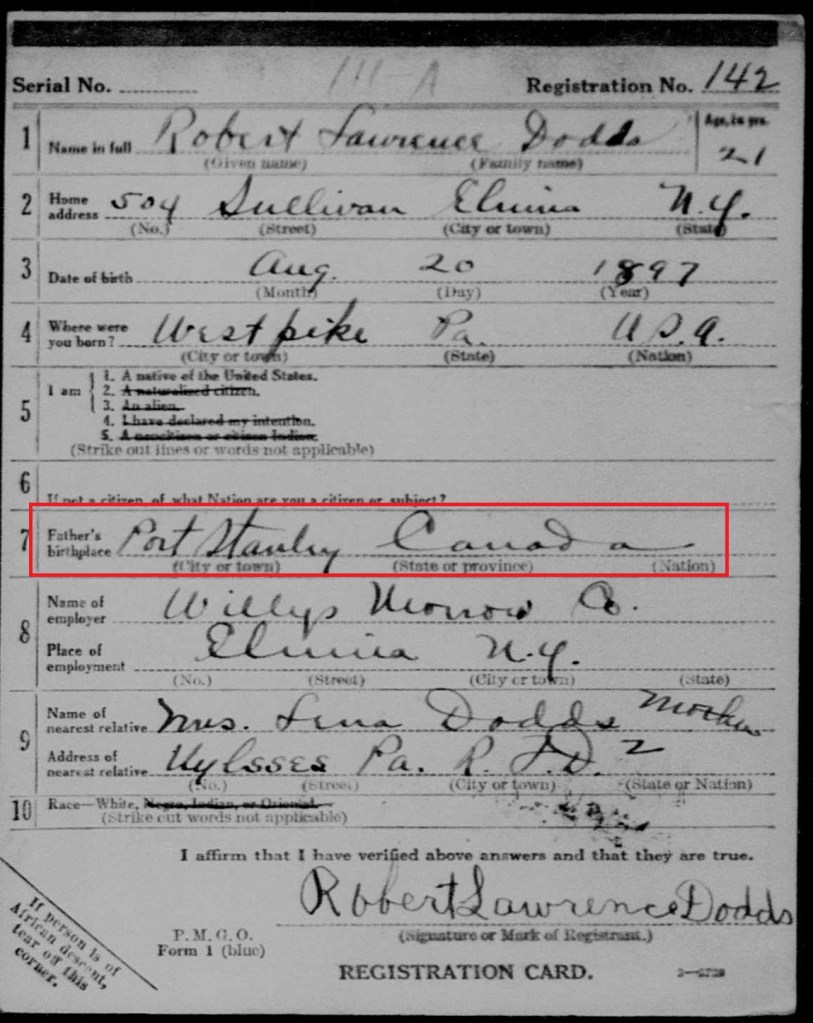
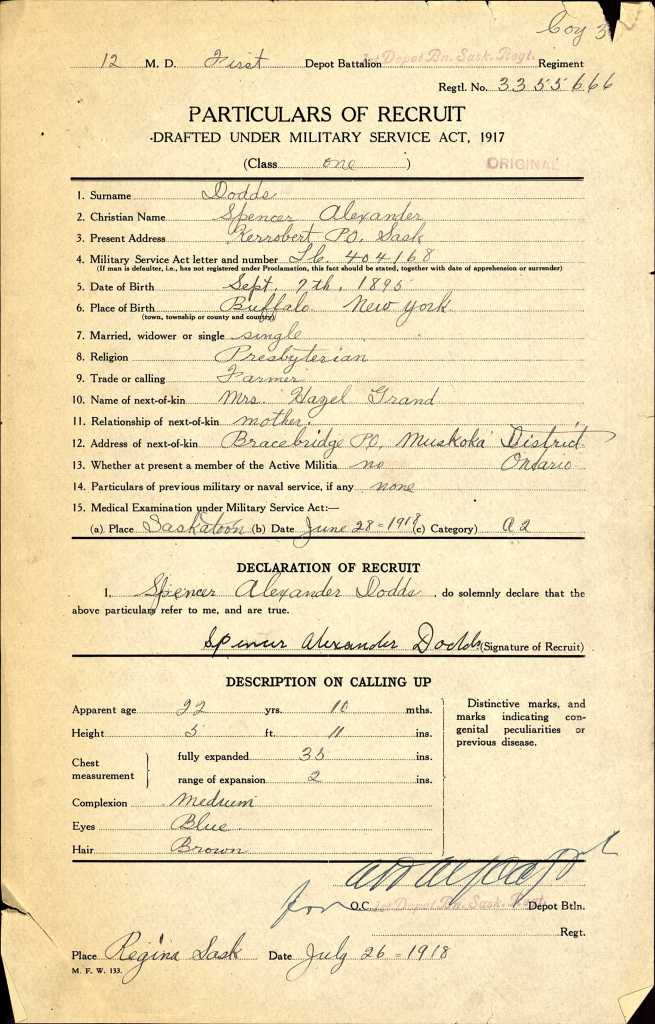


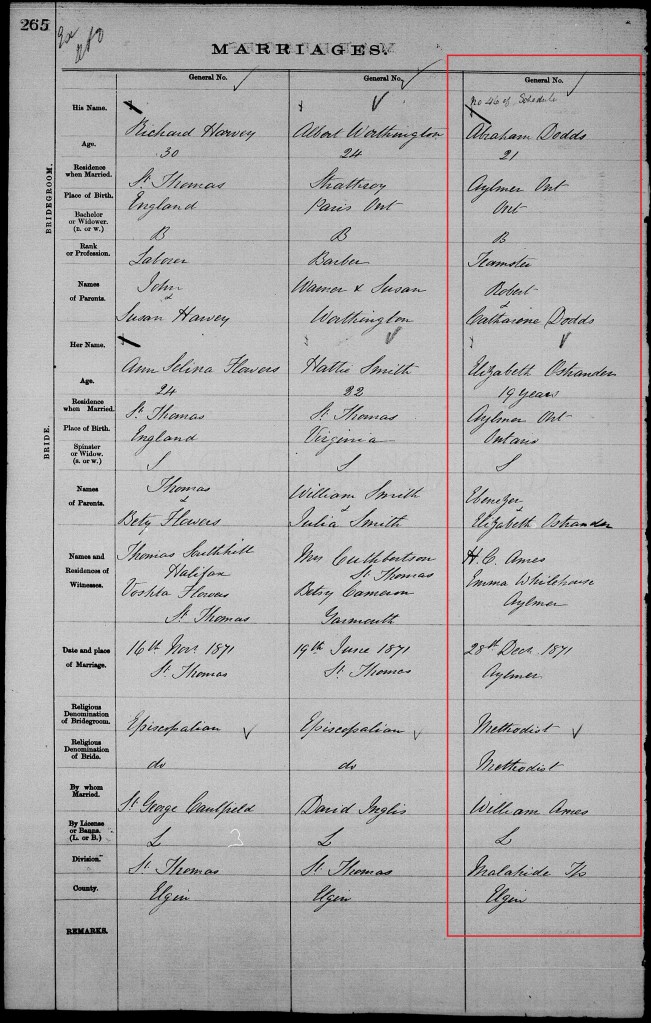

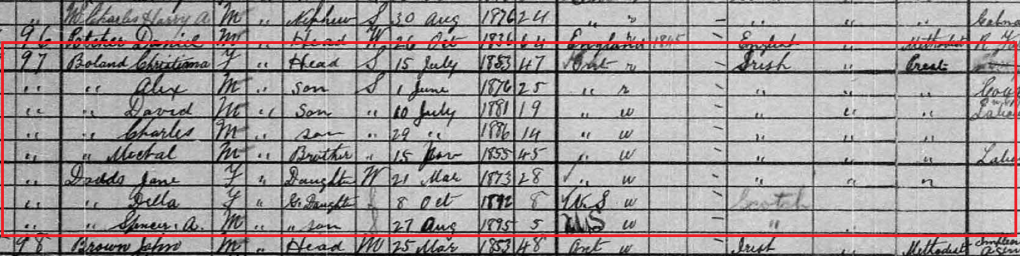

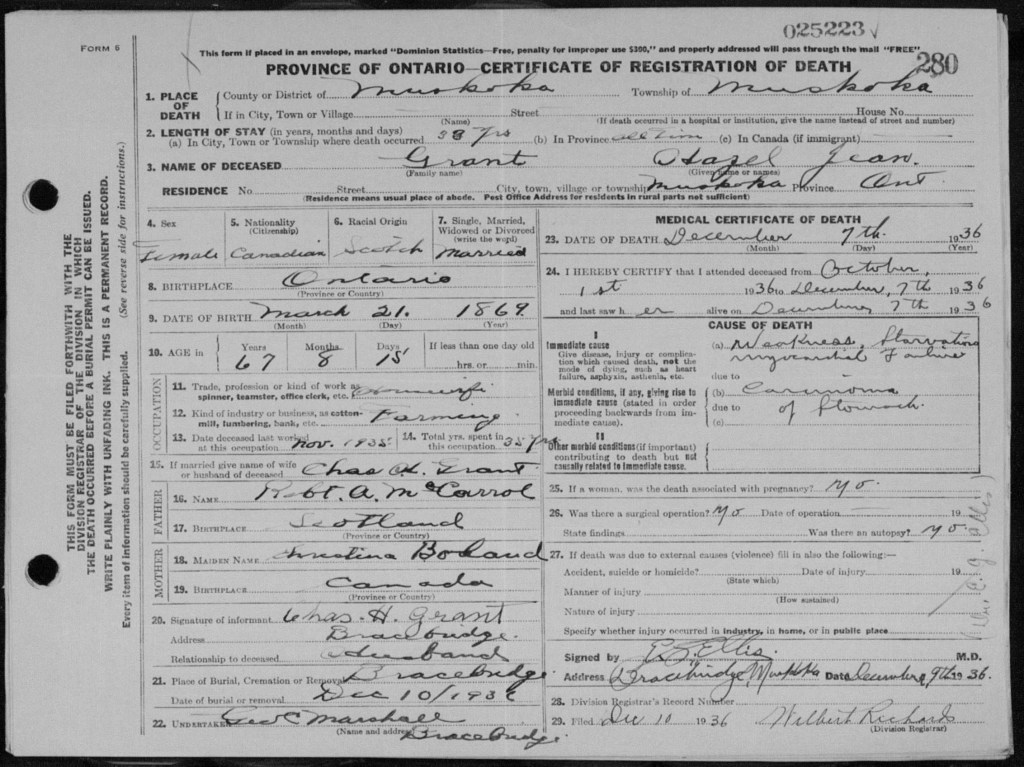
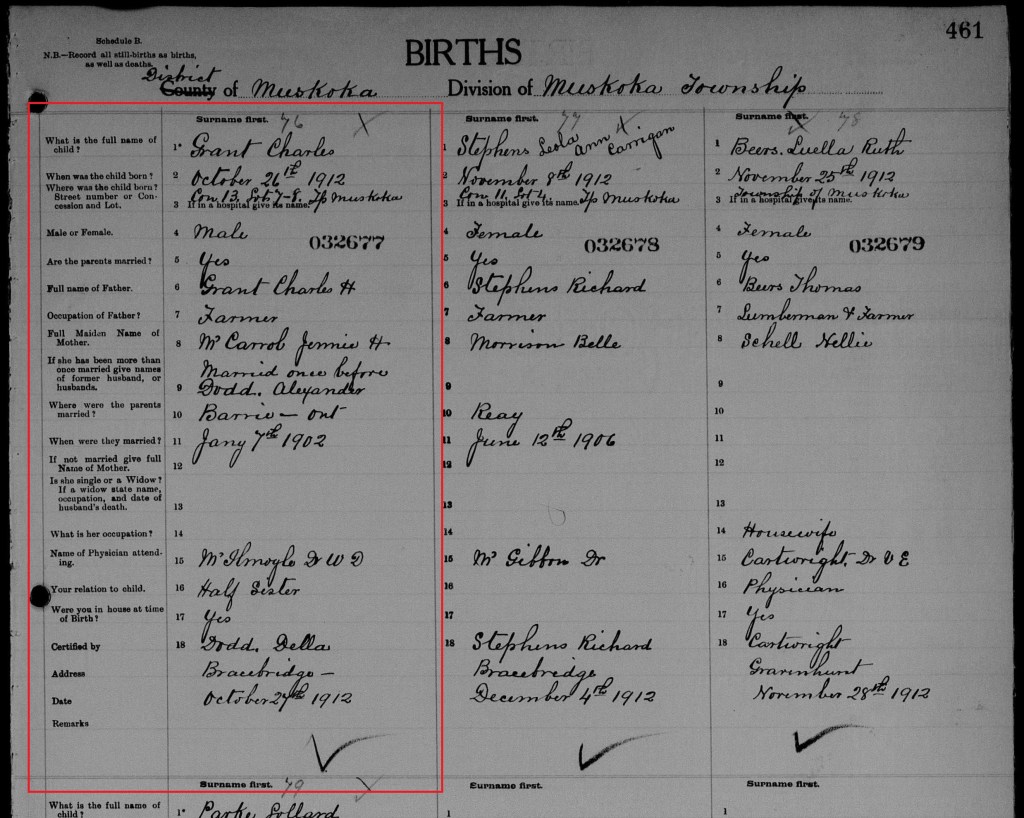
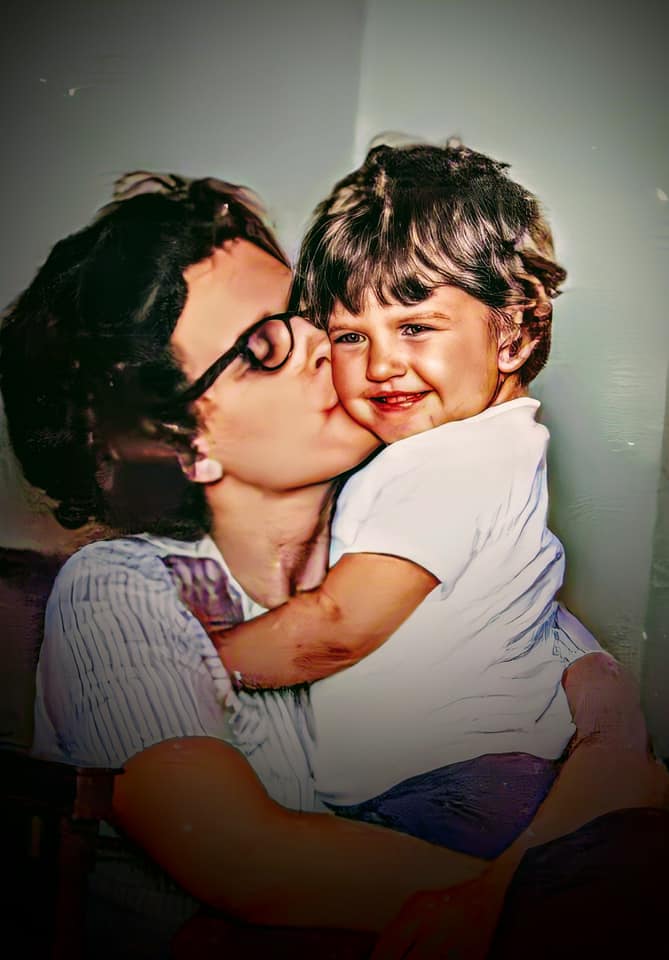

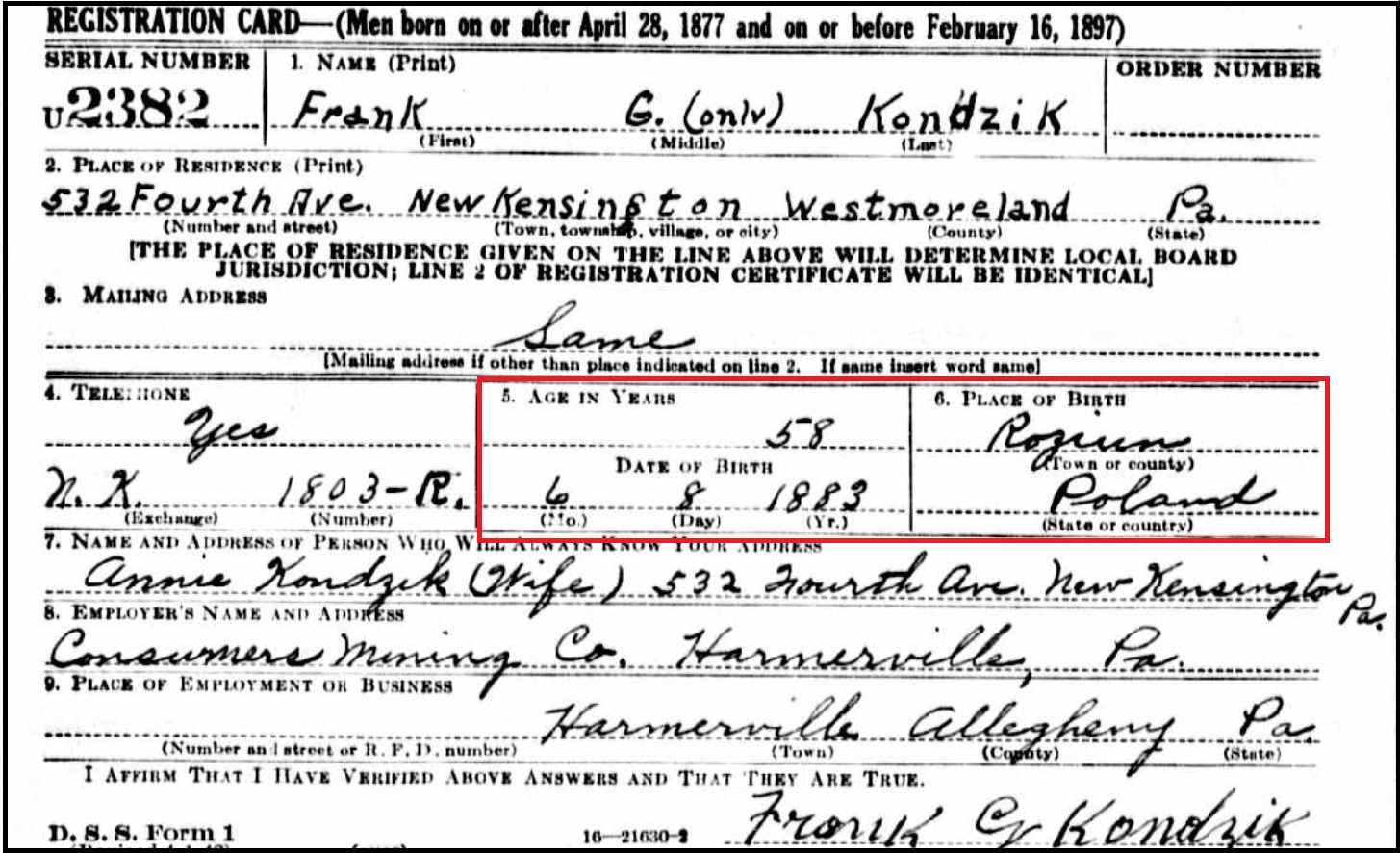
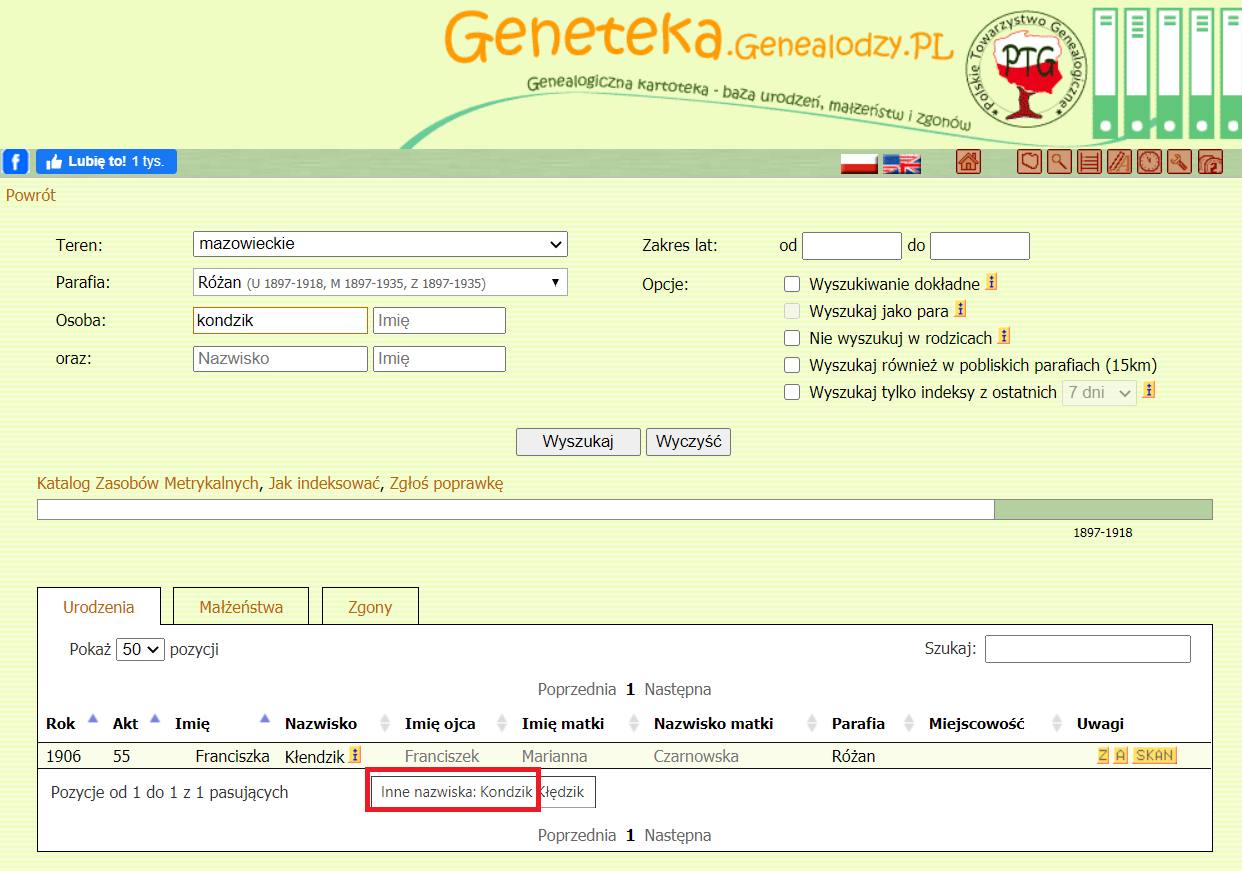

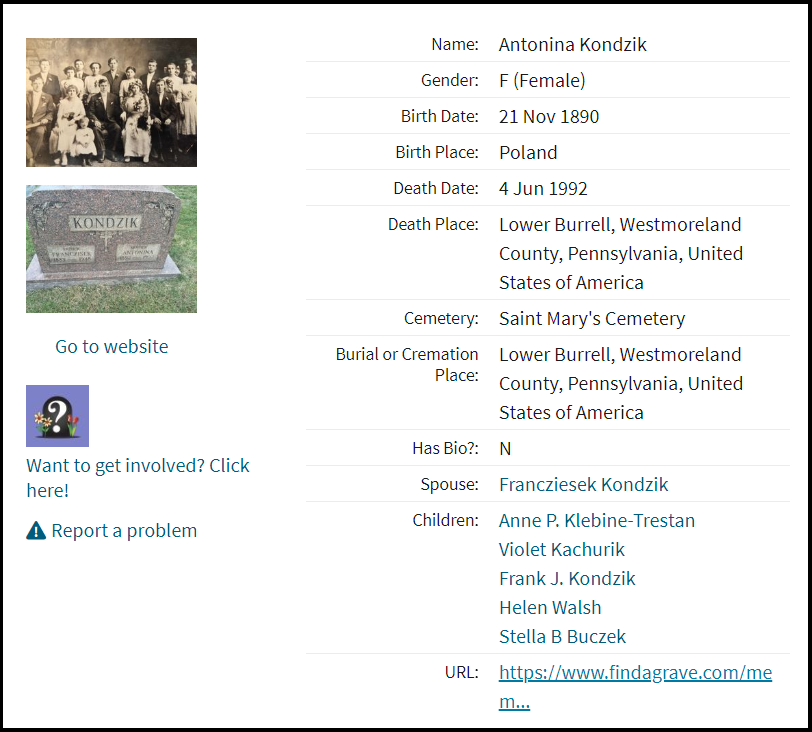







 From Shepherds and Shoemakers