Lessons From My Father

“Aviation in itself is not inherently dangerous. But to an even greater degree than the sea, it is terribly unforgiving of any carelessness, incapacity or neglect.”

— Captain A. G. Lamplugh, British Aviation Insurance Group, London. c. early 1930’s 1

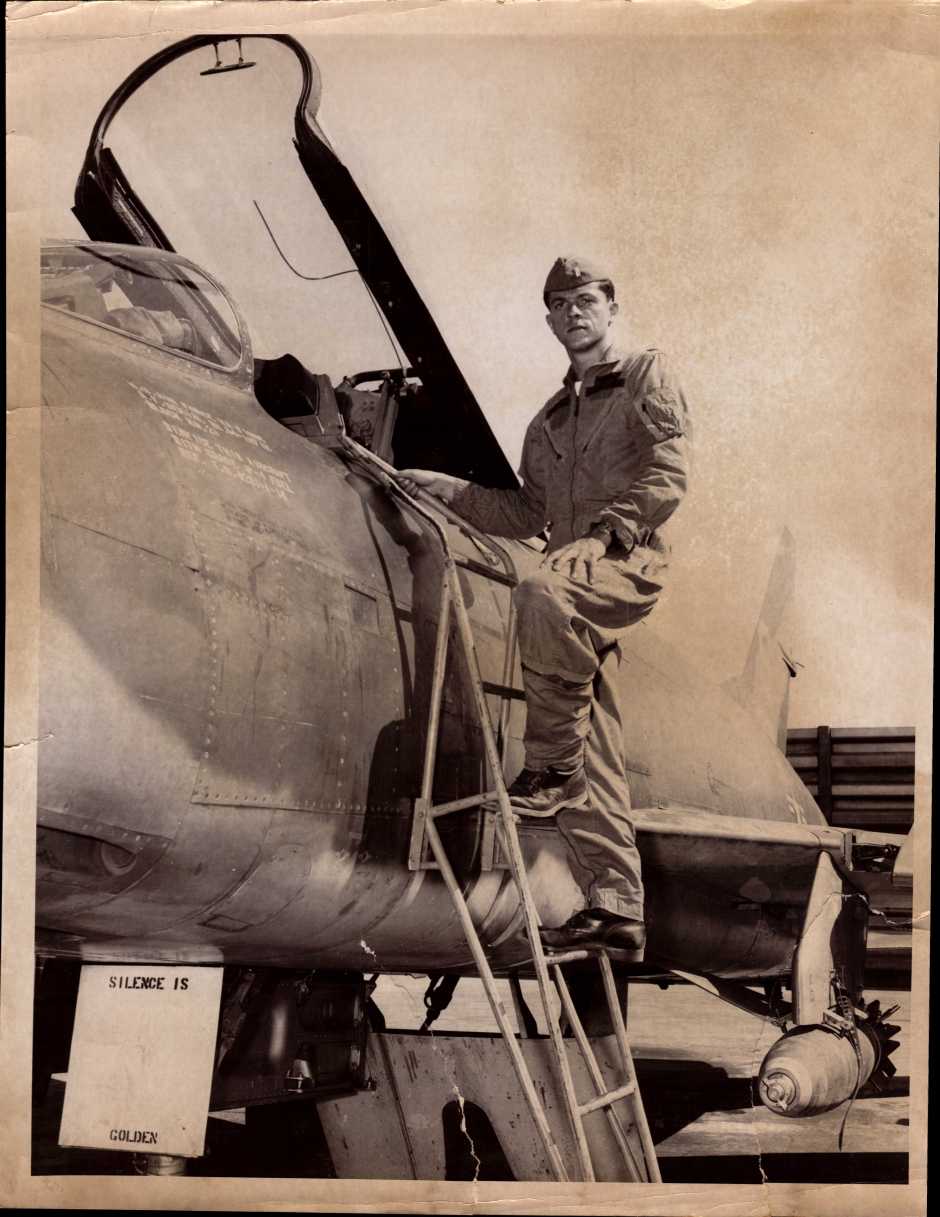
Being a military fighter jet pilot has been such an integral part of my Dad’s life experience that it affects everything he does, did, or ever will do, including the way he parented. My father, Harry W. Roberts, Jr., was sent to Vietnam as the youngest pilot in the 136th Tactical Fighter Squadron just 12 days before I was born, and I didn’t meet him until I was a year old. Dad’s homecoming from the war was something of an adjustment for all of us. Mom jokes that he had no experience with babies or small children, and somehow expected us, his daughters, aged 1 and 2, to shake his hand gravely and say, “How do you do, Father, it’s a pleasure to meet you.”  As an Air Force veteran, Dad was all about order and discipline. My bed had to be made with the sheets pulled so smoothly that one could bounce a quarter off of it.  I was often told to “shape up or ship out,” and “straighten up and fly right” because “prior planning prevents poor performance.” Hard work, competence, and results were valued and expected.  Dad had little patience with people who “didn’t have their s–t together.”

Although I always knew that Dad loved me, he was never comfortable with verbal or physical displays of affection. In all my years of childhood, I can think of maybe two occassions when he kissed me on the forehead after tucking me into bed at night. And my mother tells the story of a time when when my sister and I were about 3 and 4, and she was waiting with us in a checkout line at the grocery store. The gentleman next to her commented on what cute little girls we were, dressed in our matching outfits. He then turned to us and said, “I’ll bet your Daddy calls you his little princesses, doesn’t he?” We smiled and replied happily, “No, he calls us maggots!”  Although I don’t remember that particular incident, I do know that it was some time before I realized that “maggot” was not generally accepted as a term of endearment. It seemed affectionate to me, because Daddy always had a hint of a smile when he told us to, “Line up, maggots!”

Dad used to explain that in the Air Force they insisted on discipline because it could save one’s life. In an emergency, there often wasn’t time to think or reason. One had to rely on practiced behaviors and memorized protocols in order to survive. A prime example of this was the time when the engine seized on Dad’s F-100 Super Sabre and Dad had to bail out over the South China Sea. Although I’d heard the story many times when I was growing up, I had a chance to sit down with Dad this past weekend and take notes while he told it again. He also allowed me to scan the transcript of the radio conversation that occurred between him, the control tower, and his flight lead, Lt. Col. Sydney Johnson. (Thanks, Dad!)

The clarity with which Dad remembers that day never ceases to amaze me. It was December 18, 1968. He and three other pilots were headed north from their base in Tuy Hoa on a mission to bomb strategic enemy military targets. Shortly after he took off, he noticed an odd smell inside the cockpit. That in and of itself wasn’t grounds to abort the mission, because sometimes that would happen when the mechanics would change the jet engine oil. However, it was enough to prompt Dad to pay close attention to all the gauges from that time on. The flight continued, and they refueled mid-air without incident, but Dad’s sense that something wasn’t quite right persisted. When they were about 10 minutes from the target, Dad decided to light the afterburner, reasoning that if something bad were about to happen, he’d rather not have it occur when they were right above the target.

Hitting the afterburner is like stepping on the accelerator on a car, and as soon as Dad did that, the plane’s oil pressure plummeted. Dad radioed the rest of the flight and informed them of the situation. Lt. Col. Johnson maneuvered his plane underneath Dad’s and visually inspected the underside of Dad’s F-100. What he saw wasn’t good — bullet holes, with oil pouring out of them. It was later surmised that some Viet Cong sitting offshore in a fishing boat got in a lucky hit with an automatic machine gun as Dad was taking off that morning, causing damage minor enough to be overlooked immediately, but ultimately significant enough to endanger Dad’s life. Lt. Col. Johnson and Dad pulled away from the other two aircraft in the mission at that point. The plan was for the other two pilots to continue to the target while Lt. Col. Johnson escorted Dad back south, where Dad would attempt to land at the base in Da Nang.

There were a couple problems with this plan. First, time was not on their side. The flight manual, which Dad had to memorize as part of his pilot training, stated that once oil pressure is lost, the pilot has between 6-22 minutes before the engine seizes. There was a good chance that they would not make it back to Da Nang. Whether or not he was scared at this point, Dad’s military training kicked in and he was able to perform mechanically and methodically all the necessary procedures that would maximize his chances of landing the plane successfully. The first step was to set the power at 89%, which was the optimized power level that had been determined for that aircraft under these circumstances. Next, he jettisoned all his ordnance and external fuel tanks to make the plane as light as possible, minimize drag, and maximize flying time. Unfortunately, when he hit the “jettison all” button, the left drop fuel tank didn’t disengage completely, and was swaying precariously under the wing. Dad knew that would cause some problems on landing, but there wasn’t much he could do about it at that point.

As the minutes ticked by, Dad disconnected his g-suit from the aircraft and tidied up the cockpit, stowing unnecessary gear. He didn’t want any loose objects to come flying out of the cockpit with him in case he had to eject, since they had the potential to hit him or damage his parachute.  However, he knew that luck would play a role as well. A member of his squadron, Capt. Joseph A. “Jake” L’Huillier, had lost his life just a few months earlier after his seat got tangled up with his parachute after ejection from his disabled aircrft.

Exactly 22 minutes after he lost his oil pressure, the jet’s engine started to seize, causing flames to erupt from the tail and nose of the aircraft. Shortly after that the engine stopped completely, while the plane continued to burn. At this point, Dad still had some control of the aircraft, thanks to the Ram Air Turbine (RAT), a device that pops up in the slipstream of the airplane and powers the hydraulics for the flight controls in an emergency, so he could still move the stick.  There was only small comfort in this, however.  The RAT utilizes ram pressure, caused by the speed of the aircraft, but once landing commences and the aircraft’s speed decreases, the RAT is no longer operative and the stick becomes frozen. Partly because of this factor, no one had ever landed an F-100 with a seized engine successfully. Between that, and the dangling fuel tank under the left wing, Dad realized that landing would have been extremely challenging. Under the circumstances, the growing realization that ejection was unavoidable came as something of a relief.

Established protocol for ejecting from the aircraft specifies that the plane should be at an elevation of approximately 10,000-14,000 feet at the time of ejection, and a speed of 250 knots.  Dad spotted two U.S. Navy ships in the distance, so he headed for them in the hope that one of them might pick him up. Immediately prior to ejection, Dad deployed the speed brakes so that the plane would go straight down and not hit anything.  When he reached the specified speed and altitude parameters, he ejected from the cockpit.

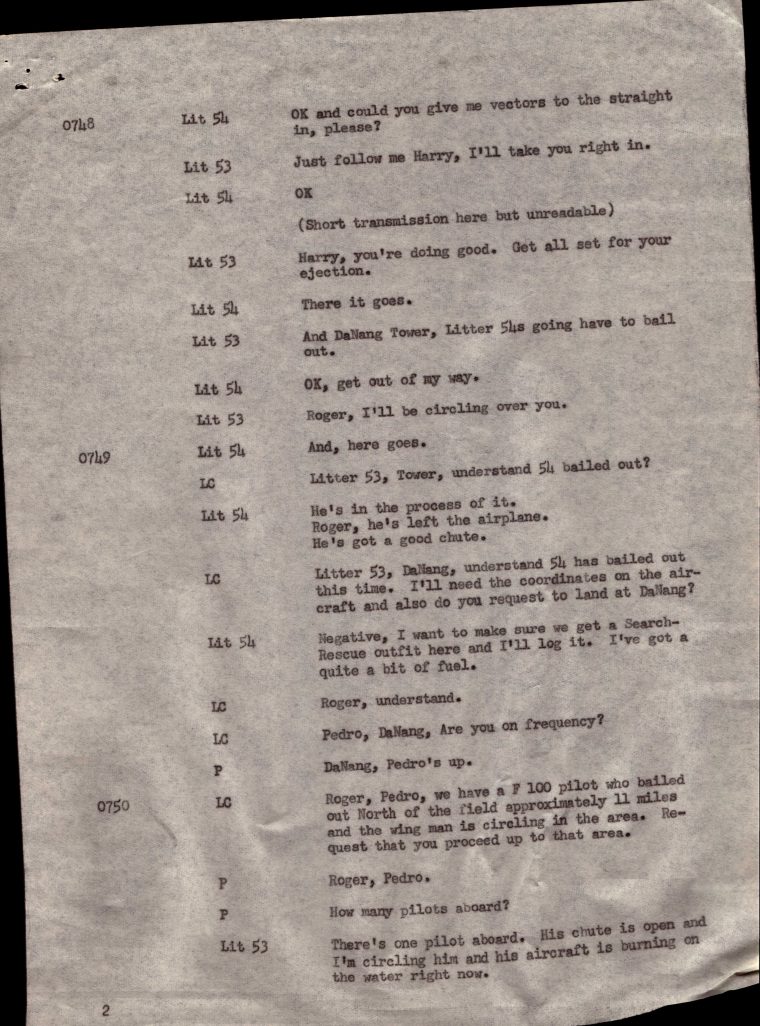
In the following transcript, Dad is Litter 54 (Lit 54), Lt. Col. Sydney Johnson is Litter 53 (Lit 53), LC is the Local Control tower in Da Nang, and Pedro is the search-and-rescue helicopter dispatched from the base in Da Nang.2harry-roberts-plane-crash-transcript-p-1

Dad recalled that the rationale for heading to the sea was that it was much easier for him to be found and rescued by friendly forces that way, rather than bailing out over the jungle and risking being found by the Viet Cong first.  At this point in the transcript, it’s clear that the intent was still for Dad to land the plane.  However, things changed very quickly.harry-roberts-plane-crash-transcript-p-2
Within that same minute, 7:48 am, as the cockpit filled up with smoke, the decision was made to forego the landing attempt and bail out. Note that there appear to be two errors in the second page of the transcript (above).  Dad’s final line is “And here goes.”  The two quotes after that, which are attributed to Dad, are clearly from Lt. Col. Johnson.  harry-roberts-plane-crash-transcript-p-3
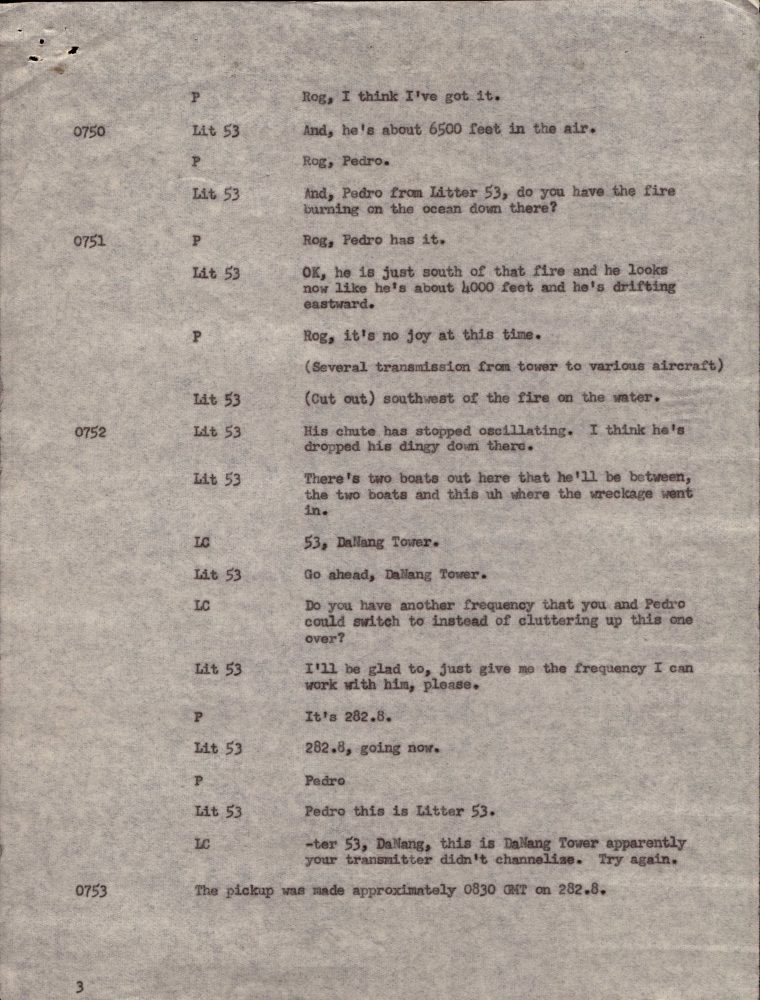
In reading this, I never fail to be impressed by the calm, cool, professionalism of all the servicemen involved.  For my family, this was a day that could have meant disaster.  For the USAF Air Traffic Control staff in Da Nang, it was just another Wednesday in Vietnam. Notice how they’re anxious for the rescue helicopter, Pedro, and Lt. Col. Johnson to find some other channel for communication, so they don’t tie up the current radio frequency?  Although the transcript mentions that “The pickup was made approximately 0830 GMT on 282.8,” it neglects to explain that Dad wasn’t out of the woods once he’d bailed out of his plane. There were still some remaining hazards to negotiate.

Things got off to a good start with the ejection. The seat of the aircraft was designed with a “seat-man separator” function which is intended to ensure that the pilot is clear of the seat before his chute opens. There is a manual override that can be utilized in case this function fails, but by the time Dad had the presence of mind to assess the need for it, he was already separated  from the seat and his parachute was successfully deployed. Although Dad was relieved to discover this, he had some new concerns to address. His parachute was equipped with a quick release system underneath a durable cover.  The cover was intended to prevent unintentional triggering of the quick release, and Dad realized that the cover on the left side had blown off during the ejection, exposing the mechanism.  As a precaution, Dad grabbed onto the left side riser lines of the parachute to be sure that they were secure, and gripped them tightly for the duration of his fall.

The next problem was that the parachute’s design was trapping air, causing him to oscillate back and forth under the chute rather violently, like the clapper in a bell.  To remedy this, there were four lines that were identified with red tape that could be cut to stop the oscillation by opening up two panels in the parachute canopy.  Dad’s G-suit was equipped with a switchblade knife with a special hook on the end designed for cutting these cords. Needless to say, cutting cords on the parachute which was the only thing standing between him and death took some resolve, and he checked several times to be sure he was cutting the right cords. However, the nauseating effect of the oscillation was enough to persuade him of the necessity of doing it.

The time between ejection and touching down in the South China Sea was perhaps the longest 15 minutes of Dad’s life.  It seemed to take forever to fall to earth, to the point that Dad wondered if he were caught in some kind of updraft. He was concerned about disconnecting his parachute as he hit the water. This was necessary to ensure that it didn’t drag him down, or act as a sail, catching the breeze and carrying him over the water at whatever rate the wind was blowing.  However, he obviously didn’t want to release the parachute prematurely. After falling for what seemed like a long time, he decided to drop his oxygen mask as a test, and was astonished when he couldn’t even see it hit the water. He was still far too high up. A few more minutes passed and he decided to try again, this time dropping his clipboard. Again, Dad couldn’t even see the splash it made. He resolved to look straight ahead and not think too much about the seemingly slow pace of his descent. He decided that he would release his parachute only when he felt his feet hit the water.

During all this time, Dad’s flight lead, Sydney Johnson, was continuing to monitor his descent. Dad knew Sydney pretty well, and knew that he was an avid videographer. Dad correctly guessed that Sydney was filming the whole episode, flying with the stick between his knees so his hands were free to hold the video camera. Unfortunately, each time Sydney flew past at 500 knots, Dad’s fragile parachute would shudder, threatening collapse. Although Dad smiles when he tells the story now, it’s easy to see how alarming that would have been at the time.

As Dad continued to fall, he prepared for his eventual landing in the water. His survival kit, which was attached to his parachute, contained a raft on a 20-foot lanyard. He inflated the raft, along with his LPUs (Life Preservers Underarm). When Dad’s feet finally made contact with the ocean, he released his parachute which immediately blew away. Still attached to his raft by the lanyard, he swam over to it, climbed inside, and waited for rescue. Overhead he could see the Search-and-Rescue helicopter Pedro, an Army UH-1 helicopter, and the forward air controller‘s plane, along with Sydney Johnson in his F-100, still filming. (When asked why there were so many aircraft, Dad quipped, “It was a slow day for the war.”) He knew he wouldn’t be in the water long, but while he was waiting, Dad began to rummage through his survival kit to see what was in there.  He found a saw, which he discarded, and then found some shark repellent tablets, which had already gotten wet and were getting dye everywhere. In those days, shark repellent consisted mainly of a potent dye that turned the water so inky black that the sharks became confused. Dad threw that into the water as well. Finally he found what appeared to be a cellophane-wrapped Rice Krispy bar left over from World War II. He took one bite, but then Pedro began lowering a rescue strop (also known as a “horse collar”) to get Dad out of the water.

During Sea Survival School, Dad had been taught how to be rescued by a helicopter. It wasn’t as straightforward as it might seem. Helicopters can generate a static charge of up to 25,000 volts while flying, which could be transmitted to the rescuee via the horse collar. Therefore it was important to be ground the horse collar by allowing it to contact the water first before touching it, to prevent the delivery of a nasty electric shock. Dad had also been instructed to keep his flight helmet on in case of water rescue. This particular instruction didn’t make sense to Dad until he hit his head on the underside of the helicopter as they attempted to reel him in. When he was finally on board the helicopter, the chief master sergeant took a long look at Dad’s lips and fingers, which were stained blue from handling first the shark repellent and then the Rice Krispy bar. Eventually he asked, “If you don’t mind my asking, Lieutenant, how cold was that water?  We’ve picked up guys out of the Arctic who looked better than you!”

One might think that Dad would have earned a little downtime after all of this. However, he was back in the cockpit of a new plane the next day, and Dad would remind us of this fact whenever we were tempted to dwell on some small failure or tragedy. In addition to learning to get back up into that cockpit, Dad learned to be cool under pressure, and to keep his wits about him in a crisis.  Although it wasn’t his choice to go to Vietnam, he opted to make the best of a bad situation, turning what would have been a compulsory draft into the Army into an opportunity to learn to fly with the Air National Guard. He sacrificed his own needs and desires and served his country with honor and integrity, working hard amid stress and danger to earn his paycheck to support his family back home. He also managed to keep his sharp sense of humor through it all. Perhaps his military experience made him a sterner, less effusive father than he might otherwise have been. It’s impossible to know what might have been, but I’m proud to be his daughter. I love you, “Daddy Ramjet.”

pict0036

Sources:

1 English, Dave, Great Aviation Quotes: Safety, Dave English: Aviation Nerd Bon Vivant, http://www.daveenglish.com, accessed 8 February 2017.

2 V.F. Gardner, Major, USAF, Chief, Flight Facilities, Maxwell AFB, Alabama, USA to Lt. Harry W. Roberts, Jr., Tape Transcript, Litter 54, 18 Dec 1968, Vietnam Memorabilia; privately held by Harry W. Roberts, Jr.

The military photos shown here are from the private collection of Harry W. Roberts, Jr. The appearance of U.S. Department of Defense (DoD) visual information does not imply or constitute DoD endorsement.

© Julie Roberts Szczepankiewicz 2017
The Siren Song of the BSO

One of the guiding principles of efficiency in genealogy research is to create a research plan and stick to it. We all run across distractions as we research, of course, and we’ve probably all had that experience of heading down a research “rabbit hole” in pursuit of something not directly related to the original goal, and then emerging hours later with little to show for one’s research time, beyond, say, a new appreciation for plants which our ancestors might have used to make clothing dyes.  (Okay, maybe that’s just me.  Anyway.)  In the genealogy community, these distractions are commonly referred to as BSO’s: Bright, Shiny Objects.  The prescribed remedy is to make a note of each BSO as it arises, jotting down where it was found so that it can be explored in detail during another research session, and then move on, in order to achieve the research goals set forth in the initial research plan. This is absolutely sound advice.

And yet, there are times when I am so very glad that I pursued those BSO’s.

A perfect example of this arose last weekend.  My husband and I had a date night planned, but I had allotted some research time in the afternoon prior to that.  My goal was to make a list of distant cousins on my Dad’s paternal line who might be persuaded to donate a DNA sample to address some research questions that have recently cropped up. In reviewing my data on this side of the family, I took a look at my Grentzinger line.

The Grentzingers of Steinsoultz, Alsace and Detroit

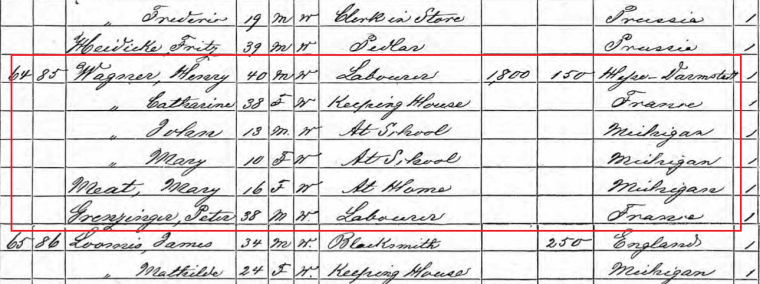
Henry and Catherine (née Grentzinger) Wagner of Detroit, Michigan, were my 3x-great-grandparents.  Henry was the son of Johann Heinrich Wagner and Maria Anna Nau, immigrants from Germany who arrived with their family in Detroit in 1853.1 Catherine was the daughter of Peter and Elizabeth (née Eckhardt/Eckerd/Eckert) Grentzinger of Steinsoultz in Ober-Elsaß, or what is now the Haut-Rhin department of France.  It’s not yet clear to me whether Peter also emigrated, or if Elizabeth came to Detroit with her children as a widow, but Elizabeth herself is buried in Assumption Grotto Cemetery in Detroit.2  It is also known that Catherine had at least one sibling who emigrated:  a brother Peter, who was living with Catherine and Henry Wagner’s family in 1870 (Figure 1).3

Figure 1:  Extract of 1870 census showing Henry Wagner household.3henry-wagner-household-1870Note that the family includes not only Henry and Catherine and their two children, John and Mary, but also 16-year-old Mary Meat.  I haven’t yet figured out how she fits in, so that’s another mystery for another day.
In reviewing my notes, I realized that I still didn’t have Henry and Catherine’s marriage record.  Henry and Catherine Wagner should have married circa 1855, based on the fact that their older son, John, was born circa 1857.  Catherine was born in 1828, meaning she would have been 27 at the time of her first marriage.  That’s certainly a reasonable age for a first marriage.  But in a previous round of research, I’d noted the following marriage record in the index at FamilySearch (Figure 2)

Figure 2:  Michigan Civil Marriages, 1834-1974, index-only entry for Catharina Grenzinzer.catherine-granzinger-marriage-index

I’d wondered if it was my Catherine, but there were other Granzinger/Grentzingers living in the midwest at that time and the relationships between them aren’t yet clear to me. I know from experience how easy it is to draw erroneous conclusions based on limited data, so I was hesitant to get too excited about this record.  Although Catherine’s age here suggests a birth year of 1828, which is consistent with what is known for “my” Catherine, this indexed entry did not include parents’ name or any other identifying information that might make it easier to draw firm conclusions. So I put this puzzle piece aside for the time being and moved on.

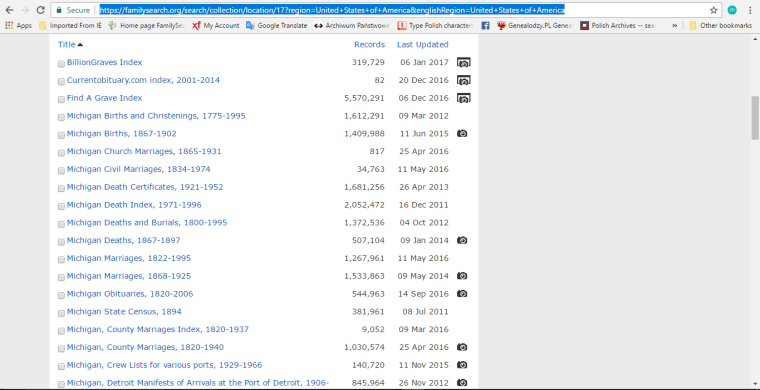
When I rediscovered this puzzle piece last weekend, it occurred to me that many of the indexed records collections on FamilySearch now have images online.  A great place to see what’s online (indexes and scans) is to visit the “Research by Location” page for your area of interest.  For example, the page for Michigan  shows all these fantastic collections of online images (Figure 3).

Figure 3:  Michigan Research Page at FamilySearch.michigan-research

I noticed that the Michigan County Marriages, 1820-1940 database has been updated since the last time I researched my Grentzingers two years ago.  I looked up that marriage record for Catherine Grentzinger and Victor Dellinger again, and this time, I was able to obtain the image of the record (Figure 4),4 despite the fact that Figure 2 states “no image available” in the upper right corner. Sometimes it seems that the left hand at Family Search knows not what the right hand is doing.

Figure 4:  Marriage record for Catherine Grenzinger and Victor Dellinger, 1846.4catherine-granzinger-and-victor-dellinger-1846-crop

The full record reads, “1733.  State of Michigan, County of Wayne. I do hereby certify that at the City of Detroit on the third day of February A.D. 1846 I received the mutual consent of matrimony between Victor Dellinger, 22 years of age, + Catherine “Grenzinger,”18 years of age, both of the City of Detroit, and joined them together in the bonds of holy wedlock in the presence of Henry “Diegel” [Diezel?] and + John Damm of Detroit, given under my hand this 22nd day of Xbr 1846 (signed) Rev. A. Kopp.”

Unlike that index-only record, this image was a cause for celebration, because it provided a necessary clue that allowed me to conclude that this was, indeed, my 3x-great-grandmother.  The clue was the first witness, Henry Diegel.  When I saw that name, my heart leaped with joy.

Henry Diegel! 

Now at this point, you may be asking, just who is Henry Diegel?

As I mentioned earlier, Catherine’s mother, Elizabeth (née Eckerd) Grentzinger, is buried in Assumption Grotto Cemetery in Detroit.  The last time I was working on this line, I’d made a phone call to the cemetery office to see what they could tell me about Elizabeth’s burial. The receptionist was very informative.  She told me that the burial record is in Latin and in translation it reads,”1 August 1854 Elizabeth Eghart (sic) age 54. Henry Diegel.” She commented further that Henry Diegel was probably the one who paid for the grave, and was presumably Elizabeth’s husband, based on the way the records are structured.5

Immediately I took a look at the other burials in Find a Grave in Assumption Grotto Cemetery with the surname Diegel to see if I could gather additional clues.  There were a couple hits for men who were born in the mid-to-late 1800s, who were therefore unlikely to have been Elizabeth’s husband.  When I broadened the search to include any Diegels buried in that cemetery, however, there was quite a list of them, including one John Henry Diegel, born in 1798, who seemed like the most plausible candidate for a connection to Elizabeth Grentzinger. But why was she not buried as Elizabeth Diegel, if they were married?  Perhaps one of the other Henry Diegels was a son-in-law who paid for her grave, since her husband Peter Grentzinger was already deceased?  There were too many questions and too few answers, and more pressing matters pulled me away from further research on this line.

Until last weekend.  Last weekend, it became clear that Henry Diegel was connected to the Grentzinger family in some important way, even if that connection is still unclear.  Not only did he pay for Elizabeth’s grave, but he also witnessed the marriage of Elizabeth’s daughter, Catherine. More importantly, I now had clear evidence that Catherine Wagner was married prior to her marriage to Henry.  Armed with that information, it was a matter of minutes before I located her civil marriage record to Henry Wagner in 1855 (Figure 5).6

Figure 5:  Civil marriage record for Henry Wagner and Catherine Dellinger, 1855.6henry-wagner-and-catherine-dellinger-1855-crop

The witnesses named here are Henry’s siblings, August and Gertrude Wagner, providing further confirmation that this is the correct marriage record for my ancestors.  It’s also worth mentioning that although this is the civil marriage record — meaning the one created by the civil authorities for Wayne County, Michigan — this does not imply that they were not also married in a religious ceremony.  In fact, the column heading on the last column (cut off in this image) indicates the name of the officiant at each marriage in the register, and the column heading states, “Ministers of St. Mary’s Church.”  The church record should also be sought because it is likely to contain information beyond what is mentioned on the civil version of the record.

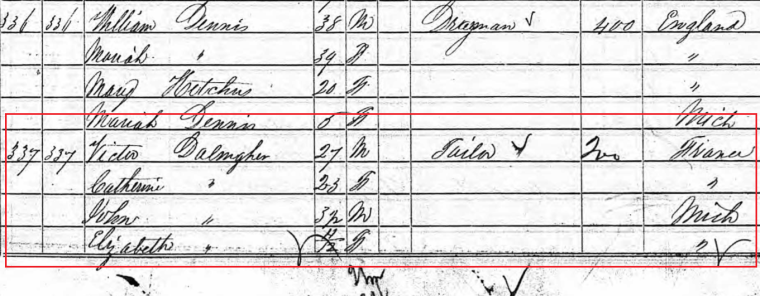
After realizing that Catherine Grentzinger was married to Victor Dellinger in 1846, my next step was to look for them in the 1850 census (Figure 6).7  Bingo!

Figure 6:  Victor Dalmgher household in the 1850 U.S. Census.7victor-dalmgher-household-p-1-crop

They were indexed under Victor Dalmgher, and it doesn’t look like a transcription error, but rather a spelling that’s true to what was recorded in the census.  At this point I don’t know which version is closer to Victor’s true surname, but as my undergraduate research mentor used to tell me, “Keep gathering data, and truth will emerge.”  What’s really exciting about this record is the fact that there are two children living with the parents, previously unknown to me. Also listed with this household, but appearing at the top of the next page, is Catherine’s brother, Peter, recorded here as “Gransan” (Figure 7).

Figure 7:  Peter Gransan in the household of Victor Dalmgher, 1850 U.S. Census.7victor-dalmgher-household-p-2-crop

That was as far as I got with my pursuit of the BSO that afternoon before my husband came looking for me, wondering why I wasn’t dressed and ready for our date yet.  (Have I mentioned that he’s a saint?)  While it’s true that my journey down the rabbit hole kept me from finishing the task I’d assigned for myself, I was still able to complete that research task the next day.  And I’m absolutely thrilled with the fascinating new insights into my Grentzinger ancestors that resulted from one little dalliance with a BSO.

 Sources:

New York, Passenger Lists, 1820-1957 (image), Henry Wagner family, S.S. Erbpring Luidrich August, 29 September 1853, http://ancestry.com, subscription database, accessed January 2017.

2 Assumption Grotto Cemetery, Detroit, Michigan (image and transcription), Elizabeth Eckert Granzinger headstone, 1800 – 5 August 1854, Memorial #108389561, http://findagrave.com, accessed February 2017.

3 1870 U.S. Census (population schedule), Detroit, Wayne, Michigan, 1st precinct, 6th ward, page 11, Henry Wagner household, http://ancestry.com, subscription database, accessed February 2017.

Michigan, County Marriages, 1820-1940,  (images and transcriptions), record for Victor Dellinger and Catherine Grenzinger, http://familysearch.org, accessed February 2017.

Assumption Grotto Cemetery, Detroit, Michigan to Julie Szczepankiewicz, Notes from telephone conversation, 15 January 2015.

Michigan, County Marriages, 1820-1940, (images and transcriptions), record for Henry Wagner and Catherine Dellinger, http://familysearch.org, accessed February 2017.

7 1850 U.S. Federal Census (population schedule), Detroit, Wayne, Michigan, page 156B and 157, Victor Dalmgher household, http://ancestry.com, subscription database, accessed February 2017.

© Julie Roberts Szczepankiewicz 2017.

“Grandma said she was from Poznań”: Decoding Stories About Ancestors from Poland

Most of us use family stories as the starting point for our genealogy research. However, the truth can sometimes get distorted, and it’s our job as family historians to sort out the historical fact from the fiction.  With that in mind, I’d like to offer some suggestions based on common misinterpretations, to help you decode those family stories and understand what Grandma really meant.

Story:  “Grandma said she was from Poznań.”

Analysis:  Most of our ancestors were from small villages, not big cities, so in all likelihood, Grandma didn’t mean she was from the city of Poznań proper.  Often an immigrant would generalize her place of birth to the closest big city under the assumption that her listener wouldn’t recognize the name of whatever small village she was actually born in.  We still do this today:  if I’m talking with someone who’s not familiar with Western New York, I might say, “I’m originally from Buffalo,” although it would be more accurate to say that I used to live in Williamsville, a village about 12 miles east of the city of Buffalo itself.  When I’m talking with another Western New Yorker, I can be more specific. In my family history, the Great-Grandma who said she was from Poznań was from the village of Kowalewo-Opactwo, about 48 miles east. Looking for her in records from the city of Poznań itself would be an exercise in frustration and a waste of time.

Story:  “On Great-Grandpa’s World War I draft registration, he stated that he was from Płock, but on his passenger manifest he said that he was from Bieżuń.  Which one do I trust?”

Analysis:  Both.  Sometimes our ancestors referenced a larger administrative division rather than the smallest one, just as I might sometimes say I was born in New York, rather than Buffalo.  Gather all the bits of evidence for your ancestor’s place of origin, then check a gazetteer to see if they can be reconciled.  In this example, the village of Bieżuń was the seat of gmina Bieżuń within the Sierpc powiat and the Płock gubernia of Russian Poland.  (A gmina is an administrative division similar to a township, serving multiple small villages, but smaller than a powiat, which is comparable to a county.  A gubernia is like a province.)  Consequently, any reference to Bieżuń, Sierpc, or Płock on documents pertaining to Great-Grandpa’s place of birth might be consistent with the same location.  Not sure which gazetteer to use?  Check out the section entitled “Maps, Phonetic Gazetteers, and Period Gazetteers” in this previous post.

Story:  “Grandpa was Polish, and he was born somewhere near the Russian border.”

Analysis:  As discussed in a recent post, Poland didn’t exist as an independent nation from 1795 until 1918.  So statements like this one, which presuppose that Grandma was born in Poland near the border with Russia, are immediately suspect.  In most cases, “near the Russian border” means somewhere in Russian Poland – either the Kingdom of Poland or the Kresy (the eastern borderlands that were part of Poland between the world wars). Similarly, “near the German border” suggests Prussian Poland, and “near the Austrian border” suggests Galicia.

In my experience, these “border” stories were an attempt to reconcile the apparent conflict between the fact of someone’s Polish ethnicity and his documented Prussian (for example) nationality.  Grandpa may have come from someplace solidly within Prussian Poland, not particularly close to the actual border with Russia, but nonetheless the “border” stories persist.  Since ethnicity has more to do with language, culture, and religion than with citizenship, even if Grandpa was a citizen of Prussia, we should not infer that he was ethnically German, for the same reason that I would not suddenly become an ethnic Mexican if Mexico were to invade the U.S. tomorrow.

Story:  “Great-Grandma’s passenger manifest from 1900 says she was 20, but the 1930 census says she was only 45. Therefore she must have lied about her age on the census.”

Analysis:  I always cringe when I hear accusations that ancestors lied about their age. Unless it’s something really egregious, I like to give Grandma the benefit of the doubt and assume that any discrepancy was an innocent mistake, rather than assuming an intent to deceive. In rural, agrarian society it just wasn’t necessary to know one’s birthdate precisely, and many of our ancestors didn’t know their exact birthdate, or they might remember the day, but not the year.  When evaluating records for your Polish ancestor, it’s not uncommon for someone’s reported age to be off by a few years in either direction.  This is as true in records from Poland as it is in U.S. records.  For example, many parish priests had a tendency to round the ages of declarants and witnesses, which is evident when all the key participants just happen to be 30, 40 or 50 with nary an odd-numbered age in the bunch.

Story: “Great-Grandpa Albert must have lied about his birthdate.  He said it was in April, but I found his baptismal record from Poland and he was actually born in September.”

Analysis:  This is a corollary to the situation described above, but with a twist.  Many Americans don’t realize that in Polish culture, name days were traditionally more important than birthdays.  Name days (imieniny) are the designated feast days dedicated to canonized saints within the Roman Catholic church.  For example, the feast of St. Adalbert is celebrated on April 23, so men named Albert/Adalbert or Wojciech (the equivalent of this name in Polish) would be celebrated on that day, regardless of when their actual birthdays were.  In practice, the feast day calendar sometimes influenced the choice of names given to a child, with parents naming their child after a saint whose feast day was on or close to the child’s actual date of birth.  However, your mileage may vary with this.  In some cases, multiple saints bore the same name throughout history, e.g. St. John the Evangelist, St. John the Baptist, St. John Kanty, St. John of God, St. John Nepomucene, etc., so the same name might have multiple feast days associated with it throughout the year.  In this case, there’s really no way of knowing just which Saint John was your ancestor’s patron unless it is specified in his baptismal record.

Story:  “I’d love to find Grandma’s birth record in Poland, but I’ve heard it’s no use, because all the records were destroyed in the wars.”

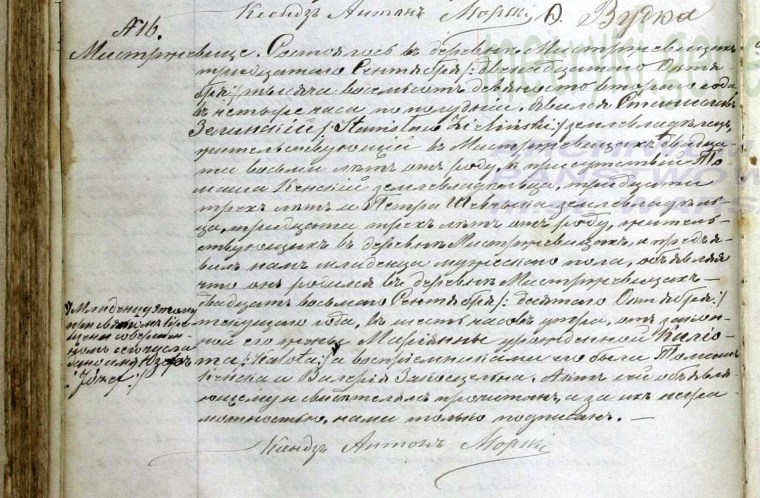
Analysis:  This misconception has prevented many a family historian from trying to explore his roots in Poland.  I’ll be honest — at one point, I fell for it, too.  Back in the earlier days of my research, I determined that my great-grandfather, Józef Zieliński, was born in the village of Mistrzewice, in Młodzieszyn township.  Thanks to the old Rootsweb genealogy mailing lists, I found another researcher who was also interested in the Zieliński surname in Młodzieszyn.  He’d been to Poland, visited the parish, and assured me that all records prior to 1945 were destroyed.  This was about 12 years ago, before it was easy to check online for availability of records in the Polish State Archives, and back before anything much was online, so I don’t blame that researcher at all.  He was going on the best information that he had, but it’s up to each of us to do our own due diligence.  At that point, I assumed that I would never learn anything more about my Zieliński family in Poland, and with a heavy heart, I moved on to other lines of research.

It wasn’t until 2012 that I discovered that some records for Mistrzewice and Młodzieszyn did survive the war, and were indexed on Geneteka. (If you’re interested, that story is told here).  Admittedly, the range of years covered by the surviving records is limited, but between these documents and some letter-writing to the local civil registry office (Urząd Stanu Cywilnego, or USC) in Młodzieszyn, I was able to add another 1-3 generations of ancestors (depending on the line) to my Zieliński family tree.  If I’d believed the story that all the records were destroyed and had stopped looking, I’d have missed out.

These are a few examples of common misunderstandings that I’ve heard from people as they begin to research their Polish ancestry.  What about you?  What are some misunderstandings that you had when you began your research?  What are the stories in your family that you’ve discovered weren’t quite accurate, once you dug a little deeper?  I’d love to hear from you in the comments!  In the meantime, happy researching.

Featured photo credit:  Detail of map, “Posen 1905”, courtesy of Wikimedia Commons, is in the public domain.

© Julie Roberts Szczepankiewicz 2017

Niagara River Stories

Rivers seem to run through my blood.  I was born in Western New York, and my first home was on Grand Island, in the middle of the Niagara River.  I have no memory of living there, because we moved to Omaha, Nebraska before I turned three, and then to Cincinnati, Ohio when I was four, but we would often return to Buffalo to visit family, and eventually moved back to Western New York when I was ten.  Even as a child I was impressed by how the narrow, muddy Ohio River just couldn’t compare to the blue depths of the mighty Niagara.

My Dad grew up on the Island, surrounded by the River.  His family moved there from Buffalo when he was about eight. As a teenager, he and his brother Peter played the dangerous game of going down to the water’s edge in winter and jumping from ice floe to ice floe to see how far out they could get, away from the shore.  As a young man, he would borrow Peter’s boat to court my mother, who lived on the other side of the river in North Tonawanda.  And at the age of forty-three, he survived a plane crash into the Niagara, when the water was only thirty-eight degrees and he had to save the pilot’s life and start swimming to shore while hypothermia was setting in.  But that’s another story for another day.

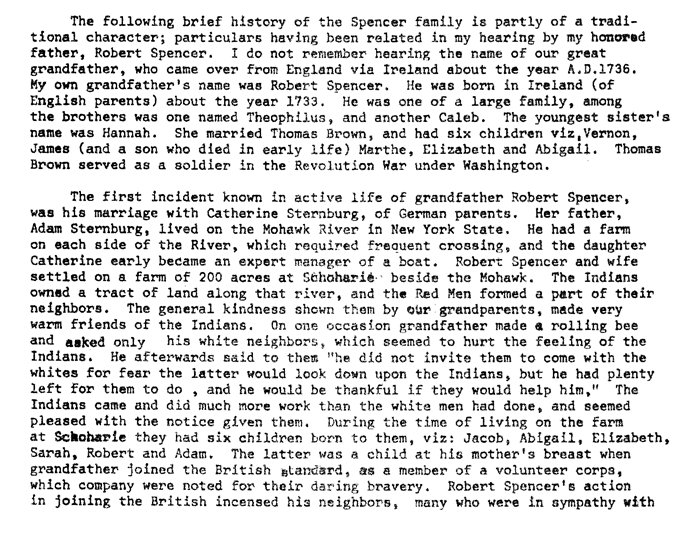
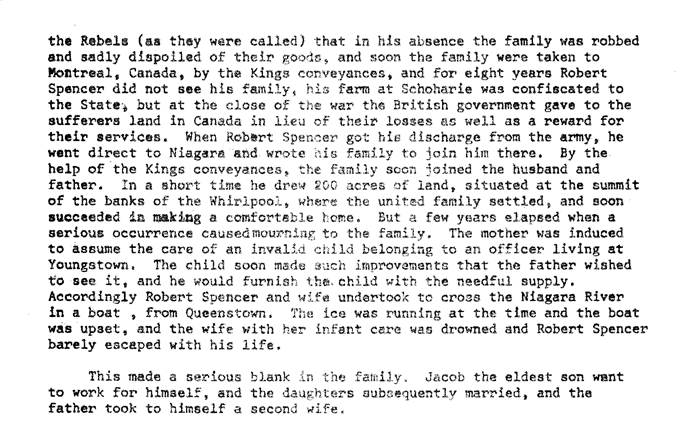
The Niagara River has been a part of my family history since the late 1700s, when my Loyalist ancestors, Robert and Catherine (née Sternberg) Spencer were granted land overlooking the Niagara River in what is now Niagara Falls, Ontario, in gratitude for Robert’s service in Butler’s Rangers during the American Revolutionary War. Before the war, another river featured prominently in their lives — the Mohawk River in what is now Central New York State.  How do I know this? I’m blessed to know a surprising amount about the lives of these ancestors, thanks to the memoirs written by their grandson, Adam Spencer, which were published after his death as a series of newspaper articles in the Norwich Gazette in 1889.  At present, I have a transcript of these articles published in 1977 in the newsletter of the Canadian Friends Historical Association (Adam Spencer was a member of the Religious Society of Friends, also known as Quakers.)1 A transcript isn’t as good as the actual newspaper articles on microfilm, of course, so that’s on my to-do list for needed documents, but this is what I’ve got right now.

canadian-quakers-newsletter1

Most of these memoirs concern the life of Adam Spencer himself, not surprisingly, and my direct line goes through his aunt, Sarah Spencer, who married John Hodgkinson, rather than through him.  So the parts that are most interesting to me are the parts about his grandparents, Robert and Catherine Spencer.  I’ll let Adam tell their story in his own words:

adam-spencer-memoirs-p-1

adam-spencer-memoirs-p-22

I have my doubts about the historical accuracy of certain parts of Adam’s story, particularly regarding Robert Spencer’s birth in Ireland, but that, too, is another story for another day.  Today what impresses me is all the lush detail presented in this passage — so many glimpses into the lives of these ancestors who lived so long ago. I like the image (historically accurate?) of Catherine as a girl of about 10, maybe, rowing across the Mohawk to travel to different parts of her parents’ farm in an era when many girls her age might be stitching samplers.  I can picture her and her young husband Robert as newlyweds, hosting the log-rolling bee to clear the land of timber as they set up their new farm near her parents along the Mohawk.  I honor her courage in packing up her six children and traveling to Montreal to wait out the war, hoping and praying for her husband’s safety. I imagine her affectionate smile as she bundled the child up in warm clothing before climbing into the rowboat on that fateful day as they attempted to cross the river to Fort Niagara.  I like to think that maybe she was watching over her 5x-great-grandsons, my Dad and his brother, keeping them safe when they were jumping from floe to floe in the river in the 1950s.  And maybe she was watching over Dad again on the day his plane crashed, when he was  rescued from the frigid waters of the Niagara before he lost consciousness.

It’s just one river, but it has so many stories to tell.

Sources:

1Spencer, Adam.  “OId Time Experiences In the Bush and On the Farm”.  Canadian Friends Historical Association 19 (March 1977):  p. 1.

2Ibid, p. 7-8.

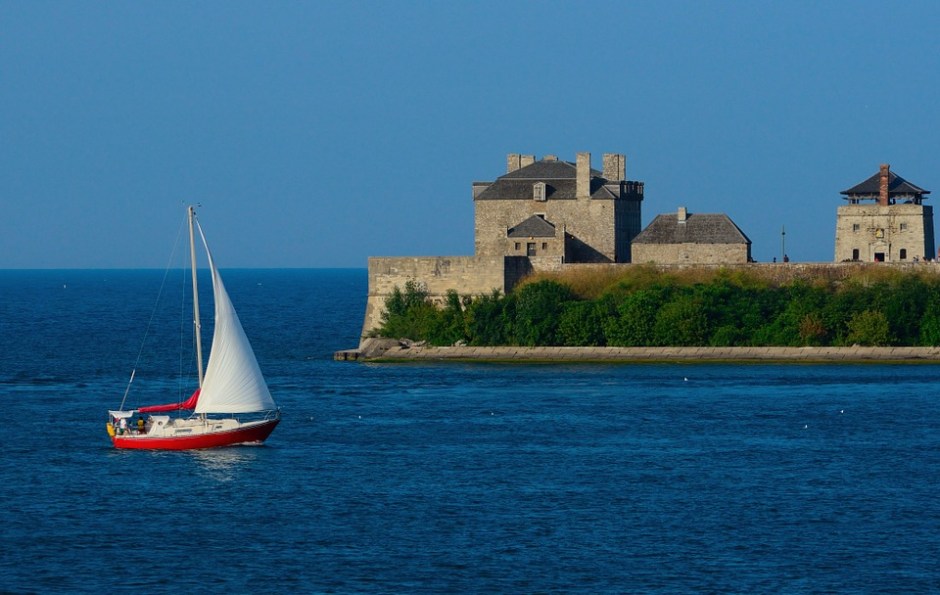
Cover photo:  Sailboat on the Niagara River in front of Old Fort Niagara, courtesy of MaxPixel.FreeGreatPicture.com, is in the public domain.

© Julie Roberts Szczepankiewicz 2017

Those Infamous Border Changes: A Crash Course in Polish History

Newcomers to Polish genealogy often start with a few misconceptions.  Many Americans have only a dim understanding of the border changes that occurred in Europe over the centuries, and in fairness, keeping up with all of them can be quite a challenge, as evidenced by this timelapse video that illustrates Europe’s geopolitical map changes since 1000 AD.  So it’s no wonder that I often hear statements like, “Grandma’s family was Polish, but they lived someplace near the Russian border.”  Statements like this presuppose that Grandma’s family lived in “Poland” near the border between “Poland” and Russia.  However, what many people don’t realize is that Poland didn’t exist as an independent nation from 1795-1918.

How did this happen and what were the consequences for our Polish ancestors?  At the risk of vastly oversimplifying the story, I’d like to present a few highlights of Polish history that beginning Polish researchers should be aware of as they start to trace their family’s origins in “the Old Country.”

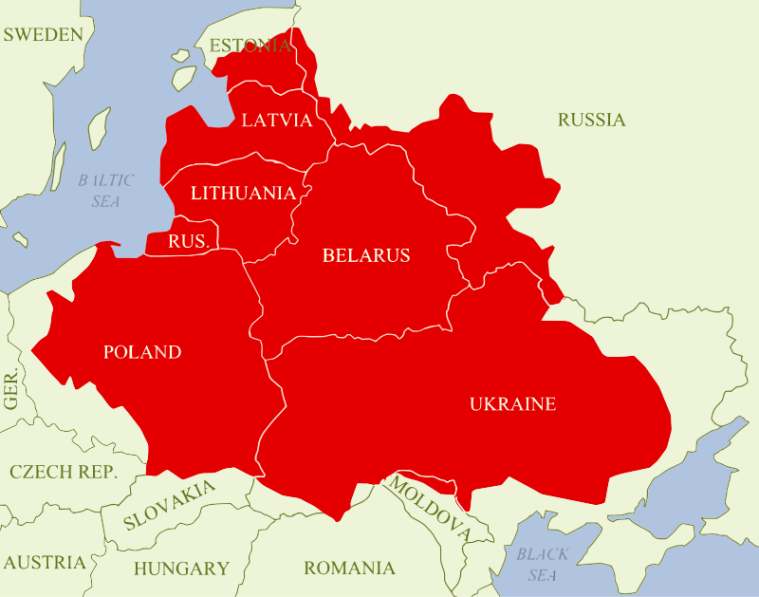
Typically, the oldest genealogical records that we find for our Polish ancestors date back to the Polish-Lithuanian Commonwealth, which existed from 1569-1795.  At the height of its power, the Commonwealth looked like this (in red), superimposed over the current map (Figure 1):1

Figure 1:  Polish–Lithuanian Commonwealth at its maximum extent, in 1619.1polish-lithuanian_commonwealth_at_its_maximum_extent-svg

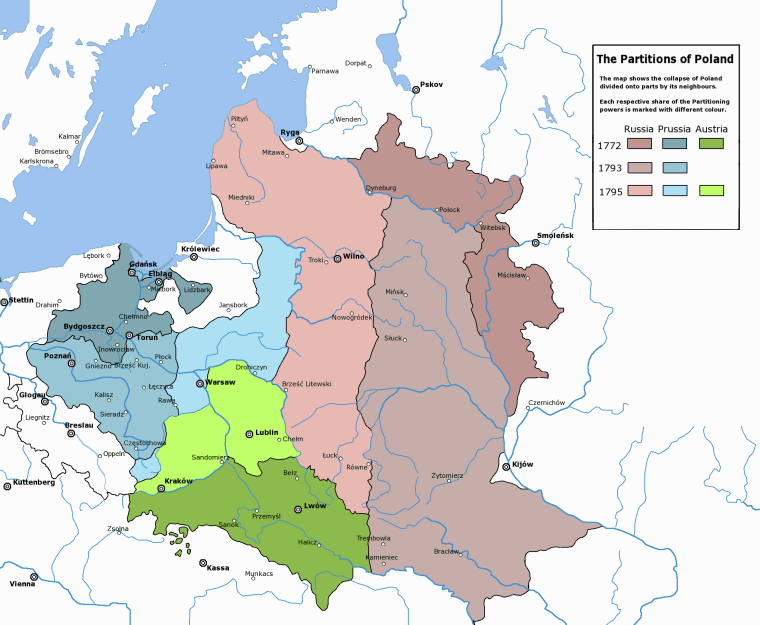
The beginning of the end for the Commonwealth came in 1772, with the first of three partitions which carved up Polish lands among the Russian, Prussian, and Austrian Empires.  The second partition, in which only the Russian and Prussian Empires participated, occurred in 1793.  After the third partition in 1795, among all three empires, Poland vanished from the map (Figure 2).

Figure 2:  Map of the Partitions of Poland, courtesy of Wikimedia.2partitions-of-poland

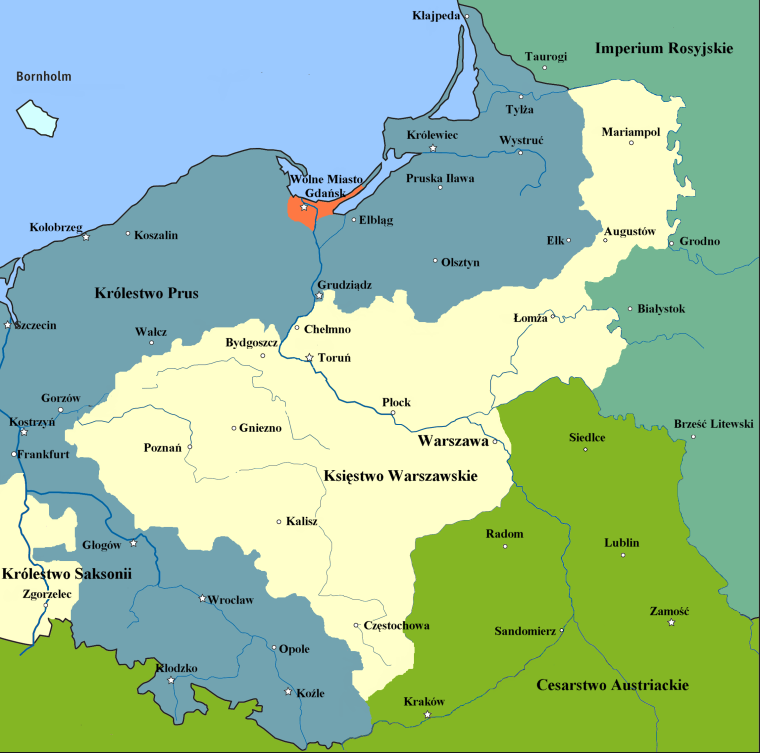
This map gets trotted out a lot in Polish history and genealogy discussions because we often explain to people about those partitions, but I don’t especially like it because it sometimes creates the misconception that this was how things still looked by the late 1800s/early 1900s when most of our Polish immigrant ancestors came over.  In reality, time marched on, and the map kept changing. By 1807, just twelve years after that final partition of Poland, the short-lived Duchy of Warsaw (Figure 3) was created by Napoleon as a French client state.  At this time, Napoleon also introduced a paragraph-style format of civil vital registration, so civil records from this part of “Poland” are easily distinguishable from church records.

Figure 3:  Map of the Duchy of Warsaw (Księstwo Warszawskie), 1807-1809. 3duchy_of_warsaw_1807-1809

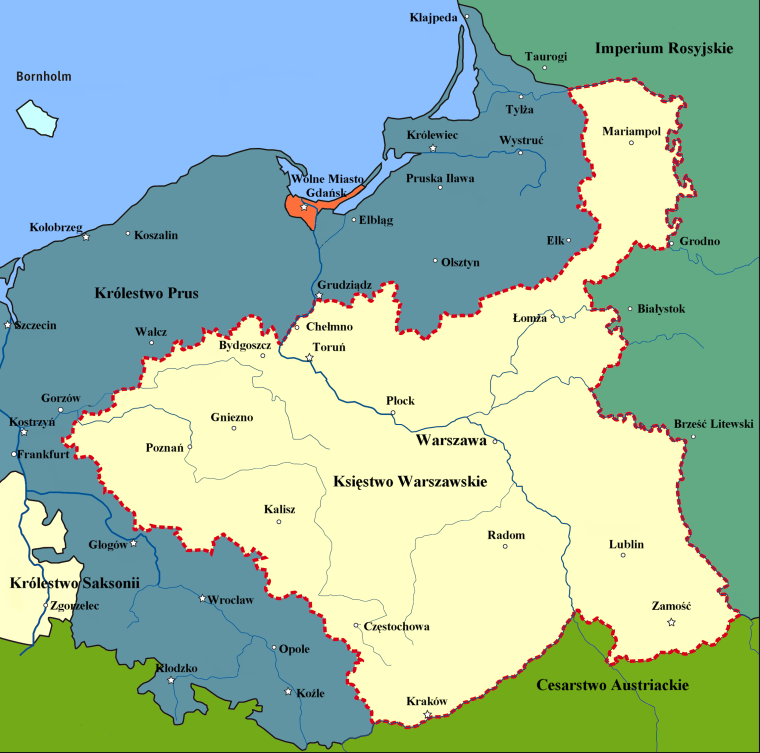
During its brief history, the Duchy of Warsaw managed to expand its borders to the south and east a bit thanks to territories taken from the Austrian Empire, as shown in Figure 4.

Figure 4:  Map of the Duchy of Warsaw, 1809-1815.4duchy_of_warsaw_1809-1815

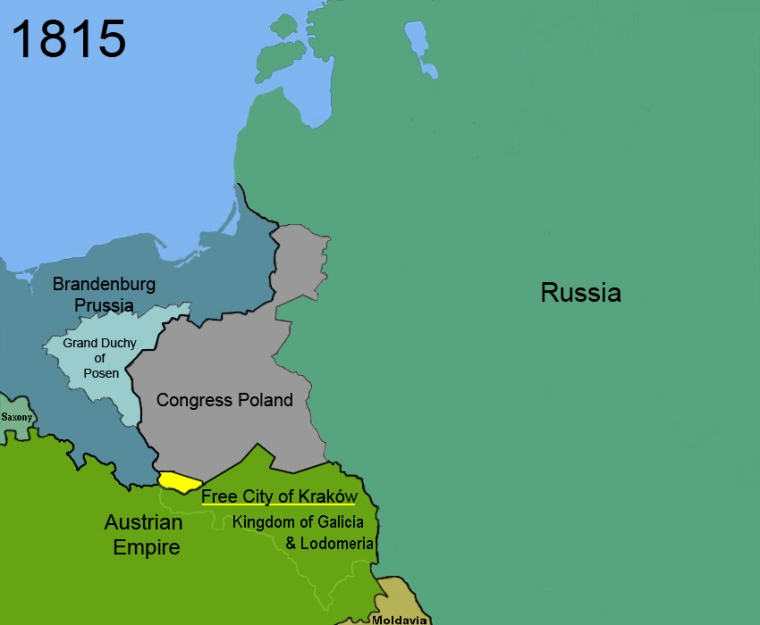
However, by 1815, following the end of the Napoleonic Wars, the Duchy of Warsaw was divided up again at the Congress of Vienna, which created the Grand Duchy of Posen (Wielkie Księstwo Poznańskie), Congress Poland (Królestwo Polskie), and the Free City of Kraków.  These changes are summarized in Figure 5.

Figure 5:  Territorial Changes in Poland, 1815 5territorial_changes_of_poland_1815

The Grand Duchy of Posen was a Prussian client state whose capital was the city of Poznań (Posen, in German).  This Grand Duchy was eventually replaced by the Prussian Province of Posen in 1848.  Congress Poland was officially known as the Kingdom of Poland but is often called “Congress Poland” in reference to its creation at the Congress of Vienna, and as a means to distinguish it from other Kingdoms of Poland which existed at various times in history. Although it was a client state of Russia from the start, Congress Poland was granted some limited autonomy (e.g. records were kept in Polish) until the November Uprising of 1831, after which Russia retaliated with curtailment of Polish rights and freedoms. The unsuccessful January Uprising of 1863 resulted in a further tightening of Russia’s grip on Poland, erasing any semblance of autonomy which the Kingdom of Poland had enjoyed. The territory was wholly absorbed into the Russian Empire, and this is why family historians researching their roots in this area will see a change from Polish-language vital records to Russian-language records starting about 1868.  The Free, Independent, and Strictly Neutral City of Kraków with its Territory (Wolne, Niepodległe i Ściśle Neutralne Miasto Kraków z Okręgiem), was jointly controlled by all three of its neighbors (Prussia, Russia, and Austria), until it was annexed by the Austrian Empire following the failed Kraków Uprising in 1846.

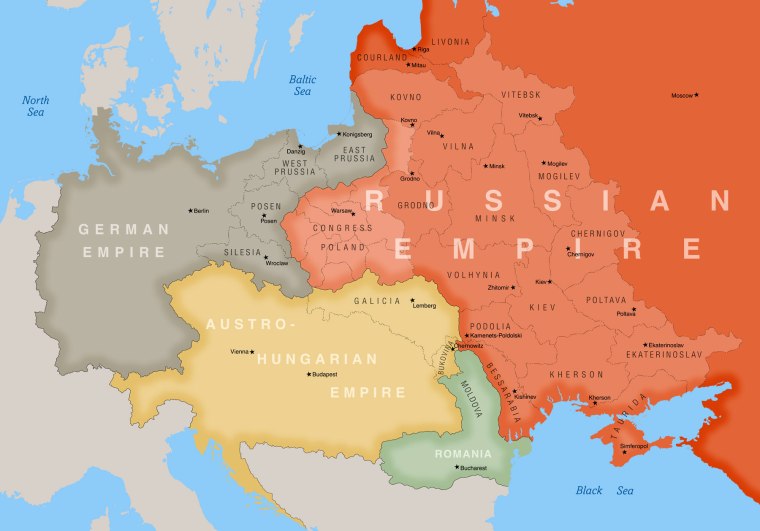
By the second half of the 19th century, things had settled down a bit.  The geopolitical map of “Poland” didn’t change during the time from the 1880s through the early 1900s, when most of our ancestors emigrated, until the end of World War I when Poland was reborn as a new, independent Polish state.  The featured map at the top (shown again in Figure 6) is one of my favorites, because it clearly defines the borders of Galicia and the various Prussian and Russian provinces commonly mentioned in documents pertaining to our ancestors.

Figure 6:  Central and Eastern Europe in 1900, courtesy of easteurotopo.org, used with permission.6europe_map_large

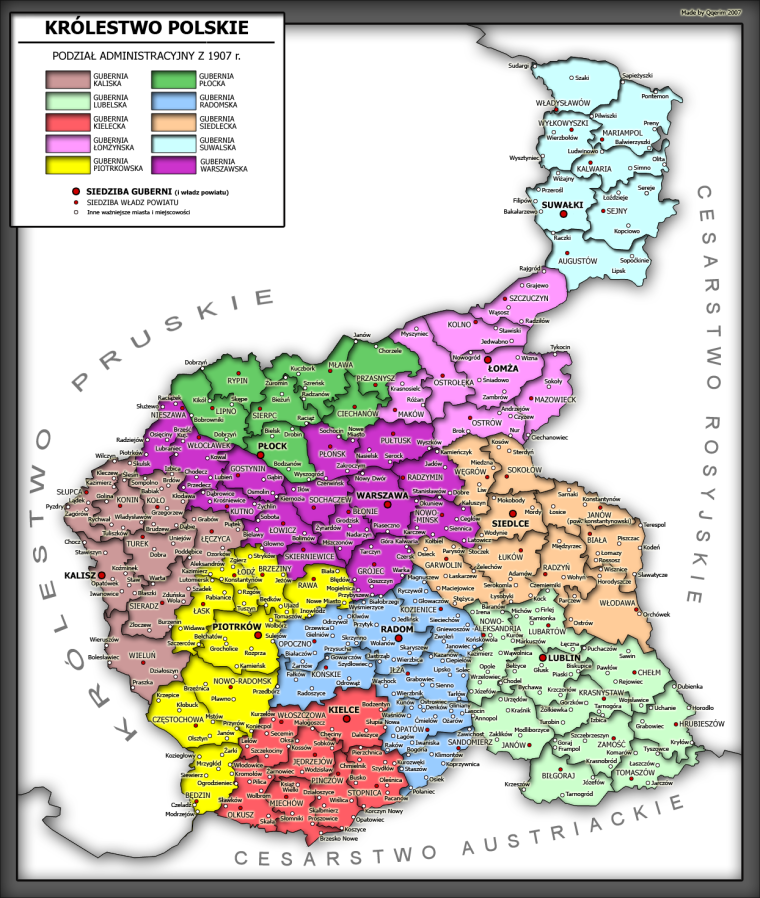
Although the individual provinces within the former Congress Poland are not named due to lack of space, a nice map of those is shown in Figure 7.

Figure 7:  Administrative map of Congress Poland, 1907.7  (Note that some sources still refer to the these territories as “Congress Poland” even after 1867, but this name does not reflect the existence of any independent government apart from Russia.)polska_1907_adm

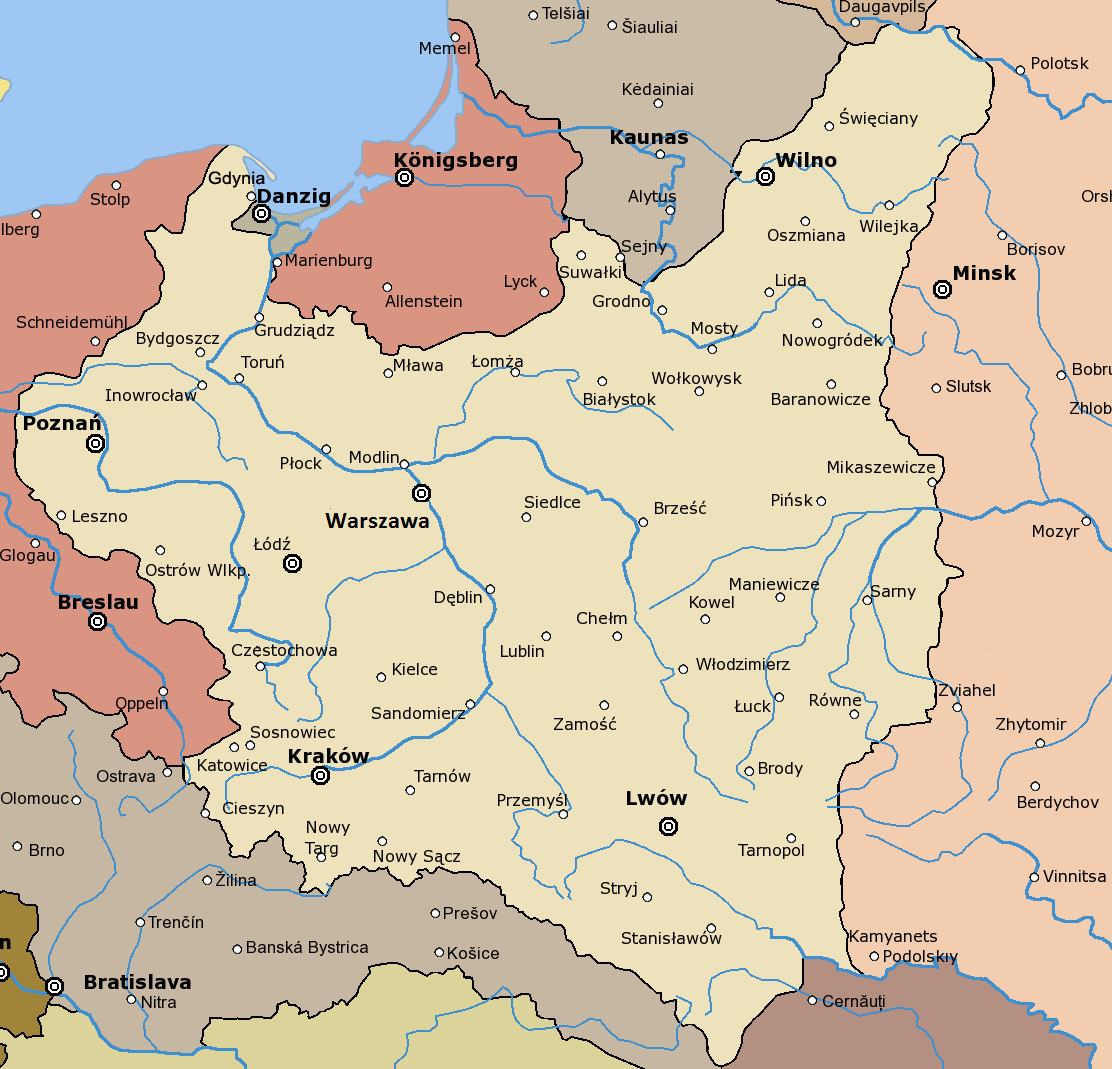
The Republic of Poland that was created at the end of World War I, commonly known as the Second Polish Republic, is shown in Figure 8.  The borders are shifted to the east relative to present-day Poland, including parts of what is now Lithuania, Ukraine, and Belarus.  This territory that was part of Poland between the World Wars, but is excluded from today’s Poland, is known as the Kresy.

Figure 8:  Map of the Second Polish Republic showing borders from 1921-1939.8rzeczpospolitaii

During the dark days of World War II, Poland was occupied by both Nazi Germany and Soviet Russia.  About 6 million Polish citizens died during this occupation, mostly civilians, including about 3 million Polish Jews.9  After the war, the three major allied powers (the U.S., Great Britain, and the Soviet Union) redrew the borders of Europe yet again and created a Poland that excluded the Kresy, but included the territories of East Prussia, West Prussia, Silesia, and most of Pomerania.10, 11 At the same time, the Western leaders betrayed Poland and Eastern Europe by effectively handing these countries over to Stalin and permitting the creation of the Communist Eastern Bloc.12

To conclude, let’s take a look at how these border changes affected the village of Kowalewo-Opactwo in present-day Słupca County, Wielkopolskie province, where my great-grandmother was born.  This village was originally in the Polish-Lithuanian Commonwealth, but then became part of Prussia after the second partition in 1793.  In 1807 it fell solidly within the borders of the Duchy of Warsaw, but by 1815 it lay right on the westernmost edge of the Kalisz province of Russian-controlled Congress Poland.  After 1867, the vital records are in Russian, reflecting the tighter grip that Russia exerted on Poland at that time, until 1918 when Kowalewo-Opactwo became part of the Second Polish Republic.  Do these border changes imply that our ancestors weren’t Poles, but were really German or Russian? Hardly. Ethnicity and nationality aren’t necessarily the same thing. Time and time again, ethnic Poles attempted to overthrow their Prussian, Russian or Austrian occupiers, and those uprisings speak volumes about our ancestors’ resentment of those national governments and their longing for a free Poland. As my Polish grandma once told me, “If a cat has kittens in a china cabinet, you don’t call them teacups.”

Sources:

1Polish-Lithuanian Commonwealth at its maximum extent” by Samotny Wędrowiec, is licensed under CC BY-SA 3.0, accessed 9 January 2017.

Rzeczpospolita Rozbiory 3,” by Halibutt, is licensed under CC BY-SA 3.0, accessed 9 January 2017.

3 Map of the Duchy of Warsaw, 1807-1809,” by Mathiasrex, based on layers of kgberger, is licensed under CC BY-SA 3.0., accessed 9 January 2017.

4“Map of the Duchy of Warsaw, 1809-1815” by Mathiasrex, based on layers of kgberger, is licensed under CC BY-SA 3.0, accessed 9 January 2017.

5 “Territorial Changes of Poland, 1815,” by Esemono, is in the public domain, accessed 9 January 2017.

6 “Central and Eastern Europe in 1900,” Topgraphic Maps of Eastern Europe:  An Atlas of the Shtetl, used with permission, accessed 9 January 2017.

7 “Administrative Map of Kingdom of Poland from 1907,” by Qquerim, is licensed under CC BY-SA 3.0, accessed 9 January 2017.

8 RzeczpospolitaII,” is licensed under CC BY-SA 3.0, accessed 9 January 2017.

9 Occupation of Poland (1939-1945),” Wikipedia, accessed 9 Janary 2017.

10  “Potsdam Conference,” Wikipedia, accessed 9 January 2017.

11 Territorial changes of Poland immediately after World War II,” Wikipedia, accessed 9 January 2017.

12 “Western betrayal,” Wikipedia, accessed 9 January 2017.

© Julie Roberts Szczepankiewicz 2017

Thank Goodness for Godparents! Researching my Ancestors’ FANS, Part II

In my last post, I wrote about using Elizabeth Shown Mills’ FAN principle with an emphasis on godparents, as a means to extend one’s family history research in the absence of direct evidence.  As Mills defines it, “FAN” is an acronym for Friends, Associates, and Neighbors, and godparents fall squarely into that category. Previously, I had analyzed data from the Polish vital records database Geneteka, and discovered a woman named Marianna (née Naciążek) Kowalska, who might have been a cousin or sister of my great-great-grandmother, Antonina Naciążek.  To gather additional evidence to substantiate this hypothesis, I examined the godparents of Antonina’s children to see if Marianna Kowalska was named among them.  Sure enough, one of the godmothers was a Marianna Kowalska, and even given the popularity of the Kowalski surname, it seems likely that she is the same as the woman I suspect to be my great-great-grandmother’s sister (or cousin, at least), under the circumstances.

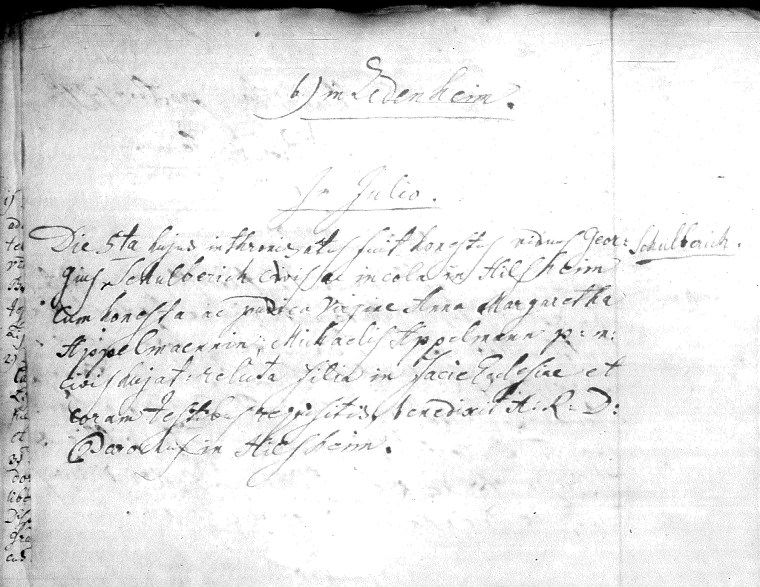
This kind of analysis can also be used in reverse, to suggest a possible mother’s maiden name, which is what I’d like to illustrate today.  A few years ago I was working on my Schulmerich line which I had traced back to Hillesheim, Mainz-Bingen, Rhineland-Palatinate, Germany.  Records are on microfilm from the LDS, but they’re also indexed and searchable online at Family Search.  I had worked my way back to my 5x-great-grandparents, Johann Georg Schulmerich and Anna Margaretha Appelmann, who were married in 1797 (Figure 1):

Figure 1:  Marriage record from Hillesheim (kr. Oppenheim) for Johann Georg Schulmerich and Anna Margaretha Appelmann, 5 July 1797.1j-georg-schulmerich-am-appelmann-1797

In translation, this reads, “July.  On the 5th day of this [month] were married the honorable widower Georg Schulberich, townsman residing in Hillesheim, with the honorable, upright maiden Anna Margaretha Appelmaenn, surviving daughter of the late townsman Michael Appelmann. [The marriage was] blessed by the Most Reverend Pastor of the parish in Hilsheim before the congregation and in the presence of required witnesses.”

As you can see, the parents of Georg Schulmerich are not mentioned.  The record indicates that he was married previously, however, which is a valuable clue.  Perhaps his first marriage record contains his parents’ names?  A search of indexed records at Family Search suggests that Georg’s first wife was Apollonia Weber, as there are a number of birth records for children of Georg Schulmerich and Apollonia Weber that can be found in the parish records for Weinolsheim, just 5 km north of Hillesheim.  Unfortunately, no marriage record for Georg and Apollonia was found in any of the indexed records on Family Search, nor was I able to find one in the microfilmed records for Weinolsheim that the indexers might have missed.

Lacking a marriage record, we can still estimate that Georg Schulmerich married Apollonia Weber circa 1786-1787, since existing birth records suggest that their oldest child was their daughter Anna Maria, and Georg and Apollonia were already “conjuges legitimi” (lawfully married spouses) by the time she was born in October 1787 (Figure 2).2

Figure 2:  Baptismal record from Hillesheim for Anna Maria Schulmerich, born 4 (?) October 1787.2anna-maria-schulmerich-1787

Assuming that Georg was at least 18 when he married, and probably a few years old than that, this suggests a birth year between about 1761 and 1768.  Lo, and behold!  There’s a birth record that fits perfectly for Johann Georg Schulmerich in in the records of Hillesheim in 1766 (Figure 3).

Figure 3:  Baptismal record for Johann Georg Schulmerich, baptized 21 December 1766 in Hillesheim.3johann-georg-schulmerich-1766

In translation, this record reads, “[On] 27th December in Hillesheim was baptized Johann Georg, [son of] the lawful spouses Philipp and Margaretha Schulmerich, [who was] lifted up by Johann Georg Lindhoff.”  The word “levabet” that appears in this record is presumably a misspelling of “levavit,” meaning, “lifted up.”  This is a reference to the child’s godfather, who lifts him out of the waters of the baptismal font during the sacrament of baptism.  The record even includes Johann Georg’s death date, 20 March 1836, in the marginal note.  This is another valuable clue because it suggests that the Johann Georg Schulmerich who was baptized here, remained in the parish until his death, which is consistent with what we know of “my” Johann Georg Schulmerich.

For those who might not be familiar with German genealogy, it’s worth mentioning that the difference in the names used on the marriage and baptismal records, “Georg” on the marriage vs. “Johann Georg” on the baptismal, is not cause for concern.  According to German tradition, it was common for all the boys in a family to be  baptized with the first name Johann, and then called by their middle name (see this article for more details).  So although the names on the records are not a problem, and the date of baptism fits with what we’d expect for “our” Johann Georg Schulmerich, there is still the problem of no maiden name for Margaretha Schulmerich.  Maybe it’s recorded on the birth record of one of their other children?

A search in the indexed records at Family Search for children of Philipp Schulmerich and Margaretha, no maiden name specified, results in four birth records, which are summarized in Figure 4.

Figure 4:  Summary of Information Recorded in Baptismal Records for Children of Philipp and Margaretha Schulmerich.

baptism-summary-table

From this, we can guess that Philipp and Margaretha Elisabeth were married circa 1765-1766, since Johann Georg appears to be their oldest child.  Although the spacing of births is typical, the relatively small number of children suggests that Margaretha died young, assuming that she was in her late teens or early 20s when she began having children.  Once again, a search of the indexed records for the Rhinehessen region on FamilySearch failed to produce Philipp and Margaretha’s marriage record or a death record for either of them, nor were these found in a subsequent search of microfilmed records. However, the fact that Johann Georg remained in the parish, as did his sister Anna Elisabeth, suggests an error or omission on the part of the priest keeping the records, rather than a migration out of the area.

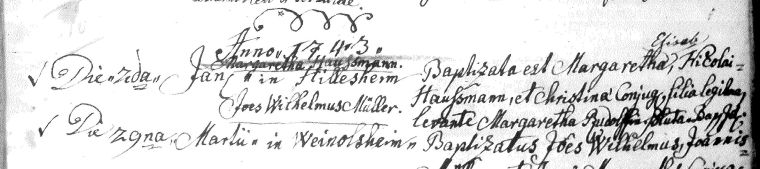
So, is this the end of the line?  Can we learn anything more about this family? Of course we can! Note that two of the godmothers had the maiden name Hausmann, and one was a Schulmerich.  The godmother, Maria Magdalena Schulmerich, might have been either a sister or sister-in-law to Philipp, but the sparsely available records from this time period offer no insight there. However, a search for Anna Elisabeth Hausmann’s birth record turns up a promising candidate:  one Anna Elisabeth Hausmann, born in 1744 in Hillesheim (Figure 5).

Figure 5:  Baptismal record for Anna Elisabeth Hausmann, baptized 30 October 1744 in Hillesheim.7anna-elisabetha-hausmann-1744

In translation, this states, “On the 30th day of October in Hillesheim was baptized Anna Elisabeth, legitimate daughter of the spouses Nicolaus and Christina Haussmann, [she was] lifted up by Anna Elisabeth Schad.”

Nicolaus and Christina Hausmann!  Might there be more records for their children, and might these records include evidence for a daughter named Margaretha Elisabetha?  Since her oldest son, Johann Georg Schulmerich, was born in 1766, we can guess that Margaretha would have been born circa 1746.  And voilà!  The FamilySearch index shows nine births to Nicolaus and Christina Haussmann including the births of daughters Margaretha Elisabetha in 1743 (Figure 6) and Maria Charlotta, who was noted as the godmother of Maria Charlotta Schulmerich.

Figure 6:  Baptismal record for Margaretha Elisab. Haussmann, baptized 2 January 1743 in Hillesheim.8margaretha-elisabetha-hausmann-1743


In translation, this record reads, “On the 2nd day of January in Hillesheim was baptized Margaretha Elisab., legitimate daughter of the spouses Nicolaus and Christina Haussmann, [she was] lifted up by Margaretha Rudolf, single.”

Taken all together, this is pretty good indirect evidence that Margaretha Elisabeth Haussmann, daughter of Nicolaus and Christina, was the wife of Johann Georg Schulmerich.  Paying attention to the names of the godparents paid off, and I was able to push the family tree back one more generation.  It should be noted that this information is only available when one views the images of the parish register on microfilm — the FamilySearch index does not include godparents’ names.  This is one of many reasons why one should never rely solely on the information found in an online index, which is a common rookie mistake.  So the next time you think you’ve hit a brick wall with researching your Catholic ancestors, take a look at the list of people they asked to be godparents to their children.  You just might find some clues in there!

Sources:

Roman Catholic Church (Nieder Saulheim [Kr. Oppenheim], Mainz-Bingen, Rheinhessen, Germany), “Kirchenbuch, 1756-1797,” 1797, Marriage record for Georgius Schulberich and Anna Margaretha Appelmaenn.; FHL Film #997333 Item 2.

Roman Catholic Church (Weinolsheim [Kr. Oppenheim], Mainz-Bingen, Rheinhessen, Germany), “Kirchenbuch, 1740-1876,” Baptisms, 1787, record for Anna Maria Schulmerich.; FHL Film #949088.

Roman Catholic Church (Weinolsheim [Kr. Oppenheim], Mainz-Bingen, Rheinhessen, Germany), “Kirchenbuch, 1740-1876,” 1766, Baptisms, record for Johannes Georgius Schulmerich; FHL Film #949088.

Roman Catholic Church (Weinolsheim [Kr. Oppenheim], Mainz-Bingen, Rheinhessen, Germany), “Kirchenbuch, 1740-1876,” Baptisms, 1768, record for Anna Elisabetha Schulmerich; FHL Film #949088.

5 Roman Catholic Church (Weinolsheim [Kr. Oppenheim], Mainz-Bingen, Rheinhessen, Germany), “Kirchenbuch, 1740-1876,” 1770, Baptisms, record for Maria Magdalena Schulmerich; FHL Film #949088.

Roman Catholic Church (Weinolsheim [Kr. Oppenheim], Mainz-Bingen, Rheinhessen, Germany), “Kirchenbuch, 1740-1876,” 1773, Baptisms, record for Maria Charlotta Schulmerich; FHL Film #949088.

Roman Catholic Church (Weinolsheim [Kr. Oppenheim], Mainz-Bingen, Rheinhessen, Germany), “Kirchenbuch, 1740-1876,” 1744, Baptisms, record for Anna Elisabetha Haussman; FHL Film #949088.

Roman Catholic Church (Weinolsheim [Kr. Oppenheim], Mainz-Bingen, Rheinhessen, Germany), “Kirchenbuch, 1740-1876,” 1743, Baptisms, record for Margaretha Elisab. Haussmann; FHL Film #949088.

Featured Image:  Pietro Longhi, The Baptism, Courtesy of Wikimedia Commons, accessed on 11 January 2017.

© Julie Roberts Szczepankiewicz 2017


Godparents: Ideal Candidates for Analysis Via the FAN Principle

Who were your ancestors’ FANS?  Genealogist Elizabeth Shown Mills first suggested this handy acronym for Family, Associates, and Neighbors and explained, “To prove identity, origin and parentage, study individuals in the context of their FAN club.”1 When it comes to researching my Catholic ancestors, some of my favorite FANS include the godparents that are named on their children’s baptismal records.

Why Godparents?

According to Catholic Canon Law, godparents must be baptized and confirmed members of the Catholic Church who have received the Eucharist.  They must also be at least 16 years of age, although exceptions can be granted, and they may not be the same as the parents.  Typically there is one godfather and one godmother, although sometimes additional godparents were named, especially for the baptism of a noble child.  Godparents were often relatives of the child, as is still the practice today, although there is no requirement for this, and it’s not uncommon for parents to ask close friends to serve as godparents.  Depending on the family culture, godparents might be a married couple, or one might come from the father’s side of the family and one from the mother’s side.  The role of godparents is to provide spiritual support to the parents as they raise their child in the Catholic faith, and some families have an understanding that the godparents will assume financial responsibility for the child in the event of the parents’ death.  Since this is such an important role, godparents are clearly worthy of some of our attention as genealogists.

Godparents are also especially noteworthy as FANs because one of them is usually a woman, which can provide clues about women’s married names in the era before women were commonly named as legal witnesses. Let’s examine some of the ways in which godparents can shed some light on questions of identity in genealogical problems.

The Naciążek Family, Revisited

In my last post, I wrote about my great-great-grandmother, Antonina (née Naciążek) Zarzycka, the frustrating lack of birth, marriage or death records for her, and why it’s possible that her birth and marriage records might no longer exist, based on where those events were likely to have taken place.  I also examined evidence regarding a contemporary of hers named Marianna (née Naciążek) Kowalska, who is likely to be a relative based on the rarity of the surname and the geographic proximity of her village of residence to that of Antonina.  However, one piece of evidence I did not examine in that post was the issue of godparents:  If Antonina Zarzycka and Marianna Kowalska were cousins or even sisters, as I suspect, then one would expect each of them to be named as a godmother to a child or children of the other.  So what do the records say?

Unfortunately, there are no baptismal records available for the five known children of Marianna (née Naciążek) Kowalska.  That leaves the baptismal records for the eleven children of Antonina (née Naciążek) Zarzycka, which are summarized in Figure 1.

Figure 1: Summary of Godparents of Children of Ignacy Zarzycki and Antonina (née Naciążek) Zarzycka.figure-1

And there we have it — the “smoking gun” is the godmother of Florentyna Zarzycka — Marianna Kowalska.  Kowalski (in combination with the feminine form of the name, Kowalska) is a very popular surname, and if we were to consider only the names of the godparents in absence of other data, it would not be obvious which Marianna Kowalska was meant here.  However, in light of the other evidence that Antonina had a cousin or sister with this name who lived nearby, it seems likely that these Marianna Kowalskas are one and the same.

So who are these other godparents?  There is documentary evidence that Ignacy Zarzycki had just three siblings:  a brother Wincenty, and twin siblings Wojciech and Wiktoria.  Wiktoria’s first husband was Ludwik Karol Pszenicki, and Wojciech’s wife was Aniela Tempińska,. so it’s reasonable to conclude that those four godparents — Aniela Zarzycka, Wojciech Zarzycki, Wincenty Zarzycki, and Wiktoria Pszenicka — were siblings to Ignacy Zarzycki by blood or marriage.

Unfortunately, for the rest of the list, there are no obvious matches to known members of the Zarzycki family, and certainly not to the Naciążek family, about whom we know so little.  At first glance, Marianna Marcinkowska’s name stood out as a possible clue. As discussed in my previous post, Marianna (née Naciążek) Kowalska was remarried to Stanisław Marcinkowski in Giżyce in 1881. However, it’s obvious that the timing does not work for this to be the same person as Tomasz’s godmother, since he was born in 1856, 25 years earlier.  Given the propensity for families to intermarry in those days, the fact that the Marcinkowski family was associated with the Naciążek family may still be significant. None of the other surnames mentioned were associated with the Naciążek family (0r any variant of that surname) in any of the indexed records in Geneteka, anywhere in Mazowieckie province.

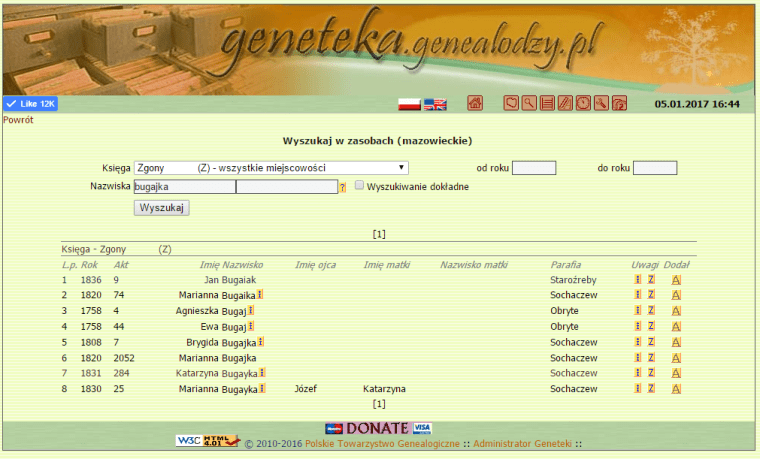
It’s still possible that these other godparents might be related to the Zarzycki/Naciążek family, and that the proof of the relationships lies in records that simply have not yet been indexed, or in records that no longer exist.  However, it’s also possible that some of these godparents were merely good friends of Ignacy and Antonina, which is the clear drawback of godparent analysis.  Some of the godparents’ surnames (e.g. Zieliński) are so common that, in absence of any direct evidence, it will be difficult to tie them to the Zarzycki/Naciążek family with any degree of certainty.  Some of them, like Bugajka, are tantalizingly rare, and it’s fascinating to note that one of the only parishes in which this surname is found in Geneteka is Sochaczew, which is one of the two parishes that seems to be associated with my Naciążek family (Figure 2).

Figure 2:  Geneteka search results for death records with the Bugajka surname in Mazowieckie province.figure-1

Could it be that Antonina Naciążek had a sister named Jadwiga who married a Bugajka, and it is she who was named as godmother to Józef Zarzycki in 1859?  Might she even be a daughter-in-law to one of the widows whose deaths are reported here?  It’s possible, maybe even probable, but at present, there’s not enough evidence to draw any conclusions.  My family should have no reason to wonder why I have insomnia some nights.

Speaking of insomnia-provoking questions, who the heck was Weronika Jaroszewska, and why was she named as godmother to three of Antonina’s children?  Another question for another sleepless night.

To sum up, in this example, we hypothesized that two women were siblings, predicted that they should be named as godmothers to each other’s children if that hypothesis were true, and then examined the evidence, which supported the hypothesis.  In my next post, I’ll offer an example of how this sort of analysis can also be used in reverse, to suggest a mother’s maiden name in absence of direct evidence for that.  In the meantime, happy researching!

Sources:

Mills, Elizabeth Shown. QuickSheet: The Historical Biographer’s Guide to the Research Process. Baltimore: Genealogical Publishing Co., 2012, p. 1.

Roman Catholic Church, St. Bartholomew’s parish (Rybno, Sochaczew, Mazowieckie, Poland), “Księga urodzeń 1845-1854,” 1850, #48, baptismal record for Maryanna Zarzycka.

3 Roman Catholic Church, St. Bartholomew’s parish (Rybno, Sochaczew, Mazowieckie, Poland), “Księga urodzeń 1845-1854,” 1853, #60, baptismal record for Paulina Zarzycka.

Roman Catholic Church, St. Bartholomew’s Parish (Rybno, Sochaczew, Mazowieckie, Poland), “Księga urodzeń, 1855-1862,”1856, #48, baptismal record for Tomasz Zarzecki.

Roman Catholic Church, St. Bartholomew Parish (Rybno, Sochaczew, Mazowieckie, Poland), “Księga urodzeń 1855-1862,” 1859, #15, baptismal record for Józef Zarzycki.

Roman Catholic Church, St. Bartholomew’s Parish (Rybno, Sochaczew, Mazowieckie, Poland), “Księga urodzeń 1863-1869,” 1861, #36, baptismal record for Florentyna Zarzecka.

Roman Catholic Church, St. Bartholomew’s Parish (Rybno, Sochaczew, Mazowieckie, Poland), “Księga urodzeń 1863-1869,” 1863, # 72, baptismal record for Aniela Zarzecka.

Roman Catholic Church, St. Bartholomew’s Parish (Rybno, Sochaczew, Mazowieckie, Poland), “Księga urodzeń 1863-1869,” 1866, #27, baptismal record for Jan Zarzycki.

Roman Catholic Church, St. Bartholomew’s Parish (Rybno, Sochaczew, Mazowieckie, Poland), “Księga urodzeń 1863-1869,” 1868, #67, baptismal record for Joanna Walentyna Zarzycka.

10 Roman Catholic Church, St. Bartholomew’s Parish (Rybno, Sochaczew, Mazowieckie, Poland), “Księga urodzeń 1863-1869,”1869, #93, baptismal record for Karol Zarzycki.

11 Roman Catholic Church, St. Bartholomew Parish (Rybno, Sochaczew, Mazowieckie, Poland), “Księga urodzeń 1870-1880,” 1872, #15, baptismal record for Roman Aleksander Zarzycki.

12 Roman Catholic Church, St. Bartholomew Parish (Rybno, Sochaczew, Mazowieckie, Poland), “Księga urodzeń 1870-1880,”1876, #87, baptismal record for Leonard Zarzycki.

© Julie Roberts Szczepankiewicz 2017

In search of Antonina Naciążek: Mining Geneteka for Clues in Absence of Direct Evidence

The year is drawing to a close. 2017 lies before us, all shiny and new, like a gift waiting to be unwrapped.  Like many of us in the genealogical community, I find New Year’s Eve to be a great time to reflect on the research triumphs and frustrations of the past year, and to make research plans for the coming year. When it comes to genealogical New Year’s resolutions, there are so many ancestors I’d like to learn more about, so many families that I’d like to understand better in their cultural and historical context.  But one of them in particular is at the top of my research to-do list for 2017:  Antonina Naciążek.

Antonina was my great-great-grandmother, notable because she is my only great-great-grandparent about whom I know little more than her name.  My first encounter with her was through the marriage record of her son (my great-grandfather), John Zazycki (Figure 1):

Figure 1:  Marriage record for John Zarzycki and Veronica Grzesiak from Buffalo, New York, 5 August 1901.jan-weronika-zazyki-marriage-1

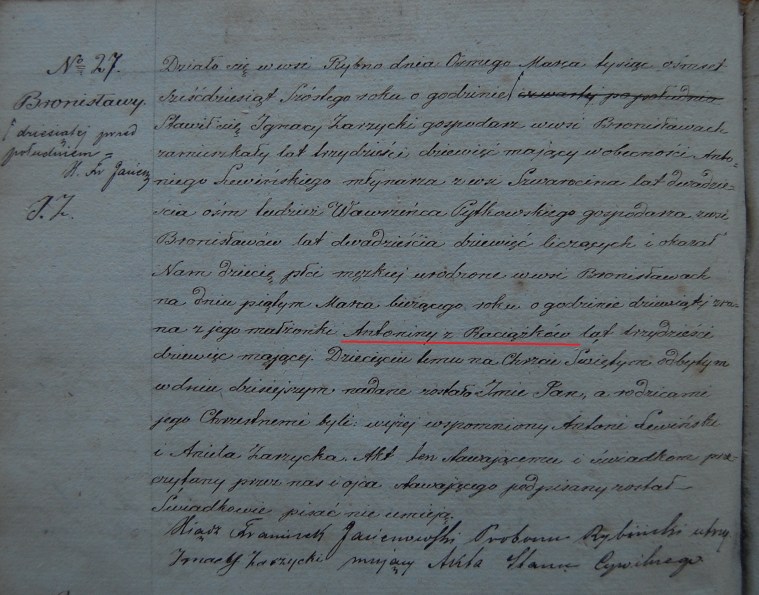
Subsequent research turned up John’s baptismal record in the parish of Rybno, Sochaczew County, Poland, where her name is spelled “Antoniny z Raciążków” (Antonina née Raciążek, Figure 2).

Figure 2:  Baptismal record for Jan Zarzycki, Rybno parish, 5 March 1866.jan-zarzycki-birth-1866

Anyone who’s been doing genealogy for a while is familiar with the inconsistencies in surname spellings that frequently crop up in records prior to the 20th century, and Polish records are no exception.  Typically, however, the variations that one sees revolve around a common root with different endings, e.g. Grzesiak can become Grzeszak, Grzeszkiewicz, Grześkiewicz, etc.  So I was a little surprised to see Maciążek become Raciążek.  In fact, as further evidence accumulated and additional birth, marriage and death records for Antonina’s children were discovered, the most common variant of Antonina’s surname that emerged was Naciążek.  Naciążek appeared in the documents a total of 9 times, while Raciążek appeared 7 times, and Maciążek appeared just twice.

Unfortunately, I have yet to obtain any documentation that indicates Antonina’s parents’ names.  Based on the birth records for her children, I estimate that Antonina was born circa 1828 and married Ignacy Zarzycki circa 1849.  Her children all seem to have been born in the village of Bronisławy and baptized in St. Bartholomew’s church in Rybno.  However, she herself must have been from another parish, because neither her birth or marriage record, nor her death record, was found in the records of Rybno at either the parish or the local civil records office (Urząd Stanu Cywilnego, or USC).  A search of Geneteka for Naciążek, Raciążek and Maciążek anywhere in Mazowieckie province failed to produce any birth records for an Antonina born circa 1828.  So where was Antonina from?  Who were her parents?  She was last mentioned as a surviving widow in the marriage record of her youngest son, Leonard Zarzycki, in 1904, so she must have died after that time.  But where?

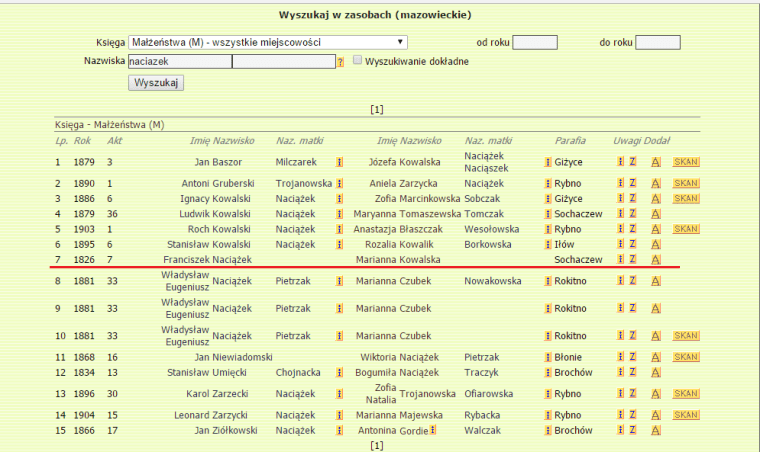
Geneteka reveals exactly one record that might give us a clue regarding this family’s origins. Figure 3 shows the results of a search of marriage records in Rybno for the Naciążek surname.  Searches for Maciążek and Raciążek produced no results, nor were there any birth or death records for Rybno associated with any of these surnames, apart from records pertaining to known children of Antonina (née Naciążek) Zarzycka.

Figure 3:  Geneteka search results for the Naciążek surname in marriage records for Rybno parish.roch-kowalski-marriage

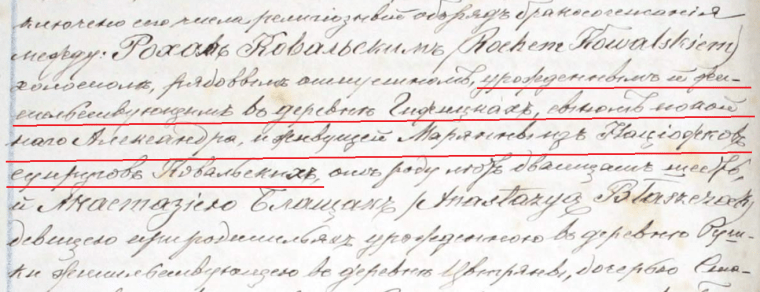
Of the four records shown, numbers 1, 3 and 4 pertain to known children of Antonina (née Naciążek) Zarzycka.  However, record #2 (boxed in red) is for the marriage of Roch Kowalski to Anastazja Błaszczak.  Further examination of that record (Figure 4) reveals that Roch was “….born and residing in the village of Giżyce, son of the late Aleksander and still-living Marianna née Naciążek, the spouses Kowalski” (text underlined in red), and that he was age 26, suggesting a birth year of about 1877.

Figure 4:  Excerpt of marriage record of Roch Kowalski and Anastazja Błaszczak in Rybno parish, 2 February 1903.  roch-kowalski-marriage-excerpt

Since Roch Kowalski was a contemporary of Antonina Zarzycka’s children, it stands to reason that Roch’s mother was of the same generation as Antonina herself.  Since the parish of Giżyce is located just 8.2 km (about 5 miles) from Bronisławy, and since Naciążek is a relatively rare surname, both in the present-day and historically, it’s not unreasonable to suspect that Antonina and Marianna were related, perhaps even sisters.

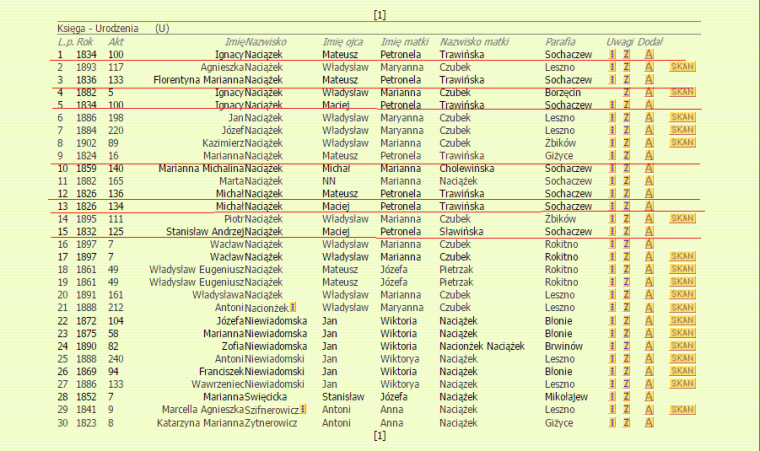
Records for the parish in Giżyce are indexed on Geneteka from 1810-1905 with some significant gaps.  One such gap exists from 1826-1890 — during the time when Antonina Naciążek is most likely to have been born (1828-1829).  However, there is a rather tantalizing birth record in 1824 in Giżyce for a Marianna Naciążek, daughter of Mateusz Naciążek and Petronela Trawińska.  Could this be the same Marianna Naciążek who married Aleksander Kowalski?

Frustratingly, a province-wide search using both the Naciążek and Kowalski surnames does not produce a marriage record for Marianna and Aleksander, which would hopefully reveal Marianna’s parents’ names, nor does it produce Marianna’s death record.  However, it does produce marriage records for four additional children of that couple (Figure 5):

Figure 5:  Geneteka search results for marriage records in Mazowieckie province that contain both the Naciążek and Kowalski surnames.naciazek-kowalski-marriages

Hovering the cursor over the “i” in the column after “Naz. matki” indicates that Józefa Kowalska, Ignacy Kowalski, Ludwik Kowalski, and Stanisław Kowalski were all siblings of Roch Kowalski and children of Marianna Naciążek and Aleksander Kowalski.  Examination of the three records for which scans are available indicates that Józefa and Ignacy were also born in Giżyce.

Note that the search result for Józefa Kowalska’s marriage notes an alternate spelling of her mother’s maiden name, “Naciąszek.” Geneteka’s search algorithms do not automatically recognize Naciąszek and Naciążek as phonetic equivalents, so Naciąszek must be searched separately.  This subsequent search in Geneteka for Naciąszek produces an  especially intriguing result: a marriage record in Giżyce for Stanisław Marcinkowski and Marianna Kowalska in 1881 (Figure 6).

Figure 6:  Geneteka search result for Naciąszek surname in Mazowieckie province.marcinkowski-kowalska-marriage

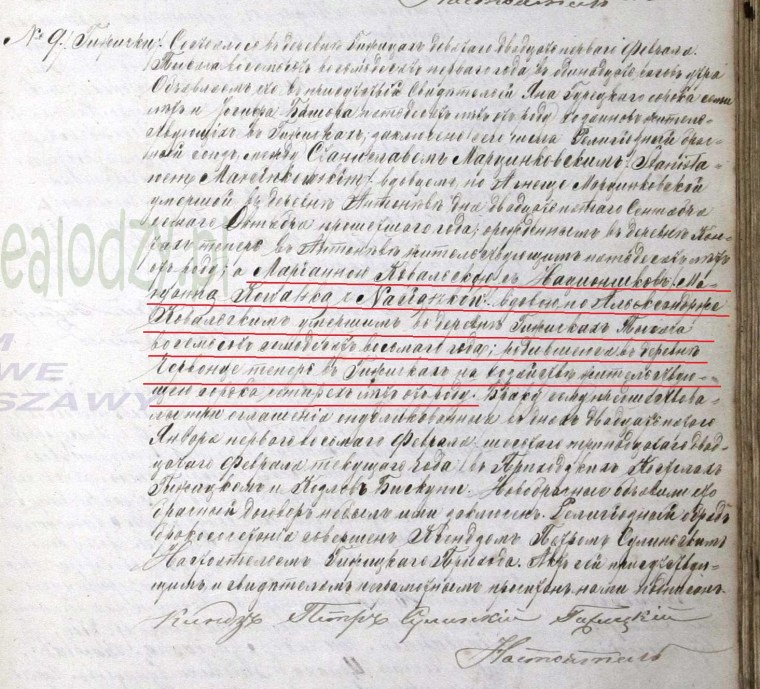
The marriage record itself verifies that this is indeed “our” Marianna Kowalska, widow of Aleksander (Figure 7):

marcinkowski-kowalski-marriage-1856

The underlined text in Russian and Polish reads, “…Marianna Kowalska née Naciąszek, widow of Aleksander Kowalski [who] died in the village of Giżyce in the year 1878; born in the village of Czerwonka, now in Giżyce… residing, age 44.”

Pay dirt!  Although this record does not tell us the names of Marianna’s parents, it does tell us where and when she was born.  Czerwonka is a village that belongs to the parish in Sochaczew, and her age at the time of her second marriage suggests a birth year of 1837.  Clearly, this Marianna can’t be the same as the Marianna Naciąszek born in 1824 in Giżyce. Figure 8 shows the location of all these villages in relation to each other in Sochaczew County.

Figure 8:  Geographic  locations of Giżyce, Bronisławy, Sochaczew and Czerwonka.map-of-czerwonka

Records for Sochaczew are indexed in Geneteka, but unfortunately, there is no perfect match for a Marianna Naciąszek or Naciążek born in 1837 in Czerwonka.  However, there is a reasonably close match:  the birth of a Florentyna Marianna Naciążek in 1836 in Czerwonka, daughter of…. (dramatic music!)…..Mateusz Naciążek and Petronela Trawińska, the same couple who were the parents of the other Marianna Naciążek who was born in Giżyce in 1824! If the Marianna who was born in 1824 died prior to 1836, it’s possible that her parents would have honored her by naming a sibling Florentyna Marianna but calling her Marianna.  So maybe she’s our bride of Aleksander Kowalski?  Unfortunately — and frustratingly — there is no marriage record to prove it, nor is there a death record for the Marianna who was born in 1824.


Let’s take a moment to recap what we know so far:

  • Only one other Naciążek record exists in Rybno parish, where Antonina (née Naciążek) Zarzycka lived.
  • That record is a marriage record for Roch Kowalski, born in Giżyce, son of Marianna Naciążek and Aleksander Kowalski.
  • Roch Kowalski is the same generation as Antonina Zarzycka’s children, suggesting that Marianna Naciążek is of the same generation as Antonina, perhaps even her sister.
  • Marianna (née Naciążek) Kowalska’s second marriage record reveals her place of birth as Czerwonka (Sochaczew parish) in 1837 and her place of residence as Giżyce.
  • The closest match for Marianna’s birth in the records of Sochaczew parish is for a Florentyna Marianna Naciążek, born in Czerwonka in 1836, daughter of Mateusz and Petronela (née Trawińska).
  • Mateusz Naciążek and Petronela Trawińska were parents to another daughter named Marianna Naciążek born in Giżyce in 1824.  Although the Trawiński surname is fairly common, the relative rarity of the Naciążek surname makes it likely that this is the same couple as the one mentioned in the records in Sochaczew.

So, the focus is definitely on Giżyce and Sochaczew for the births and marriages of both Antonina Naciążek and her putative sister, Marianna Naciążek. Marriages for Sochaczew are indexed on Geneteka from 1826-1835,and 1879-1901, leaving a gap when Antonina and Marianna would have married, which would explain why her marriage record does not show up in the Geneteka index. Geneteka’s indexed birth records for Sochaczew cover 1781-1802, 1826-1841, 1849-1864, 1868-1870, and 1874-1884. So Antonina’s birth in 1828-1829 should be there, if she were born in Sochaczew.

But what if Antonina were born in Giżyce, and not Sochaczew?  Geneteka has births indexed for Giżyce for 1810, 1823-1825, and 1891-1905, so there’s a gap for both 1828  when Antonina would have been born, and also for 1849, which is approximately when she would have married. Unfortunately, in reviewing the available ranges of years for available records for both Sochaczew and Giżyce on LDS microfilm and at the Polish State Archives, the hope of identifying Antonina’s and Marianna’s parents definitively seems slim. It appears that Geneteka has indexed all the existing records for these parishes, so the records needed to fill those gaps no longer exist.  One of my goals for the new year is to have a researcher in Poland confirm this for me, and verify that there are no additional records available for either of these parishes at the parishes themselves or in a diocesan archive. Even if those early records are gone, and Antonina’s birth and marriage records are lost forever, it should still be possible to track down her death record after 1904, so that’s on my agenda, too.

If you’re like me, you like wringing every last drop of information from a data set, particularly in cases like this where data are limited.  So what else can Geneteka tell us about the Naciążeks in Giżyce and Sochaczew? Figure 9 shows Naciążek births in indexed records for all of Mazowieckie province.

Figure 9:  Geneteka search result for Naciążek births in Mazowieckie province.naciazek-births-in-mazowieckie

I’ve underlined the ones in red that I believe pertain to the same family.  Notice that the father’s name is sometimes recorded as Mateusz and sometimes recorded as Maciej.  This might be an artifact of the transcription and translation process.  Based on my experience with the records from Sochaczew for this time period, these records are likely to be in Latin, and those names in Latin might be written as Mattheus or Matthias — potentially difficult to differentiate if the handwriting is bad.  It’s also possible that the priest used either spelling indiscriminately, especially since he seems to have been a bit careless with Petronela’s name, which is recorded as Trawińska in most of the records, but as Slawińska in one of them.  Copies of these records are available from the Diocesan Archive in Łowicz, and I plan to order those in the New Year, so hopefully the originals can shed some light on this.

Based on these data, and data from the death records as well, a clearer image of the Naciążek family’s timeline emerges:

  • 1824:  Daughter Marianna born in Giżyce.
  • 1826:  Son Michał born in Sochaczew. (Note that Michał’s birth is recorded twice in the index, as record #134 and record #136.  Information contained in the infodot reveals that #134 is the Latin church record while #136 is the Polish-language civil copy.)
  • 1832:  Son Stanisław Andrzej born in Sochaczew.
  • 1834:  Son Ignacy born in Sochaczew.  (Again, both the Latin church version and the Polish civil copy are available for this record.)
  • 1836:  Daughter Florentyna Marianna born in Sochaczew.
  • 1837:  Son Ignacy dies in Sochaczew.
  • 1840:  Son Jan dies in Sochaczew.  Jan is noted to be 6 days old, and birth records for Sochaczew exist for the time of his birth, so it’s unclear whether his birth record is missing due to an omission by the priest or by the indexer.

If great-great-grandma Antonina does, in fact, belong to this family, her birth would fit into that 6-year-gap between Michał’s birth in 1826 and Stanisław Andrzej’s birth in 1832. Since her birth was not captured in the records for Sochaczew, it’s possible that the family returned to Giżyce for that time period.

One final record worth noting that pertains to the Naciążek family in Sochaczew and Giżyce is the marriage record in 1826 of Franciszek Naciążek and Marianna Kowalska.  (Figure 10).

Figure 10:  Geneteka search results for Naciążek marriages in Mazowieckie province.franciszek-and-marianna-naciazek

Hovering the cursor over the “i” in the “uwagi” column reveals that the groom, Franciszek Naciążek, was from Giżyce although the wedding took place in the bride’s parish in Sochaczew. Franciszek and Marianna could also be potential parents for Antonina Naciążek, although they seem to disappear from the records.  They are not mentioned as parents on any of the indexed birth records in Mazowieckie, and the only other mention of them is in Marianna’s death record in Sochaczew in 1844.

Despite the lack of direct evidence concerning Antonina Naciążek, the indexed records in Geneteka offer a powerful tool for gathering hints about her possible family origins.  While it’s disappointing that Antonina’s birth and marriage records may no longer exist, there’s still some hope of finding her death record, and Sochaczew and Giżyce would be logical places to look for it.  Maybe 2017 will be my lucky year in terms of locating that document, and maybe I’ll get even luckier and it will include her parents’ names, so I can know for certain whether Antonina Naciążek is the daughter of Mateusz and Petronela (née Trawińska) Naciążek. May 2017 be a lucky year for your genealogical research as well. Here’s to finding our dead ancestors!

© Julie Roberts Szczepankiewicz 2016


50+ Useful Websites for Polish Genealogy

“Raindrops on roses, and whiskers on kittens, bright copper kettles, and warm woolen mittens….”  Like Maria in The Sound of Music, we all have lists of our favorite things.  For me, there are quite a few Polish genealogy websites that are on my list of favorite things.  With that in mind, and with Christmas right around the corner, here are some of my favorite online resources for Polish genealogy.  Some of these bear further mention in future blog posts, and I’ll probably get around to discussing them in greater detail at some point.  For now, give it a look, maybe you’ll find something new that will help with your research. (And in case you were wondering, I’m calling it “50+” because some of the links are to related sites, so number them as you wish.) Happy hunting!

Maps, Phonetic Gazetteers, and Period Gazetteers:                            

Jewish Gen Gazetteer (www.jewishgen.org/communities/loctown.asp):

  • An indispensable Soundex-type (phonetic) gazetteer for identifying villages for which the name is spelled incorrectly on a U.S. document. For more hits, try using the Daitch-Mokotoff Soundex, rather than Beider-Morse Phonetic Matching.

Kresy Gazetteer (http://www.kami.net.pl/kresy/):

  • This is a fantastic site for determining parish for villages in the eastern border regions (Kresy) that formerly belonged to Poland (Second Polish Republic) but are now located in western Ukraine, western Belarus, and southeastern Lithuania.
  • Soundex-style allows you to search without knowing the exact spelling of the place name, if you select “similar” (Daitch-Mokotoff Soundex) or “rough” as your search method.

Mapa.szukacz.pl (http://mapa.szukacz.pl/):

  • Does not show parish for a village, but does show current administrative divisions including the gmina (useful if you want to write to the USC for a record less than 100 years old).
  • Only shows villages within current borders of Poland.
  • Polish diacritics don’t matter (i.e. a search for “lodz” will give you “Łódź”.)
  • Advanced search allows you to search within a specific Voivodeship; useful when searching for places like “Nowa Wieś.”

Słownik geograficzny Królestwa Polskiego i innych krajów słowiańskich (http://dir.icm.edu.pl/Slownik_geograficzny/):

  • Coverage includes all localities in the former Polish provinces of Russia, most localities in the former Austrian province of Galicia (now divided between Poland and the Ukraine), Belorussian provinces of the Russian Empire (now in the Republic of Belarus), and also contains significant localities in other Slavic and eastern European nations; Russia, Slovakia, the Czech Republic, Hungary, Slovenia, Croatia, Serbia, Bulgaria and Romania. While the information is a bit less comprehensive, localities from the provinces of Poznan, West Prussia, East Prussia, Silesia, and Pomerania are also covered.
  • Published between 1880-1902 in 15 volumes.
  • Contains information on parishes, history, population, etc.
  • Abbreviations are common; assistance can be found at PGSA website (below)
  • Must use proper Polish diacritics (i.e. a search for “lodz” will yield no result, but a search for “Łódź” will give multiple hits)

PGSA Translated Słownik geograficzny entries (https://pgsa.org/research-slownik-translations/) and related pages, (https://pgsa.org/research-slownik-terminology/, https://pgsa.org/research-slownik-interpretation/, 

  • Defines abbreviations and explains historical context for Słownik entries; also offers English translations for a limited number of villages. Translated entries are currently a benefit available to members only.

Polish Roots Translated SGKP entries (https://www.polishroots.com/GeographyMaps/SlownikGeograficzny?PageId=61):

  • Similar to the above site, but different coverage. To access translated entries, hover cursor over “Geography & Maps” option in menu bar at the top of the page, then select a letter of the alphabet to view translated entries for places in the Słownik beginning with that letter.

Skorowidz Królestwa Polskiego (https://www.sbc.org.pl/dlibra/publication/11404/edition/10794/content?ref=desc for Volume 1 and https://www.sbc.org.pl/dlibra/show-content/publication/edition/10795?id=10795 for Volume 2):

  • Will need to install a Deja Vu reader onto your computer to read these files. Follow instructions at website for downloading (the site will prompt you) or you can download it here.  Running the most current version of Java is also important. Easy-to-read, tabular format shows name of village, gubernia/governate, powiat/county, gmina/township, parafia/parish, as well as sąd pokoju/courthouse, and poczta/post office.
  • Published in 1877.
  • Includes only the Kingdom of Poland (Congress Poland, or “Russian Poland”) – not Galicia or Prussian Poland.

Tabella of the Kingdom of Poland (Tabella miast, wsi, osad Królestwa Polskiego z wyrażeniem ich położenia i ludności alfabetycznie ułożona w Biórze Kommissyi Rządowey Spraw Wewnętrznych i Policyi; Volume 1:  http://bc.wbp.lublin.pl/dlibra/docmetadata?id=7612&from=pubstats and Volume 2: http://www.wbc.poznan.pl/dlibra/doccontent?id=110117)

  • The Tabella is similar to the Skorowidz Królestwa Polskiego in that it covers the same territory (Russian Poland). However, it was published 50 years earlier, in 1827, so may be of value if you need to focus on that earlier time period.

Kartenmeister (http://www.kartenmeister.com/preview/databaseuwe.asp):

  • Includes Eastprussia, Westprussia, Brandenburg, Posen, Pomerania, and Silesia.
  • Flexible search parameters; can search by German or Polish name of village, or use other methods.
  • Catholic or Evangelical parish for the village is usually included in search results.

Gesher Galicia Town Locator (http://www.geshergalicia.org/galician-town-locator/):

  • If you’ve got the correct spelling of a town, this is a great resource because it includes places of worship for people from all towns and villages in Galicia as of 1900.

Genealogische Orts-Verzeichnis (GOV), The Historic Gazetteer (http://gov.genealogy.net/search/index):

  • This German-language database includes locations around the world. It searches for the character string typed in the search box (truncate by leaving off as many letters as desired). The results list includes the type of location, the higher level jurisdictions, and the current postal code, and includes links to additional articles about this place for further reading.

Meyers gazetteer (https://www.meyersgaz.org/):

  • This is an online, searchable version of the popular Meyers Orts- und Verkehrs-lexikon des deutschen Reichs The goal of the Meyer’s compilers was to list every place name in the German Empire (1871-1918). It gives the location, i.e. the state and other jurisdictions, where the civil registry office was and parishes if that town had them. It also gives lots of other information about each place. Click the “Ecclesiastical” link in the menu bar at the top to see the distance in miles from the target location to the nearest Catholic, Protestant and Jewish places of worship.

Brian Lenius’s Genealogical Gazetteer of Galicia (http://www.lenius.ca/gazetteerorder/gazetteerorderform.htm ):

  • Not an online resource, but this gazetteer is available in print from the author, and is considered to be a superlative resource for those with ancestors from Galicia.

Bigo’s Skorowidz of Galicia, 1914 (Najnowszy skorowidz wszystkich miejscowości z przysiółkami w Królestwie Galicyi, Wielkiem Księstwie Krakowskiem i Księstwie Bukowińskiem z uwzględnieniem wszystkich dotąd zaszłych zmian terytoryalnych kraju) (https://www.pbc.rzeszow.pl/dlibra/publication/5332/edition/4909/content?ref=desc):

  • Like the Skorowidz of 1877, you need a Deja Vu reader to view these files.
  • Tabular format includes columns for village name, the county and district council, district court and tax office, parish office, population, post office, klm distance (from the post office), telegraph office, klm distance (from the telegraph office), and the owner of the “Major estate” in a village, as opposed to the owners of the “minor estates” (commoners).
  • Roman Catholic parishes are distinguished from Greek Catholic by the use of “ł” (abbreviation for “łaciński,”) or “gr” (abbreviation for “grecki”) next to the name of the parish that served that locality. The word “loco” means that there was a parish within that location.

Index of Place Names in the Republic of Poland (Skorowidz miejscowości Rzeczypospolitej Polskiej) (http://www.wbc.poznan.pl/dlibra/docmetadata?id=12786&from=publication ):

  • Like the Skorowidz of 1877, you need a Deja Vu reader to view these files.
  • Published circa 1933, it covers locations that were within the borders of the Second Polish Republic (1918-1939).
  • Tabular format again, includes villages in the eastern border regions (Kresy) that formerly belonged to Poland but are now located in western Ukraine, western Belarus, and southeastern Lithuania.

3rd Military Mapping Survey of Austria-Hungary (http://lazarus.elte.hu/hun/digkonyv/topo/3felmeres.htm):

  • Contrary to what the name suggests, maps include places that were in Russian Poland and Prussian Poland.
  • Individual maps can be downloaded by right-clicking on them.
  • 1:200,000 scale resolution shows most small villages.
  • Place names may be in Polish or German.
  • Does not cover the northern third (approximately) of modern Poland.

Map Archive of Wojskowy Instytut Geograficzny 1919 – 1939 (http://www.mapywig.org/):

  • Mapywig is a treasure-trove of maps in a variety of different scales, time periods, and resolutions.
  • Maps might be in Polish, German or Russian.
  • An overview (in English) can be found here.
  • Clicking on a map quadrant in the index will take you to a page showing all the maps available for that quadrant, which vary in resolution and date of map.
  • Offers full coverage of northern Poland, unlike the maps at the Lazarus site (above).

Mapire:  Historical Maps of the Hapsburg Empire (http://mapire.eu/en/):

  • This is a really fun site if you have ancestors from Galicia.  It includes maps from the first, second and third military surveys of the Austrian Empire and allows you to overlay these maps with modern maps and vary the transparency between the two.

Sources for locating vital records in Poland:

Note:  Sites marked with * are primary sources, at which actual images of the records can be obtained.  Sites marked with § are indexes for records; copies of the records themselves must be obtained from another source.

*LDS FHL microfilms (https://familysearch.org/catalog-search):

  • Not an online source for records, but all researchers should be aware of this option nonetheless. Check back regularly — the FHL has been digitizing more and more of their microfilms and changes are NOT reflected on their “Poland Research” page (below). You may be pleasantly surprised to discover that some of your favorite microfilms are now online.

*§Family Search digitized or indexed collections for Poland: (https://familysearch.org/search/collection/location/1927187):

  • Collections exist for Roman Catholic dioceses of Lublin, Radom, Częstochowa, and Gliwice, with images; index-only records exist for the Diocese of Tarnów.  There’s also a collection of curiously-named “Evangelical” Church records. 1700-2005, that not only includes Baptist and Lutheran records but also Greek Catholic records from Sulmice in the Lublin province.

*Szukajwarchiwach, “Search the Archives” (http://www.szukajwarchiwach.pl/):

  • Use proper Polish diacritics for best results.  Often you’ll get results without them, and it may be an old bug that has since been fixed, but if you get no results without diacritics, repeat the search with them.
  • For best results, search according to parish or gmina name rather than village name. The exception for this is for records from Galicia/Austrian Poland, where separate books were kept for each village within a parish, so you may find villages indexed individually.
  • Check box for “Vital records and civil registers” to limit search results.
  • Detailed instructions for using (with screen shots!) can be found at https://familysearch.org/learn/wiki/en/images/a/af/Polish_State_Archives.pdf

*Metryki.GenBaza (http://metryki.genbaza.pl/):

  • Must create an account at http://genpol.com/ first in order to access records, and must log in each time.
  • Some overlap with Metryki.Genealodzy.pl in terms of records collections, but contains many parishes not found elsewhere online.
  • Use of site in Polish is recommended; portions of site are not usable in English (am error message will result — although again, this might be an old bug that has since been fixed, as I haven’t had this happen in a while).

*§Genealodzy.pl websites:  Geneszukacz, Geneteka, Metryki, Poczekalnia (http://genealodzy.pl/):

Geneteka: http://geneteka.genealodzy.pl/

  • Surname-indexed records searchable by individual parish or entire province.
  • Can input a second surname to find all children of a given couple; can also limit range of years.
  • Polish diacritics not important, and searches for the masculine version of a surname will return results for both genders (i.e. “Zielinski” à Zieliński and Zielińska).
  • Can be helpful if only some information about an ancestors’ birthplace (e.g. county) is known, but not the precise location; however, only a small fraction of Polish parishes are indexed to date, so there is a risk of chasing down the wrong ancestors if Geneteka is used in an attempt to side-step preliminary research in U.S. documents.
  • Some indexed records are linked to scans of documents within the Metryki.Genealodzy.pl collection or at Szukajwarchiwach.

*Metryki.Genealodzy.pl: http://metryki.genealodzy.pl/

  • More than just a repository of scans for records indexed at Geneteka, Metryki often contains different parishes or different ranges of years for parishes indexed on Geneteka.  See this post for more information.

*Poczekalnia (“Waiting Room”): http://poczekalnia.genealodzy.pl/

  • Scans waiting to be checked and added to Metryki. Click on “Lista” or “Galeria” to get to the directory of parish records, grouped according to the archive from which they were obtained.

*AGAD (Archiwum Główne Akt Dawnych w Warszawie, Central Archives of Historical Records in Warsaw): http://www.agad.gov.pl/inwentarze/testy.html

  • Roman Catholic, Greek Catholic, Jewish, and Protestant records from parts of Eastern Poland which are now located in Ukraine.

*Archiwum Państwowe w Przemyślu:  http://www.przemysl.ap.gov.pl/skany/

  • Has Roman Catholic and Greek Catholic records from parishes in the Przemyśl area. Most of these records are also available from Szukajwarchiwarch, but there are a few parishes for which records are only online here, and NOT at that site as well.

*State Archive in Olsztyn: http://www.olsztyn.ap.gov.pl/apnet/wybierz.php

  • Has vital records from some villages in this area formerly located in East Prussia; click “Skan Digitalizacja,” and then use the drop-down menu under “Nazwa zespołu” (name of the collection) to find a town based on current Polish names, or use “Nazwa oryginala” to look up record sets based on former German names.

*State Archive in Szczecin: http://www.szczecin.ap.gov.pl/iCmsModuleArchPublic/showDocuments/nrap/65

  • Has vital records from some villages in this area formerly located in the Prussian province of Pomerania. Scroll down the page to see the available locations, listed in the column on the left.

*Civil Registry Office in Wrocław/Standesamt Breslau:  http://ahnenforscher.pl/?page_id=120

  • Has vital records for Wrocław (Breslau in German) from 1889-1911
  • Viewing records requires the installation of the DjVu plug-in, so the site works best with Internet Explorer and appears to be incompatible with some versions of Google Chrome (like mine).

*Archion: https://www.archion.de/de/browse/?no_cache=1

  • Has Lutheran church records from parishes located in the former German provinces of Posen, West Prussia, East Prussia and Silesia, with over 20 million scans online.
  • Searching is free, but a subscription is required to access scans.

*Matricula: http://data.matricula-online.eu/en/polen/breslau/

  • Has Lutheran church records for four places in Lower Silesian Voivodeship (województwo dolnośląskie), Siedlęcin/Boberröhrsdorf in Jelenia Góra County, 1748-1914; Sobieszów/Hermsdorf in Jelenia Góra County, 1742-1916; St. Elizabeth’s Church in Wrocław, 1750-1945; and St. Bernhard’s Church in Wrocław, 1812-1906.

*Epaveldas:  http://www.epaveldas.lt/vbspi/lang.do?language=lt

  • Has vital records for locations that are in present-day Lithuania.

*Genealogy in the Archive:  https://www.genealogiawarchiwach.pl/

  • Has vital records for locations in the Kujawsko-Pomorskie, Pomorskie, Wielkopolskie, and Warmińsko-Mazurskie provinces.  A relative newcomer to the Polish vital records scene, this site is somewhat infamous for its awkward and slow user interface.  However, attempts are being made to resolve some of these issues, so there’s hope.

*Górnośląskie Towarszystwo Genealogiczne (Upper Silesian Genealogical Society):   http://siliusradicum.pl/ksiegi-metrykalne/

  • Has some Roman Catholic, Protestant, and Jewish vital records for some locations in Upper Silesia; original records are held by the State Archive in Katowice.
  • Records can be browsed online via Dropbox.

BaSIA (Baza Systemu Indeksacji Archiwalnej, Database of Archival Indexing System): http://www.basia.famula.pl/en/

  • Has indexed vital records (births, marriages and deaths) from the Poznan area, some linked directly to scans from the Polish State Archives
  • Extended search allows you to restrict search to a give range of years, type of document, distance from a specified location.
  • Polish diacritics not important.
  • One can create an account, register surnames of interest, and they will e-mail you when new records for those surnames are added.
  • To view scans, go to archive information in the results column on the right, and click on the line below the archive name that has code numbers and the word “scan.”

*§Lubgens:  http://lubgens.eu/portal.php

  • Has indexed vital records for Lublin area, many with scans attached.
  • Polish diacritics don’t matter (i.e. “Zielinski” yields same result as “Zieliński”) BUT masculine or feminine version of surname DOES matter (i.e. “Zielinski” yields different results from “Zielinska”).

*§Słupca Genealogy:  http://slupcagenealogy.com/

  • Indexed records from parishes in Słupca and Kalisz counties; Jewish records recently added for Słupca.
  • Many results linked to scans from the Polish State Archives.

§Pomeranian Genealogical Society database: http://www.ptg.gda.pl/

  • Indexed civil and church vital records from Pomerania.
  • Go to “PomGenBase” in menu bar at the top of the page and then select “Search PomGenBase” followed by the type of records you wish to search. Alternatively, select “Metrical Book Indexes” followed by “Parish and Registry Offices” to see the full list of parishes and years currently indexed.
  • Polish diacritics DO matter IF you choose “search directly” (i.e. “Wolinski” yields different results than “Woliński”). Can use wildcard characters (“?” replaces one letter, “*” replaces more than one) if you’re not certain of the spelling.

§Poznan Marriage Project: http://poznan-project.psnc.pl/

  • Indexed marriage records from the Poznan region, 1800-1899, currently about 80% complete.
  • One may request a copy of a single record by clicking “original record” and requesting it from the archive, OR it may be requested from the site’s creator, Lukasz Bielecki, with a donation to the project. However, clicking the parish name in which the record was found will yield a list of LDS microfilms for that parish, and by searching these one is likely to find not only that marriage, but also many other vital records for one’s family.

§Katalog Szlachty: http://www.katalogszlachty.com/

  • Click on “indeksy” in menu at left, and then on “indeksy” again to reach the list of indexed parishes.
  • Records for Szlachta (noblemen), primarily from northeastern Poland.

§Szpejankowski and Szpejankowski Family Website: http://szpejankowski.eu/

  • Has indexed vital records for the Dobrzyń region of Poland.

§SGGEE Databases: https://www.sggee.org/research/PublicDatabases.html

  • Society for German Genealogy in Eastern Europe; public database includes indexed Lutheran vital records for select parishes in Volhynia, Kiev and Podolia, and Lublin.

*§Metryki Wołyń: http://wolyn-metryki.pl/joomla/index.php

  • Has indexed church and civil vital records from 19th century Wołyń/Volhynia (eastern Poland/Belarus/Ukraine).  English-language search portal yields results that are linked to scans at the AGAD site.  Polish diacritics are not required to search this site.

*§Indexed records from Zieluń parish: 

http://www.zielun.pl/metryki.php?parafia=zielun&metryki=b&year=1900

  • Has indexed birth, marriage and death records from Zieluń parish in gmina Lubowidz, Mazowieckie province, from 1822-1912, linked to scans in Metryki. Note that the range of indexed years is broader at this site than what’s available on Geneteka. To navigate between births, marriages and deaths, click on the icons of the star (births), wedding rings (marriages), and cross (deaths) located between the column with the years and the column with the names.

§Jamiński Zespół Indeksacyjny (Jaminy Indexing Team): http://jzi.org.pl/

  • This group is indexing records for the parishes of Jaminy, Krasnybór, Sztabin, Bargłów Kościelny, and others in Augustów county, Podlaskie. The search form for their indexes is found here: http://search.jzi.org.pl/geneo/.

§Databases of the State Archive in Płock: http://plock.ap.gov.pl/p,136,geneaa

  • Has indexed vital records for several Lutheran and Roman Catholic parishes in the Płock area (under “Genea”).

§Częstochowa Genealogical Society database: http://www.genealodzy.czestochowa.pl/index.php

  • Has indexed vital records from a number of parishes in the Częstochowa area.
  • Must create an account in order to search records.

§Strony o Wołyniu Przed Wojennym (Volhynia Before the War): http://wolyn.ovh.org/

  • Pre-WWII era genealogical data for individuals living in the Volhynia region (which straddles eastern Poland, Belarus and Ukraine), grouped by village name.
  • Click on “Alfabetyczny spis miejscowości” at the top of the page for an alphabetical list of villages covered; each listing provides contact information to connect with others researching those families.

§Poland GenWeb Archives: http://www.rootsweb.ancestry.com/~polwgw/polandarchives.html

  • Assorted records transcriptions from parishes across Poland.

§Church Registers of Tyniec Mały/Klein Tinz: http://frontiernet.net/~michael6/tinz/

  • Data from Catholic parish registers; village is in Wrocław County, Lower Silesian Voivodeship.

Polish State Archives’ PRADZIAD database search portal:  http://baza.archiwa.gov.pl/sezam/pradziad.php?l=en

  • Enter a parish or gmina/township name for a complete list of the vital records holdings of the Polish State Archives for that location. If records are found, you can write or e-mail the archive to request a search of records for a particular record or records.  See this post on writing to archives in Poland.

Catalog of Metrics in Russia, Ukraine and Belarus:  http://metrics.tilda.ws/  

  • This site is a great finding aid for vital records in Russia, Ukraine and Belarus, organized by geographic region within each country, with links to archives, gazetteers (in Russian) and other resources.

FBPGG site: https://sites.google.com/view/polishgenealogygroup/polish-archives-in-a-nutshell?authuser=0

  • The “Internet Tools” list at this site includes a comprehensive collection of web links for Polish genealogy. There is also a helpful collection of addresses for civil and church archives in Poland.

Cyndi’s List, Poland: https://www.cyndislist.com/poland/ 

  • An additional collection of web links for Polish genealogy.

© Julie Roberts Szczepankiewicz 2016, updated January 2021.

A Geneteka Christmas

The Advent season, with its preparations for Christmas, is always nostalgic for me.  I was very close to my grandparents, John and Helen Zielinski, and Grandpa told me stories of how his mother, Genevieve (née Klaus) Zielinski, loved Christmas, too.  He was the oldest of the five children in his family, and at some point before Christmas, she would draw him aside and show him the gifts that she had gathered to give to his younger siblings, sharing with him her anticipation of the joy that those gifts would bring.  Of course, she didn’t show him the gifts that he himself would receive, but the honor of being co-conspirator in creating Christmas joy for his siblings was clearly a source of pride for Grandpa.  Grandpa’s family also had a tradition of giving the children one gift before Christmas.  Whether this custom had its origins in the Polish tradition of gift-giving at the feast of St. Nicholas (Święty Mikołaj) on December 6 is unclear, but Grandpa and Grandma strongly felt that children should not have to wait throughout the whole of Advent without some small gift.  As a child, I certainly had no objections to this practice.

Grandpa passed away in the pre-dawn darkness of a February night in 2003.  He had been suffering from prostate cancer for some time, and we knew the end was near. At the time, I was pregnant with my fourth child, Catherine, and when I spoke with him on the phone for the last time, a few days before he died, Grandpa told me that he was holding out to know that Catherine had arrived into this world safely.  Catherine was born a few minutes after dawn, just hours after Grandpa died.  He never got to meet her, but I know in my heart that he knew all about her.  I’ve tried to share my memories of my grandparents with all my children, especially at Christmas when those memories are so dear and Grandma and Grandpa feel so close.

So what does this have to do with Geneteka?  Fast-forward to October of 2012. I was still plugging away at my research on Grandpa’s Zieliński’s family, but I hadn’t obtained any information prior to the emigration of Grandpa’s father, Joseph Zielinski, and Joseph’s brother, Frank Zielinski. I had progressed to the point where I had identified the Zielinskis’ ancestral village of Mistrzewice, Mazowieckie province, and I had determined that some records for this parish were held at the Archiwum Państwowe w Warszawie Oddział w Grodzisku Mazowieckim (the Grodzisk Mazowiecki Branch of the Polish State Archive of Warsaw).  In October 2012 I wrote a snail-mail letter to the archive to request a copy of my great-grandfather’s birth record, hoping that at last I might have some documentation from Poland for this family.  Most of my research in Polish records at this point had been done in LDS microfilms, and I was as yet unaware of the growing treasure-trove of Polish vital records coming online in greater numbers each day.

It was while I was waiting for my reply from that archive, that Grandpa gave me my best Christmas gift that year, on December 16 — a little early, because no one should have to wait all the way until Christmas without some small gift.  That was the day I discovered Geneteka, and found the birth records for his father, Joseph Zielinski, as well as for Joseph’s brother, Frank Zielinski, and eight other siblings who were previously unknown to our family (Figure 1).

Figure 1:  Geneteka search results for children of Stanisław Zieliński and Marianna Kalota.zielinskis-in-geneteka

For me, finally reading great-grandpa’s baptismal record, after so many years of seeking it, was such a thrill (Figure 2).

Figure 2:  Baptismal record for Józef Zieliński, son of Stanisław Zieliński and Marianna Kalota.joseph-zielinski

As you may notice, the record is in Russian, which was the required language for all legal documents from this part of Poland at that time. Having this fantastic data set that I couldn’t read because all the records were in Russian, was also a gift in its own way.  Although I’d dabbled in Russian translations with a few records before this, it was these records that forced me to finally get serious about learning to read Russian vital records.  During the week between Christmas and New Year’s, while we were in Buffalo visiting with our extended family, I sat down and immersed myself in these records and in Shea and Hoffman’s game-changing translation guide until they finally started making sense and I could read them with relative ease.  The fact that my family indulged me in that, and gave me the time and space for genealogy research in the midst of holiday cheer, was yet another Christmas gift.

(If you’re curious about what that baptismal record says, here’s the translation.)

“This happened in the village of Mistrzewice on the 30th day of September/12th day of October 1892 at 4:00 in the afternoon. He appeared, Stanisław Zieliński, farmer residing in Mistrzewice, 28 years from birth, in the presence of Tomasz Kęska, farmer, age 33, and Piotr Szewczyk, farmer, age 33, residents of the village of Mistrzewice, and showed us a child of the male sex, stating that it was born in the village of Mistrzewice on the 28th day of September/10th day of October of the current year at 6:00 in the morning of his lawful wife Marianna, née Kalota. (Marginal note, whose text should be inserted here, reads, “To this child at Holy Baptism was given the name Józef.) and godparents were Tomasz Kęska and Waleria Zakościelna. This document to the declarant and to the illiterate witnesses was read, and signed only by us.”

Unfortunately, Mistrzewice and Młodzieszyn, the two parishes which held records for my Zieliński family, were in the path of the Nazis in 1939.  Many records were destroyed, as was the parish cemetery in Mistrzewice, so my knowledge of the family is incomplete.  I do know that my 5x-great-grandparents were Wojciech and Katarzyna (maiden name unknown) Ciećwierz, probably born in the 1790s.  Their son, Jan Ciećwierz, married Katarzyna Grzelak about 1836.  Jan and Katarzyna’s daughter, Antonina Ciećwierz, married Michał Zieliński circa 1853, and together they had 7 children, including my great-great-grandfather, Stanisław Zieliński, who married Marianna Kalota.  Michał Zieliński died in February 1872, a fact which I know only because it was mentioned in the marriage record when his widow Antonina remarried Ludwik Grzegorek. Surviving marriage records for Mistrzewice only go back to 1855, and death records only go back to 1890, so I will never be able to determine Michał’s parents’ names from either his marriage or his death record.

On the Kalota side, I can trace back as far as my 4x-great-grandparents, Antoni Kalota and Marianna Wilczek, whose son Roch Kalota married Agata Kurowska, daughter of Andrzej and Katarzyna (maiden name unknown) Kurowski, circa 1855.  Had they married in Mistrzewice, their marriage record might have been captured in the surviving records, but unfortuately the Kalota family was from Młodzieszyn, where all the records prior to 1885 were destroyed.  Roch and Agata Kalota had six children that I have been able to discover, including my great-great-grandmother, Marianna (née Kalota) Zielińska.

Geneteka’s interface has changed considerably since I began my research that Christmas, and it offers more powerful and flexible search options than it did four years ago.  Moreover, records are being added to Geneteka regularly, so it’s well worth your time to revisit your research periodically, even if you think you’ve been thorough.  For example, a new feature that has been added since I first began researching my Zieliński family is the ability to conduct a province-wide search using both a surname and a maiden name.  So I can now search all of Mazowieckie province for records which mention both the names Ciećwierz and Grzelak — which I just did, while writing this blog post, with exciting results (Figure 3)!

Figure 3:  Search results for Ciećwierz and Grzelak in Mazowieckie province.ciecwierz-and-grzelak

If you’ll notice, there are three marriages that occurred in Mistrzewice, and I knew about those already.  However, there are two births for children of Jan Ciećwierz and Katarzyna Grzelak in the parish of Mikołajew — Feliks in 1838 and Marcjanna in 1840.  The dates are right on the money to make them siblings of my 3x-great-grandmother, Antonina (née Ciećwierz) Zielińska.  Moreover, there is an 1830 marriage record for a Marianna Ciećwierz to a Karol Grzelak, also in Mikołajew, as well the death record for this same woman five years later. If you hover your cursor over the “i” in that indexed entry for the death record, you see that Marianna was age 25 when she died and her maiden name was indeed Ciećwierz. The death index specifies that the parents of Marianna (née Ciećwierz) Grzelak were Wojciech and Katarzyna, which means that Marianna was most likely a sister to my 4x-great-grandfather Jan Ciećwierz. Jan’s death record from 1897 states that he was age 82 when he died, suggesting a birth year of 1815, and if Marianna was 25 when she died in 1835, then she was born in 1810 — just 5 years older than Jan.

The fact that these records are from Mikołajew is also fascinating to me.  My great-grandfather, Joseph Zielinski, emigrated in 1912 with his cousin, Stanley Mikołajewski. Although he initially settled in North Tonawanda, New York, where my family lived, Stanley eventually moved on to Cleveland where he changed the family surname to Michaels. The families remained close and would often travel back and forth between North Tonawanda and Cleveland for visits.  Etymologically, “Mikołajewski” is a topographic surname, deriving from the names of towns such as Mikołajew.1 So essentially, the surname “Mikołajewski” means, “that guy from Mikołajew,” and I have long suspected that the Mikołajewskis who settled in Młodzieszyn and married into my Kalota family, must have been from the nearby village of Mikołajew originally (Figure 4).

Figure 4:  Map showing proximity of Mikołajew to Młodzieszyn and Mistrzewice.map

Surnames were often surprisingly changeable in the first half of the 19th century in Poland, and as I consider these new data, I wonder if perhaps it was Stanley Mikołajewski’s grandfather or great-grandfather who might have used a different surname previously, but migrated to Młodzieszyn, perhaps at the same time as my Ciećwierz ancestors, and became known as “Mikołajewski.”  Further pondering and research are required to fully understand all this, but at the moment, I’m thrilled with this wonderful new discovery!

Somehow, it seems like another Christmas gift from Grandpa in heaven.

Sources:

1 William F. Hoffman, Polish Surnames:  Origins and Meanings (Third Edition), (Chicago: Polish Genealogical Society of America, 2012), p. 450

© Julie Roberts Szczepankiewicz 2016